A lie detector test is a serious procedure whose results can affect the fate of family relationships, a career, or even a court case. That is why choosing a polygraph examiner is not simply a search for the cheapest offer on the internet, but a responsible decision on which the reliability of the results depends.
Unfortunately, the polygraph services market in Ukraine still lacks strict government regulation. This means that alongside experienced professionals, there are people without proper education, using cheap equipment and questionable techniques. The results of their work can be not only useless but also dangerous: a false conclusion can destroy a family or unjustly accuse an innocent person.
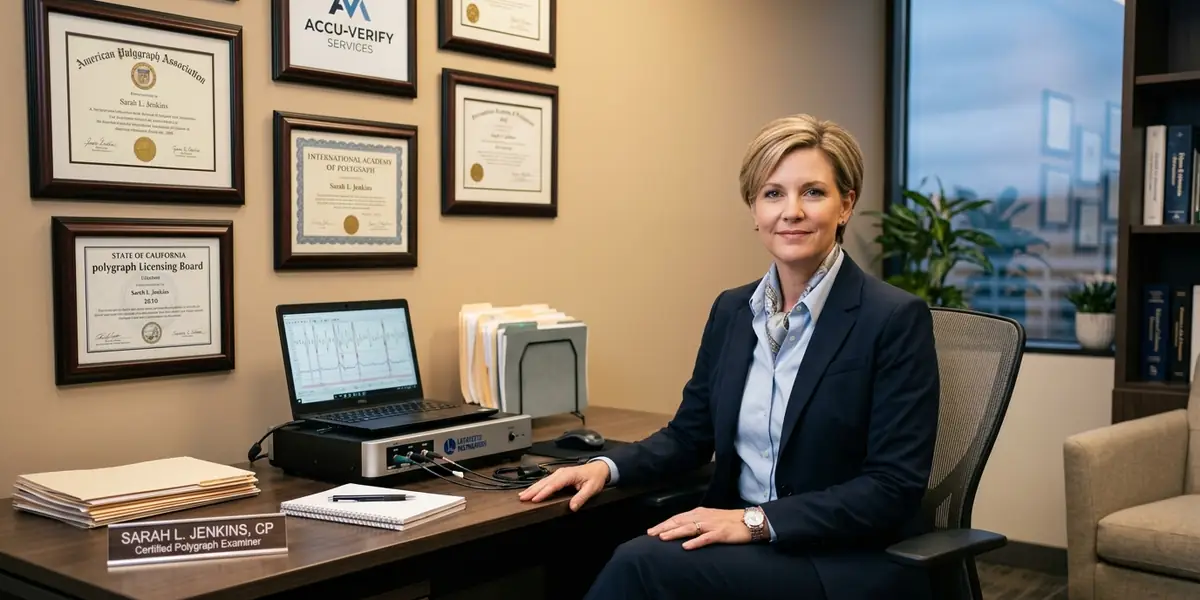
In this article, we will examine 7 specific signs that distinguish a qualified polygraph examiner from an amateur. These criteria are based on the standards of the American Polygraph Association (APA), the European Polygraph Association (EPA), and the practical experience of the Ukrainian Polygraph Association.
Important: The result of a polygraph test depends 70% on the qualifications of the examiner and only 30% on the quality of the equipment. Even the most expensive device in the hands of an incompetent person will produce a false result.
Before moving on to the specific signs, let us understand why this issue is so critical. A polygraph examination is not an automatic process where a machine produces a "truth" or "lie" answer. It is a complex procedure in which the polygraph examiner performs several roles simultaneously:
If even one of these roles is performed poorly, the entire result is called into question. Now imagine that a person without proper training undertakes a forensic psychophysiological examination — the consequences can be catastrophic.
Education is the foundation upon which a polygraph examiner's entire career is built. Without quality foundational training, even years of experience cannot compensate for gaps in knowledge. This is why we place this criterion first.
In Ukraine, unfortunately, there is no single government standard for polygraph examiner training, so one must rely on international requirements and programs from accredited schools.
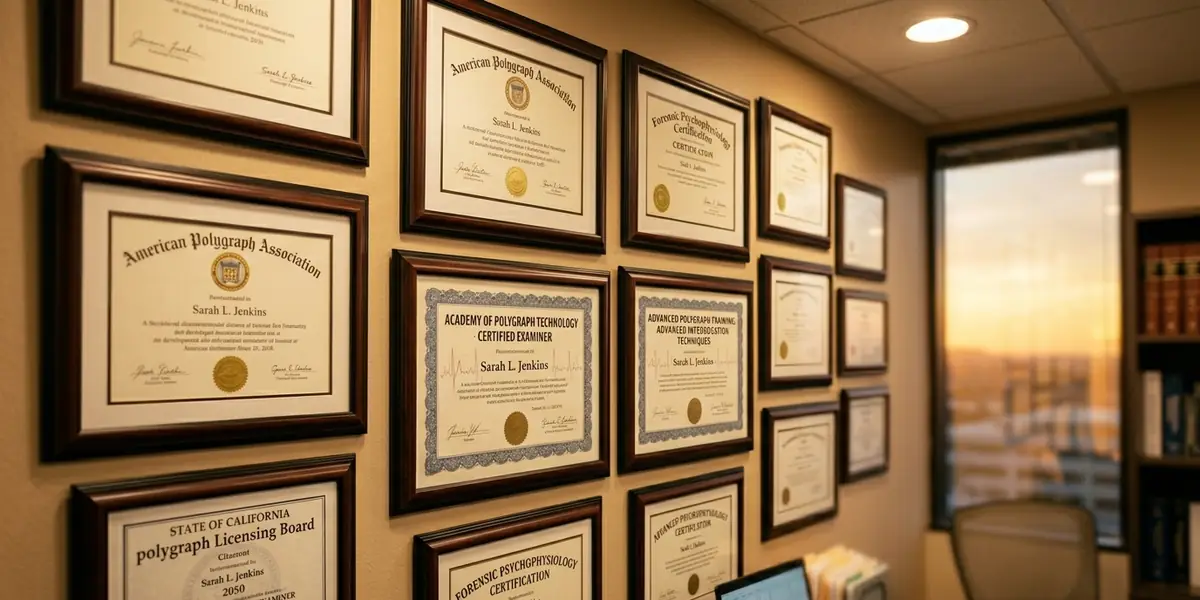
The first and most important criterion is the availability of specialized education in the field of polygraphy. This does not mean weekend courses, but a full training program lasting at least 240 academic hours, which includes:
It is important to understand that polygraphy sits at the intersection of several sciences — psychophysiology, neuroscience, statistics, and psychology. Without a systematic understanding of each of these disciplines, a specialist cannot correctly interpret results. This is precisely why short courses of 30-50 hours are physically incapable of providing the necessary volume of knowledge.
Ask to see the diploma or certificate of completion of the training course. Pay attention to:
| Sign of reliability | Red flag |
|---|---|
| Diploma from an accredited polygraph school (APA, NPA, EPA) | Certificate from an unknown organization or "online courses" |
| Training program of 240+ hours | Course lasting less than 100 hours |
| Undergraduate degree in psychology or related sciences | No relevant professional education whatsoever |
| Regular continuing education | No professional development after the initial course |
In Ukraine, you can verify a polygraph examiner's qualifications through professional registries and associations. The presence of a specialist in a verified list confirms that their qualifications have been reviewed by the professional community.
Theory without practice in polygraphy is like a surgery textbook without a single operation. Even flawless academic preparation cannot replace real-world experience working with living people, each of whom represents a unique case.
The minimum threshold recommended by international organizations is 3 years of active practice. But what matters is not just the number of years, but also the intensity of work and the diversity of examinations conducted.
Polygraphy is one of those professions where theoretical knowledge without practice is worth nothing. Every person reacts differently: some get nervous from the very fact of being tested, while others remain calm even when deceiving. The ability to distinguish these reactions comes only with experience.
An experienced polygraph examiner has conducted hundreds of examinations and has encountered a wide variety of situations:
Ask directly: how many examinations has the specialist conducted in the past year? What area do they specialize in? A reliable specialist will answer specifically and without hesitation. If you hear vague phrases like "many" or "enough" in response, that is a cause for concern.
An additional marker of experience is the presence of a specialization. A polygraph examiner who says "I do everything" may turn out to be less competent in your specific case than a specialist who focuses on internal investigations or marital fidelity checks. Specialization indicates depth of experience in a particular field.
Please note: The minimum recommended experience for conducting independent examinations is 3 years of active practice under the supervision of an experienced mentor. For conducting forensic examinations — at least 5 years.
A polygraph is not a magical device — it is a high-precision measurement instrument. As in medicine, equipment quality directly affects diagnostic accuracy. Outdated or cheap equipment may miss critically important signals.
The difference between professional and amateur polygraph equipment is like the difference between an MRI machine and a home blood pressure monitor. Both measure something, but the level of detail and reliability is fundamentally different.
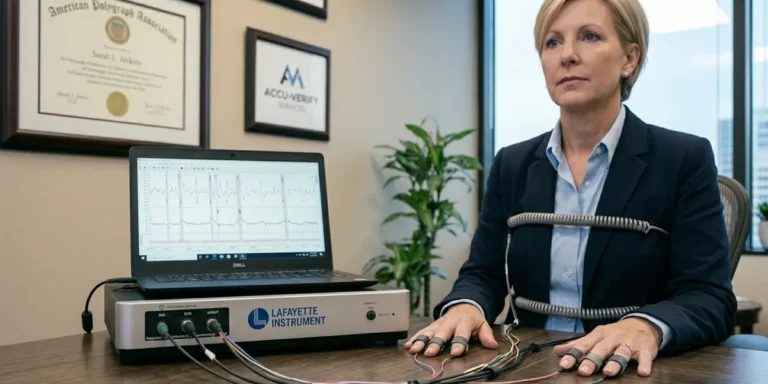
A modern computerized polygraph is a high-tech medical device that records 5 to 12 physiological channels simultaneously. It is fundamentally different from analog devices of the past century that drew graphs on paper tape.
Professional polygraph examination equipment must meet certain standards:
| Characteristic | Professional level | Questionable level |
|---|---|---|
| Number of channels | 5-12 channels | Fewer than 5 channels |
| Device type | Computerized with dedicated software | Analog or "homemade" |
| Manufacturer | Lafayette, Limestone, Stoelting, Rubicon | Unknown brand or no markings |
| Sensors | Original from the manufacturer, in working condition | Worn, damaged, or non-original |
| Motion sensor | Present (to detect countermeasures) | Absent |
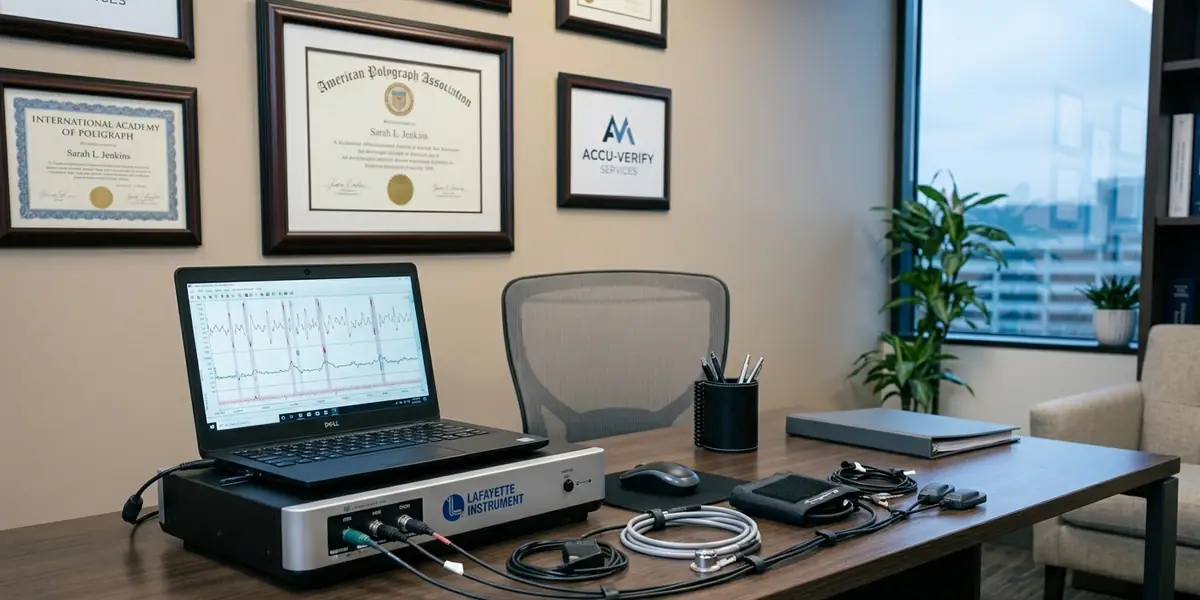
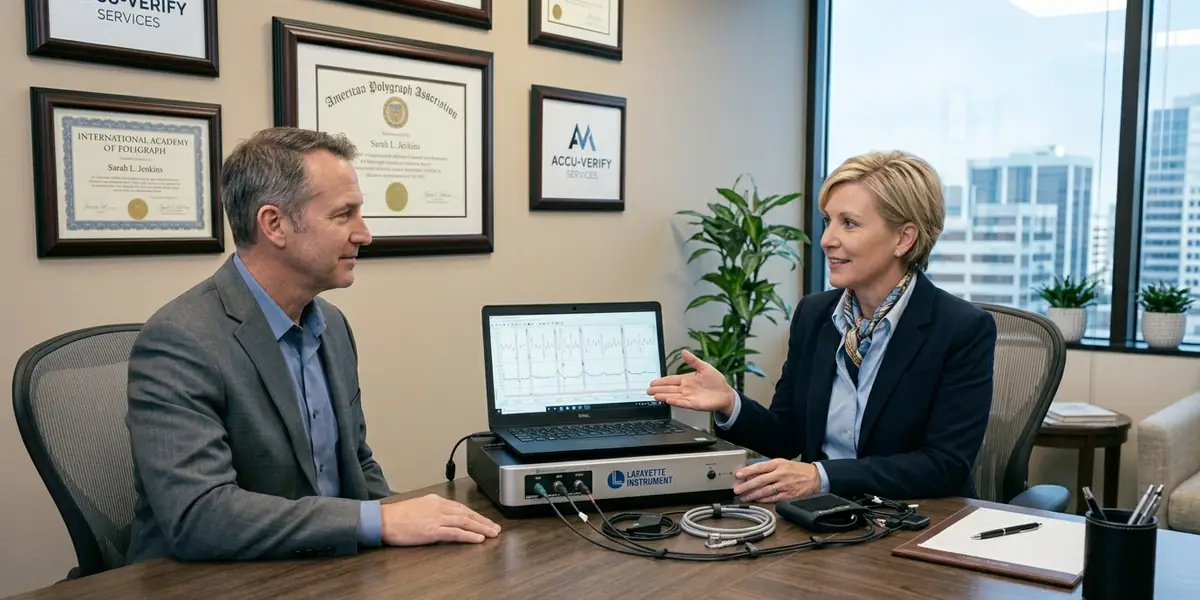
Before the procedure, you have every right to ask for the name and model of the equipment. A reliable polygraph examiner will gladly show their device, explain which sensors are used, and what each of them measures. If the specialist avoids answering or conducts testing on a laptop without external equipment, that is a serious reason to decline the service.
Also pay attention to the condition of the sensors. Worn, cracked, or damaged sensors produce inaccurate readings. A professional regularly replaces consumable components and calibrates the equipment. Ask when the device was last serviced — a competent specialist will be able to answer without hesitation.
A technique is the "recipe" by which an examination is conducted: which questions to ask, in what sequence, and how to evaluate reactions. Using the right technique is the difference between a scientific investigation and fortune-telling.
Unfortunately, some polygraph examiners use "proprietary" techniques that have never undergone scientific validation. The results of such examinations carry no weight in court or in the professional community.
A validated technique is a scientifically verified examination protocol whose accuracy has been confirmed by numerous experiments.
Validation means that the technique has been repeatedly tested under controlled conditions, compared against actual facts, and its reliability has been statistically confirmed.
In the world of polygraphy, there are several main validated techniques:
Non-validated or "proprietary" techniques that some specialists present as their own developments have not undergone scientific verification. Their accuracy is unknown, and results can be easily challenged in court or in the professional community.
Standard: According to APA recommendations, a polygraph examiner is required to use only techniques with proven validity and to inform the client which specific technique will be used. This is a professional ethics requirement.
Ask the polygraph examiner before the examination: which technique do they plan to use and why this particular one? A competent specialist will not only name the technique but also explain why it is optimal for your specific case — whether it is theft detection or personnel screening.
The pre-test interview is a stage that many clients underestimate, viewing it as "just a conversation before the test." In reality, it is the most important part of the entire procedure, determining the quality and reliability of all subsequent results.
It is during the pre-test interview that the foundation for the entire examination is established: rapport is built, the circumstances of the case are clarified, questions are discussed, and voluntary consent is obtained.
A pre-test interview is a conversation between the polygraph examiner and the examinee that takes place before being connected to the device. It is not just a formality — it is a key stage on which the quality of the entire examination depends. A quality pre-test interview lasts from 30 minutes to 1.5 hours.
During this interview, the polygraph examiner:
If the polygraph examiner:
Tip: A quality polygraph examination takes from 1.5 to 3 hours in total, including the pre-test interview, the procedure itself, and the post-test conversation. If you are offered "everything in 30 minutes," that is a sign of an unserious approach.
Membership in a professional organization is a kind of "quality seal," indicating that the specialist has been vetted by peers and has committed to upholding professional standards.
In Ukraine and worldwide, several organizations exist that unite polygraph examiners and oversee the quality of their work. Let us examine why this matters to you as a client.
Polygraphy is a field where professional self-regulation plays a crucial role. Unlike medicine or law, where strict government licensing exists, in polygraphy it is the professional organizations that serve as the quality control mechanism.
Membership in professional organizations is not just a line on a resume. It means that the specialist:
Several recognized organizations exist worldwide, and membership in any of them indicates a high level of examiner qualification. Each has its own entry requirements, code of ethics, and continuing education program:
| Organization | Level | Membership requirements |
|---|---|---|
| APA (American Polygraph Association) | International | Accredited education, annual training |
| EPA (European Polygraph Association) | European | Professional education, experience, code of ethics |
| Ukrainian Polygraph Association | National | Qualification verification, registry of specialists |
If a polygraph examiner is not a member of any professional association or cannot confirm their membership, that is a serious cause for concern. Note that the mere existence of a "nice" website or active social media accounts is not proof of qualifications. Only confirmed membership in an organization with transparent admission requirements indicates the real level of a specialist.
The last but no less important sign is the specialist's willingness to be completely open about the procedure, methods, and results. Transparency is not merely a courtesy — it is a professional obligation.
If a polygraph examiner cannot or will not explain what exactly they are doing and why, this is the most serious red flag of all those listed above.
Transparency is a fundamental trait that distinguishes a professional from an amateur. A specialist who is confident in the quality of their work has no reason to conceal any detail of the procedure or results.
A professional polygraph examiner provides a written report after completing the examination, which includes:
Warning: If the polygraph examiner refuses to provide polygrams (graphic recording of reactions) or offers only a verbal conclusion, this is unacceptable. Polygrams are primary documentation that allows another specialist to verify the correctness of interpretation.
A specialist who is confident in their work is not afraid of scrutiny. They are ready to:
In contrast, an unprofessional examiner often limits themselves to a brief text message: "Result — deception" or "Passed the test." Such a "conclusion" has no legal or professional value whatsoever.
We have compiled all the criteria into one convenient checklist that you can use during your first contact with a polygraph examiner. Save it and go through each point before making your decision.
Each item is a specific question you can ask during your first call or correspondence. A professional will answer every one of them clearly and specifically:
| N | Question | Expected answer |
|---|---|---|
| 1 | Where did you study polygraphy? | Specific school name, number of hours |
| 2 | How many years have you been practicing? | At least 3 years, specific number of examinations |
| 3 | What equipment do you use? | Manufacturer name and model |
| 4 | Which technique do you plan to use? | Name of a validated technique (CQT, DLST, etc.) |
| 5 | How long does the procedure take? | 1.5 to 3 hours |
| 6 | Will you conduct a pre-test interview? | Yes, mandatory |
| 7 | What will I receive after the examination? | Written report with polygrams |
| 8 | Are you a member of a professional organization? | Yes, with the ability to verify |
Rule: If the polygraph examiner refuses to answer even one of these questions or gives vague answers, consider other options. A professional is always open to dialogue.
Even knowing all 7 signs of a reliable specialist, people continue to make typical mistakes when choosing. These mistakes are not due to a lack of information, but rather to stereotypes and false expectations.
Let us examine four of the most common mistakes that can cost you money, time, and — most importantly — a reliable result:
The cheapest offer on the market is almost always a sign of low quality. Professional equipment, education, office rental, insurance — all of this costs money. If you are offered an examination at a price that is half the market rate, ask yourself: what is this specialist cutting corners on?
At the same time, the most expensive service is not a guarantee of quality either. Focus not on price, but on the objective signs described above.
The average cost of a quality polygraph examination in Ukraine depends on the complexity of the topic, the number of questions, and the region. The best approach is to compare several offers and assess what exactly is included in the price: whether the pre-test interview is included, whether a written report is provided, and whether professional equipment is used.
A recommendation is a good thing, but it does not replace independent verification. Your acquaintance may be satisfied with the result even if the examination was conducted poorly — they simply do not know what a proper procedure should look like.
Furthermore, your acquaintance's experience may have involved a completely different field. A specialist who works well with corporate screenings may not have sufficient experience in family matters — and vice versa. Therefore, even with a recommendation, always ask the clarifying questions from our checklist above.
Many people believe that "a polygraph is a polygraph" and all specialists work the same way. This is not the case. Different techniques have different levels of accuracy for different types of tasks. For example, the technique for screening employees for arbitration teams differs from the technique for verifying marital fidelity.
If a polygraph examiner cannot explain which specific technique they use and why it is suitable for your situation, this indicates either insufficient qualifications or the use of non-validated "proprietary" approaches. In both cases, the results of such an examination will be highly questionable.
The examination must be conducted in a quiet room, isolated from noise, with a comfortable temperature. If you are offered to take the test in a cafe, in a car, or in a room where strangers are walking around — decline. External stimuli distort the results.
The ideal room for a polygraph examination is a separate office without windows facing a busy street, with even lighting and a stable temperature of 20-24°C. There should be no strangers in the room, no ringing phones, or other distracting factors. Professional polygraph examiners, as a rule, have an equipped office or rent an appropriate space for on-site examinations.
Now that you know all the selection criteria, a practical question arises: where exactly should you look for a specialist who meets all these requirements? Random searching on Google or classified ads is not the best option, as it is difficult to verify qualifications there.
There are several trusted sources for finding a qualified specialist:
Our specialists work in all regional centers of Ukraine. Contact the representative office in your city:
We also provide mobile polygraph testing services — a specialist will come to you with a full set of professional equipment.
Choosing a polygraph examiner is a decision that should be made consciously. Let us summarize the 7 key signs of a reliable specialist:
Do not entrust your fate to a random specialist from the internet. Verify, ask questions, compare — and choose the one who meets all the criteria of professionalism.
If you have any questions or would like to schedule a test with a qualified polygraph examiner — contact us. The specialists of the Ukrainian Polygraph Association are ready to help in any situation.
The cost depends on the complexity of the topic, the number of questions, and the region. Do not focus on price alone — an unusually low price often means cutting corners on equipment quality, procedure time, or the examiner's qualifications. Compare offers using the objective criteria from our checklist.
Membership in a professional organization is an important but not the only criterion. Some experienced examiners may not be members of associations for various reasons. However, the absence of membership means that the specialist is not bound by the organization's code of ethics, and you will not be able to file a complaint in case of violations. Therefore, we recommend giving preference to examiners with verified membership.
Key signs include: a device without computer connection (analog), fewer than 5 recording channels, no motion sensor on the seat, and worn or damaged sensors. Ask for the name and model of the device — if the specialist cannot answer or names an unknown brand, that is a cause for concern.
No, and if someone promises 100% accuracy, it is a sign of unprofessionalism or manipulation. The highest proven accuracy of validated techniques is 87-95%. An honest specialist will always inform you about the possible limitations of the method and explain what the reliability of results depends on in your specific case.
You have the right to request the polygrams (graphic recording of reactions) and consult another qualified polygraph examiner for an independent evaluation of the report. This is precisely why it is so important to choose an examiner who provides a complete set of documents after the examination.
How a Lie Detector Works: Physiology, Technology, and Stages of a Polygraph Test The term "lie detector" is familiar to...
Read more →

1
2