Long-standing suspicion is rarely settled by conversation: each side keeps its own version of events. A lie detector test moves the discussion onto verifiable ground — there is a question agreed in advance, and there is a recorded physiological response to it.
The consultation is free of charge. Call-backs are made between 08:00 and 22:00, seven days a week.
A single episode is rarely the reason for an enquiry: as a rule, a series of circumstances accumulates for which no explanation is offered. Most enquiries fall into four situations.
If your situation matches none of the four, describe it in the enquiry form. At the consultation the examiner will establish whether detection of marital infidelity applies to it at all.
A lie detector test ends with two outcomes, both of which stay with the client.
The examiner reviews the chart in your presence and states a conclusion for each question separately.
A written report: the methodology used, the full question list, the recorded responses, the date and a signature.
The accuracy of the method when questions are correctly constructed. Absolute certainty is not something it offers.
The session is predictable by design: no surprise questions and no provocation. You know in advance what will be asked, and you may strike out any wording that does not suit you.
Free, by phone or at the office. It may conclude that no test is needed
Wordings are agreed with you; any one of them may be removed
The polygraph records breathing, pulse, blood pressure and skin response
1.5–2.5 hours. Repeating questions is part of the methodology
Verbally on the day, in writing within 24 hours

No special preparation is required; the countermeasures described in open sources only make the session longer. A few conditions are enough: a full night's sleep, no alcohol or stimulants, and notice of any medication you take. The instrument responds to changes in physiological indicators, so a steady baseline matters more than preparation. After severe stress the session is better postponed, and the examiner will say so at the consultation, before any payment is made.
This is the most frequent question at the enquiry stage. One test is built around one episode: three or four of its questions are relevant ones, the rest are neutral and comparison questions needed as a baseline. Wordings are short, with no "why" and no double negatives: the instrument gives no clear answer to those.
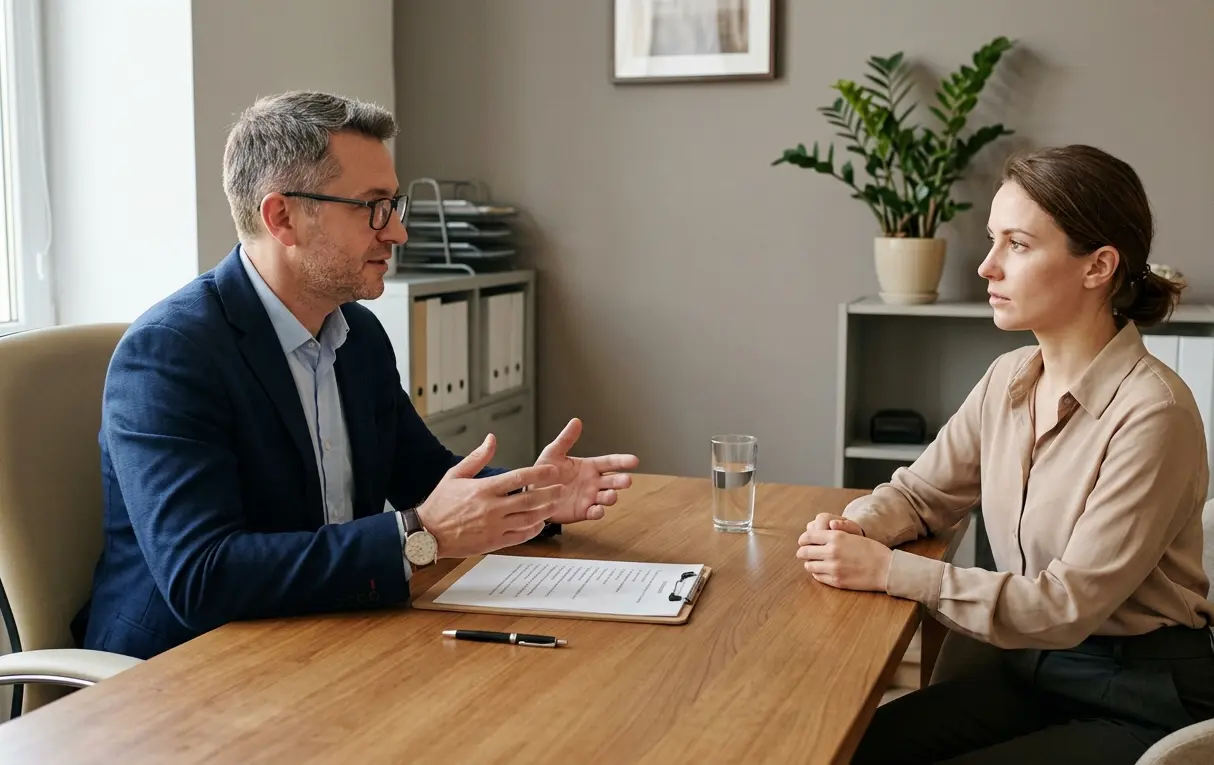
The test format is fixed during the pre-test interview: one methodology is applied to one episode under examination. Mixing separate topics within a single session is not acceptable, as it lowers accuracy. If there are more questions than one test can hold, a second session is scheduled, usually on the same day.
The capabilities and the limits of a lie detector are worth knowing before you book. The instrument neither reads minds nor reconstructs events: it records responses to the questions put to the examinee.
| It answers | It does not answer |
|---|---|
| Whether a specific episode occurred within the stated period | What your partner feels towards another person |
| Whether the examinee is concealing a fact they are asked about | What will happen to the relationship next |
| Whether they previously gave false information on the subject | Who is to blame for the crisis |
| How consistent the answers are with one another | Details that no question covered |
Important. The result is a probabilistic conclusion for each question, not a verdict. The more precisely the subject matter is defined, the clearer the answer.
The conclusion for each question takes one of three forms: responses typical of a truthful answer; responses typical of a deceptive answer; or an inconclusive result. The last of these does not indicate an error by the examiner — it means the data is insufficient for a definite conclusion. In that case a repeat test is possible.
Below are the questions most often raised at the consultation, answered from the methodology rather than in general terms.
A refusal is not evidence, and no examiner treats it as a sign of concealment. In practice consent often follows once the person has seen the question list: what troubles them is not the procedure but the assumption that their entire private life is open for discussion. The test is confined to one episode and to the agreed wordings.
Countermeasures — holding the breath, tensing muscles, counting silently, taking medication — are documented in the professional literature and leave characteristic traces on the chart. Multi-channel recording separates them from a natural response: the examiner logs the attempt separately, and the conclusion is stated as "an attempt at countermeasures" rather than as truth or deception.
No. Anxiety is common to most examinees and is accounted for by the methodology. The pre-test interview establishes your individual level of arousal, after which responses to the relevant questions are compared with responses to the comparison questions, not with some notional calm norm.
The session is postponed in cases of acute illness, pregnancy, or a state following severe stress or bereavement. A separate case is a situation in which the result will plainly change nothing between the parties: where that is clear at the consultation, the examiner says so before any payment.
No. Written voluntary consent is required. Beyond the formal grounds there is a methodological limit: under coercion physiological responses change and the reliability of the result falls.
The session takes 1.5–2.5 hours, including the pre-test interview and the briefing. The verbal conclusion is given the same day; the written report follows within 24 hours.
Yes, and such enquiries are common. Partners take separate sessions on an identical set of questions: that removes any sense of a one-sided examination and allows the two results to be compared.
The verbal conclusion is given on the day of the session, after which the document is drawn up. It is the document that remains with the client: unlike a verbal account, it does not lose detail over time.
The report excludes circumstances of private life, the names of third parties and emotional detail. That is deliberate: a document of this kind may end up in the hands of people it was never meant for.
Clients use the report for decisions inside the family; it may be handed to a lawyer or submitted as part of a case at the party's own initiative. Its weight comes not from the document itself but from the assessment of the body reviewing it, and detection of marital infidelity remains first of all a tool for the people directly involved.
The fee depends on the country and on the format of the session, so current figures are kept on the country pages rather than in a single service price list — that way the numbers never contradict one another between locations. The countries where our examiners work are listed at the foot of this page.
The exact figure is quoted at the consultation, before anything is booked. The consultation itself is free.
Every examiner holds specialist training and has at least five years of practice. The name of the examiner who will run your session is given when you book. Equipment and methodology are the same at every office: the lie detector records no fewer than four physiological channels at once.
The examiner does not pass judgement on anyone's conduct and does not mediate the dispute: the task is to obtain an answer correctly. Testing follows the methodology accepted in the professional community, and the examiner signs for every conclusion in the report.
Details of the training and specialisation of each examiner are published in the register of polygraph examiners of Ukraine.
The handling of material is identical at every office and does not depend on the country in which the session took place.
If the situation runs wider than a single episode and the issue is a prolonged conflict, it is more sensible to begin with resolving family conflicts. If the answer is needed before a marriage, the task is covered by a check before entering into marriage.
A few minutes on the phone are enough to establish whether detection of marital infidelity is needed at all. If it is not, the examiner will tell you so.
Your enquiry is confidential. Your data is never passed to third parties.
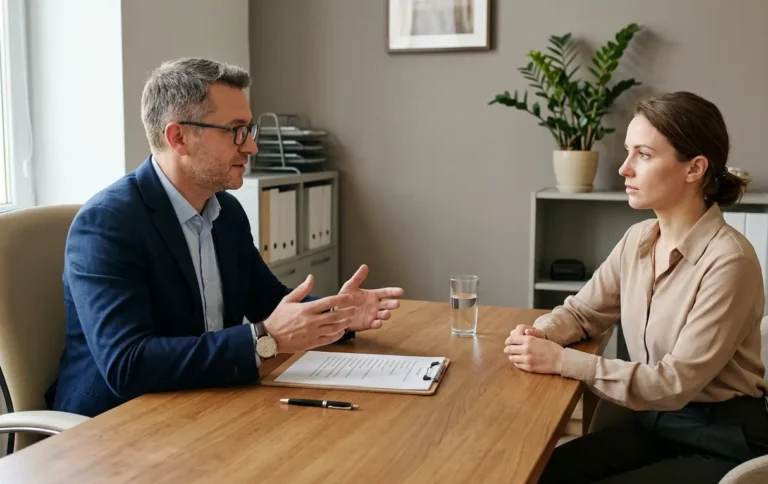
What Questions Are Asked on a Polygraph: Types, Examples and What You Cannot Ask Editorial Team, Polygraph Examiners...
Read more →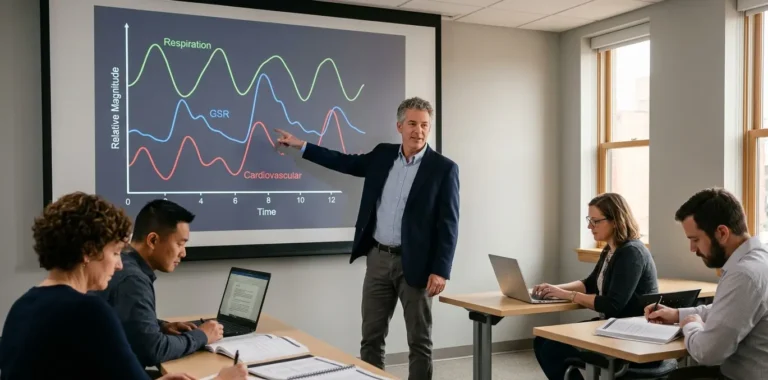
How to Become an Expert Polygraph Examiner: Training, Certification and the Path to Professionalism Editorial Team...
Read more →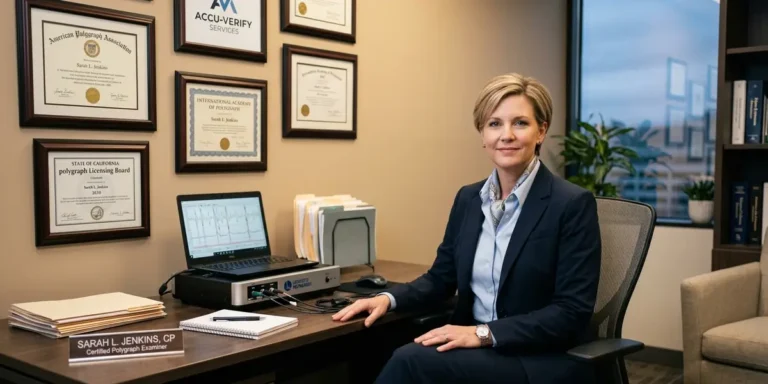
How to Choose a Reliable Polygraph Examiner: 7 Signs of a True Professional A lie detector test is a serious procedure...
Read more →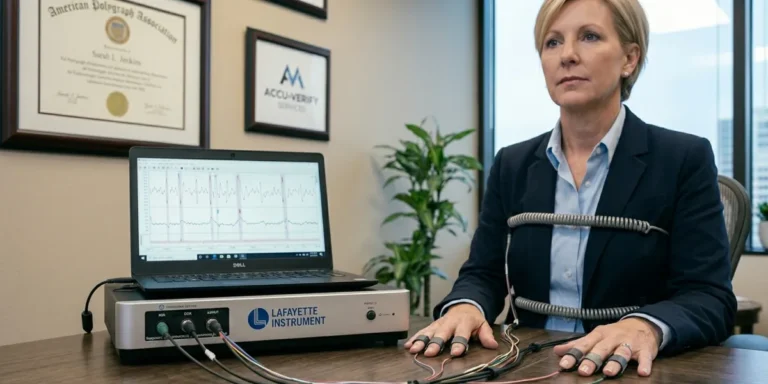
How a Lie Detector Works: Physiology, Technology, and Stages of a Polygraph Test The term "lie detector" is familiar to...
Read more →Certified SPU examiners work across Europe, Asia and North America — choose your country


1
2