
The Polygraph Examiners Union of Ukraine (SPU) runs certified lie detector tests in London — at our room on Regent Street or at an address you name, from the City to the outer boroughs. The preliminary conclusion is yours on the day of the test.
A standard private lie detector test in London is £365 and covers one person on one topic; from the pre-test interview to the conclusion it takes 1.5–2.5 hours, with accuracy of 95–98%. Sessions run at 4-12 Regent Street, London SW1Y 4RG, or wherever suits you — a flat in Islington, an office near Canary Wharf, a meeting room in Croydon. The examiner gives you a preliminary answer before you leave, and the signed written report follows within 3–5 business days at no extra cost. Online sessions are £150. Every SPU examiner appears in the official Register of Polygraph Examiners of Ukraine, and the first conversation is free.
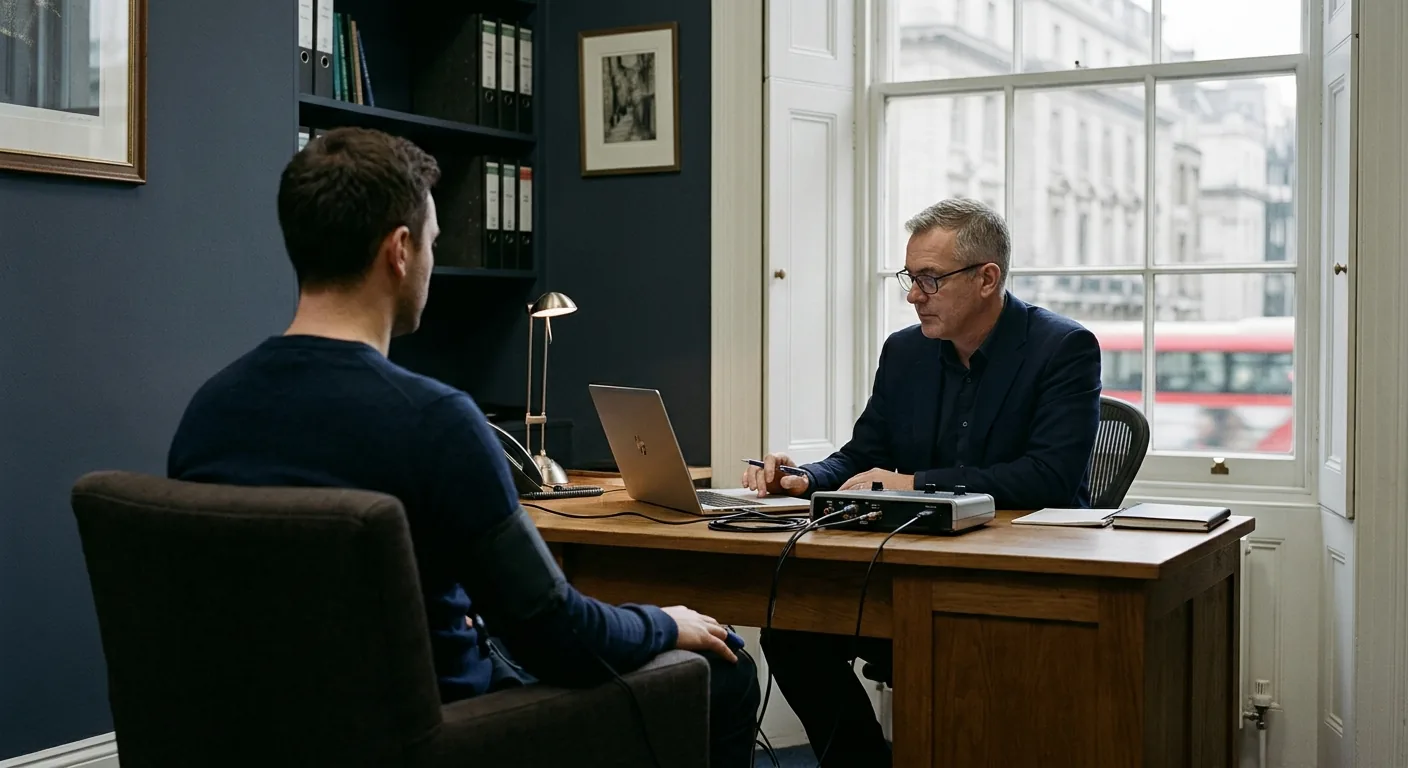
Nobody books an examination early. It happens after the arguing has run its course, after the explanations have been offered and found wanting, and after it has become clear that no further conversation is going to settle anything. These are the requests that reach us most often from the capital.
Two features of the city shape almost everything that reaches us. The first is that people here can disappear into their own lives entirely. Neighbours do not know each other, colleagues rarely meet outside work, and a person can hold two versions of themselves apart for years without anyone noticing the seam. When one of those versions finally surfaces, there is no community memory to check it against — only one person's word.
The second is money in motion. Deposits, private loans between friends, cash businesses, informal arrangements between people who never wrote anything down because they trusted each other at the time. When one of those arrangements goes wrong, the sums are large enough to matter and the paperwork is thin enough that nothing can be traced. A lawyer will tell you honestly that there is nothing to litigate. That is usually the week somebody looks for us.
There is also the plain matter of geography. A journey across town at the wrong hour can take longer than the appointment itself, which is why more sessions here happen at the client's own address than in our room. Nobody should have to cross the city twice in a day to answer a question about their own life.
You and the examiner settle the exact wording of everything that will be asked. Nothing goes into the test that you have not read and accepted first. This stage takes longer than people expect and decides most of the outcome.
Taking part is a choice and the paperwork records it. Whoever is being examined can bring the session to a halt at any moment, and is told so before a single sensor is attached.
Breathing, cardiovascular activity and skin conductance are tracked while the agreed questions run in several standardised sequences. Nothing is invasive and nothing is uncomfortable.
Charts are read on the spot and you are told the preliminary outcome face to face. The signed written report reaches you within 3–5 business days.
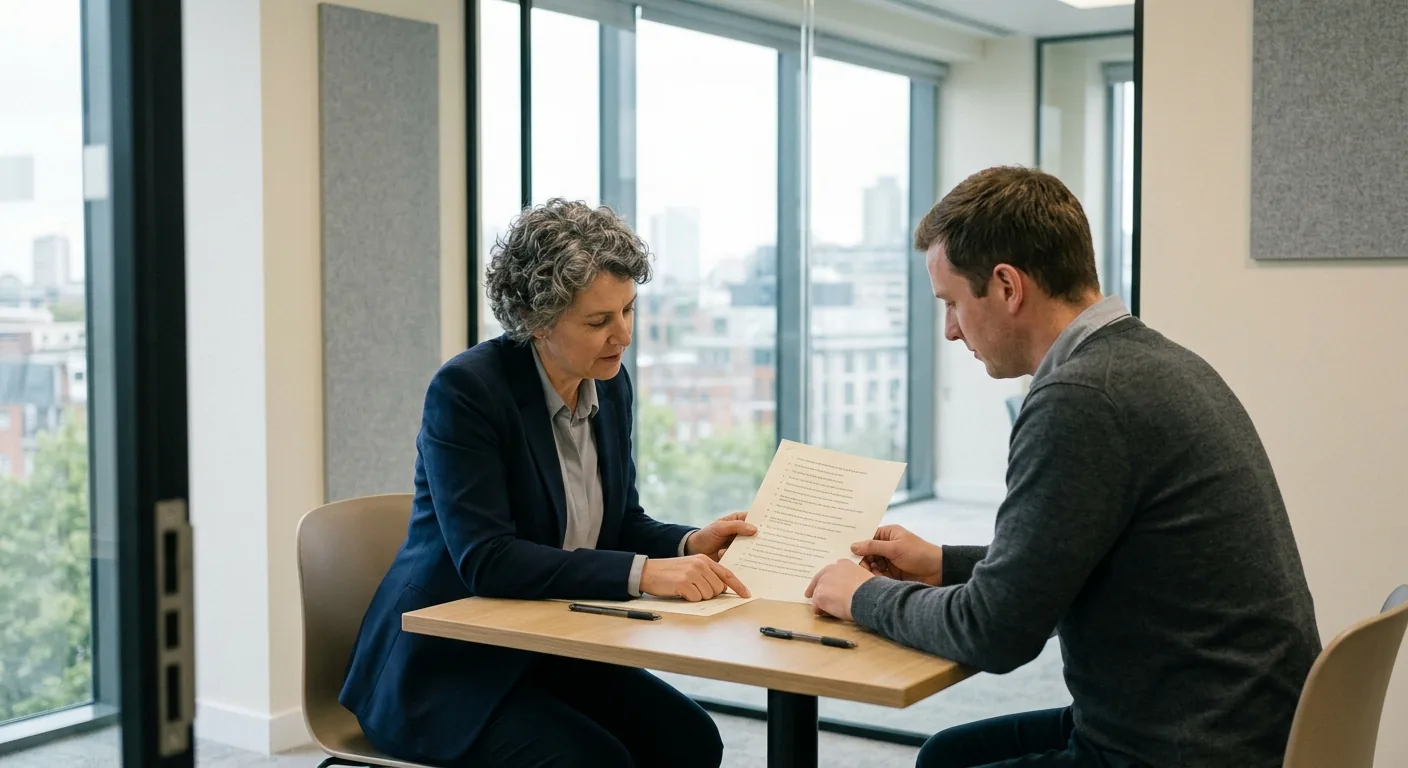
A single figure for a standard examination rather than an hourly meter, so the cost is settled before anything is booked. Talking it through beforehand costs nothing, and the written report is part of the price rather than an extra at the end. Being in the capital adds nothing: the rate here is the national one, and the examiner's journey inside Greater London is not charged for.
| Format | What it covers | Price, GBP |
|---|---|---|
| Standard lie detector examination | One person, one question; interview and testing run 1.5–2.5 hours between them; signed report included | £365 |
| Online-format examination | For cases where those involved are in different countries and one room could never hold them | £150 |
| Testing in a foreign language | Added when the session must run outside the languages the examiner works in | +£70 |
| Multi-topic or corporate examination | Several people, a company investigation, or a date the diary has to be cleared for | Quoted individually |
Most private requests sit at the standard rate, among them settling a family conflict, a check before a marriage, an examination arranged through a solicitor and a visit by the examiner to your own address. A screening check for a role is priced case by case, since what it costs follows how many people sit the session.
Treat the table as a starting point. The figure you actually pay is agreed during the consultation, once the number of questions and the number of people are known.
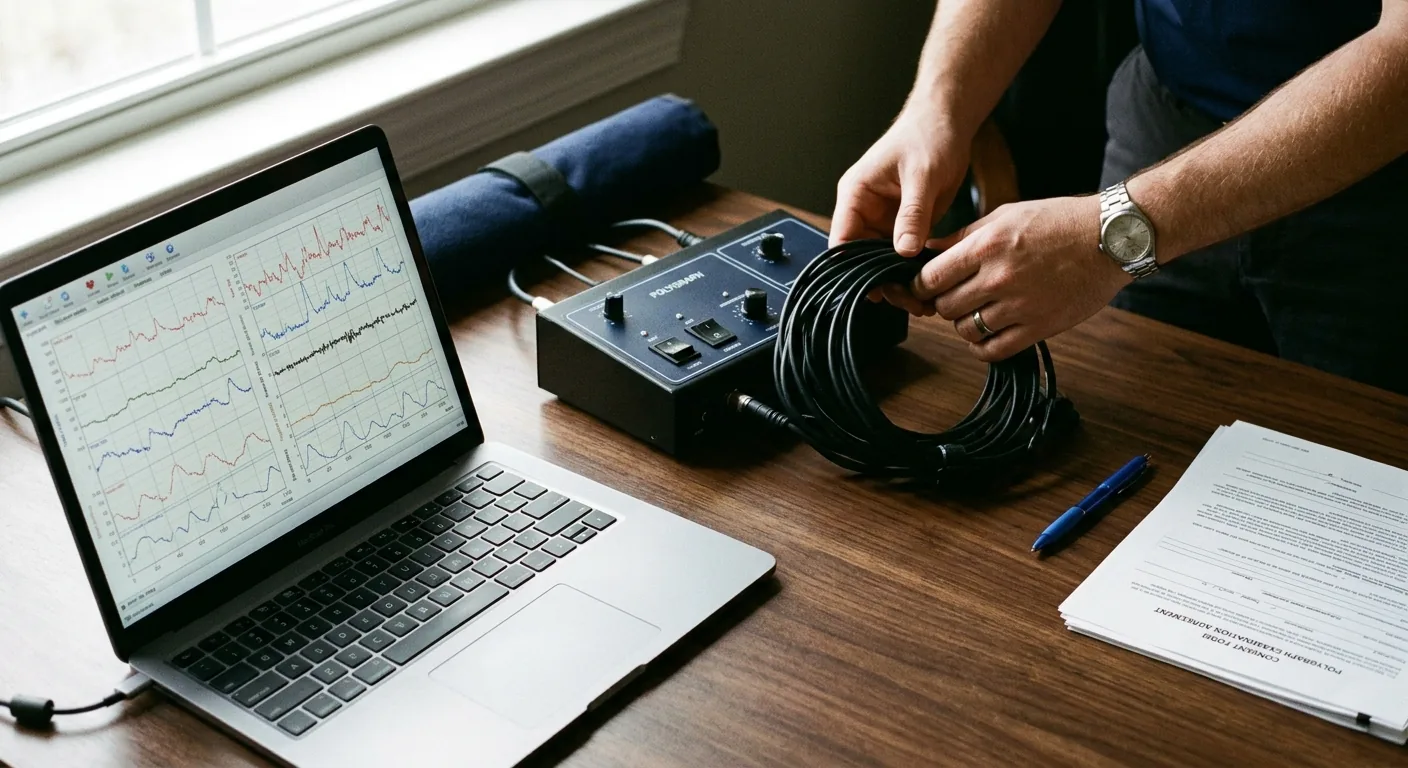
Sessions in the capital are run by SPU-certified examiners and by local partner examiners held to the same union protocols and the same consent procedure. Names are not published on the site: much of this work is confidential by its nature and clients would rather it stayed that way. You will be told who is attending before the appointment.
Takes the cases where an organisation or an individual needs a specific fact established — where a figure went, why stock does not reconcile, what a borrower actually knew. Works with the owner or the solicitor to narrow a sprawling suspicion into something a test can genuinely answer, which is where most such requests fail before they begin.
Takes the appointments people put off making for months. Spends more time on the pre-test interview than the recording lasts, because the real difficulty in a private case is turning a long and painful history into three or four questions that can be answered plainly.
A small bar was losing between forty and sixty pounds most weeks, never enough to trigger anything formal and never traceable to a shift. Six people held keys. The owner had reached the point of replacing all of them and losing a team that worked well together. Five agreed to an examination and one asked for a day to think, then agreed too. The session settled it, the person concerned left quietly, and nobody else spent another month being quietly suspected by their colleagues.
A four-year-old agency with two owners found a payment to a consultancy that neither of them had authorised and each believed the other had. It was not a large sum, but it sat between them for six weeks and started to reach the staff. They agreed to be examined on the same afternoon, on questions they drafted together with their accountant present. The result cleared one of them outright and identified where the authorisation had genuinely come from — a bookkeeper acting on an instruction they had misread months earlier.
After a separation, a man in north London found himself accused, in a message circulated to thirty relatives, of something he insisted had never taken place. There was nothing to investigate and nobody to appeal to — only a version of events that had already been read by everyone he was related to. He asked to be examined and for a report he could show. It did not delete the message, but it gave him something to offer people other than his word repeated more loudly.
A family found several withdrawals from their mother's account over four months and the only person with regular access was the carer who had been with her for three years. The family did not want to go to the police and could not simply carry on. The carer, told what had been found, asked for the examination herself. The result supported her account; the withdrawals turned out to have been made by the mother, who had been giving money to a caller on the telephone. The family kept the carer and changed the phone number.
People come to us with things they have not told anyone close to them. Discretion in this work is a written procedure with steps in it, not a phrase offered at the door.

Standardised CQT and CIT protocols run on professional equipment

Regent Street, or the examiner travels to any borough at no extra charge

The outcome is given before you leave; the document follows in 3–5 business days

Signed consent, a closed room and a confidentiality procedure that is written down

Examiners listed in the public register and answerable to the union

Settled before the booking, with the written report already inside it
An employer may put an examination forward but has no power to require one. Taking part must be voluntary, consent has to be informed and in writing, and whatever is recorded falls under the same data-protection duties as any other personal information. Inside those boundaries, companies here use testing for a narrow set of purposes: getting to the bottom of one identified incident such as a shortfall or a leak, voluntary screening for roles that touch cash, stock or client records, and periodic checks that staff have agreed to in advance. What comes back informs a decision. It is not a substitute for a fair internal process, and an examiner worth hiring will refuse to let it become one.
Several people at once. From five respondents upwards we work to a case rate and fit the schedule around your trading hours — usually early starts or a weekend day at your own premises. Send a message and you will have an answer the same day.
Our room is at 4-12 Regent Street, London SW1Y 4RG, a few minutes from Piccadilly Circus and straightforward to reach from any line. Just as often the examiner travels instead: the City, Canary Wharf, Islington, Camden, Hackney, Shoreditch, Chelsea, Fulham, Wimbledon, Richmond, Ealing, Harrow, Enfield, Stratford, Greenwich, Bromley and Croydon, and out into the commuter towns — Watford, St Albans, Kingston, Sutton, Romford. For a great many clients an appointment at their own address is simply the shorter journey.
Any quiet closed room of roughly 10 m² will serve: a room at home, a meeting room, a rented office, a hotel room. What the session actually needs is privacy and two uninterrupted hours, not a particular sort of space. For cases elsewhere in the country the same terms apply — see lie detector testing nationwide.
When we reply: messages on WhatsApp, Telegram and Viber are answered daily, 06:00–20:00 local time.
Private, voluntary testing is entirely lawful, and what you hold afterwards is a signed document from a certified examiner. The courts of England and Wales, however, do not treat such findings as evidence in the ordinary sense, and a report is not something you can expect to decide a case on its own. Placed beside other material — in a private dispute, a negotiation, a family matter, a decision taken inside a company — it does the work our London clients actually need from it. Where proceedings are a genuine prospect, discuss the format with your solicitor before booking and the examination will be built around what they need.
There is no preparation to be done, which people find harder to accept than any other part of this. Sleep as you normally would, leave alcohol and sedatives alone the day before, eat an ordinary breakfast, and allow enough margin that a delayed train does not decide your morning. Prescribed medication is not a problem — mention it during the interview and it is factored in, as it is every week.
Nerves are the norm and make no difference to the outcome: every question will already have been agreed with you, and the method exists precisely to distinguish ordinary anxiety from a concealment response. What does register, plainly and unhelpfully, is any effort to control your own breathing. If you would like to understand the mechanics first, our explanation of how a lie detector works sets it out.
£365 for the standard examination: one person, one topic, 1.5–2.5 hours, with the signed report included in that figure. Online it is £150, and a session outside the examiner's working languages adds £70. Cases involving several people or several topics are quoted individually after the free consultation. Nothing is added for the capital, and travel inside Greater London is not charged.
No: one procedure, two names. “Polygraph” is the instrument, “lie detector” the everyday word for it. A polygraph test in London and a lie detector test in London are the same appointment, at the same £365, with the same certified examiner working to the same protocols.
Usually you do not travel at all: the examiner comes to you. Sessions take place at 4-12 Regent Street in SW1, or at an address you name — Camden, Hackney, Islington, Wimbledon, Ealing, Stratford, Croydon, Bromley and the commuter towns among them. A closed room of about 10 m² is the only requirement, whether that is at home, in a rented office or in a hotel.
From 1.5 to 2.5 hours between arrival and conclusion. The larger part of that is the pre-test interview, where every question is agreed with you word by word; the recording is the shorter half. You are told the preliminary answer before leaving and receive the signed report within 3–5 business days.
95–98%, provided the examination follows standardised CQT and CIT protocols on professional equipment, the questions were agreed beforehand and the person is in a fit state to be tested. Accuracy drops when a question is too broad to answer yes or no, which is exactly why the interview carries more weight than anything else in the process.
Not as ordinary evidence. The courts of England and Wales do not treat such findings that way, and a report will not decide a case by itself. Alongside other material it can support a position, and in private disputes and negotiations it frequently does. If proceedings are realistic, agree the format with your solicitor before you book.
No. An employer is free to propose one, but taking part is voluntary and requires informed written consent, and declining is not itself a finding. Where the consent looks less than genuine we decline the work, and we say so to the company rather than to the employee.
Under-18s are examined only with the written consent of a parent or guardian, who stays present throughout, and only where the young person agrees. If the interview suggests the real subject is a family conflict rather than a question a test can answer, we say so and advise against the session.
Yes, at £150, and it is the usual route when the people involved are in different countries. The interview and consent procedure are identical. Where meeting in person is realistic we would still recommend it: the examiner sees the whole person rather than a video frame.
Describe the situation in a message and we will tell you honestly whether an examination will answer it. The consultation costs nothing and commits you to nothing.
Leave a name and a way to reach you and we will come back the same day with available times and a firm figure. If it is urgent, a message on WhatsApp or Telegram gets to us faster than the form does.
Address: 4-12 Regent Street, London SW1Y 4RG
Email: contact@polygraph-spu.com
Hours: daily, 06:00–20:00
What Questions Are Asked on a Polygraph: Types, Examples and What You Cannot Ask Editorial Team, Polygraph Examiners...
Read more →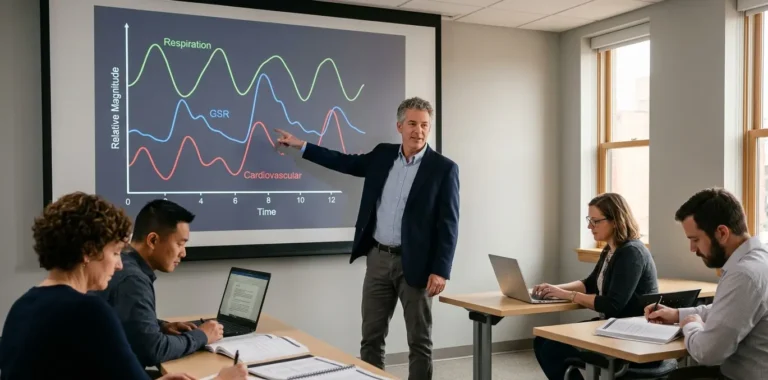
How to Become an Expert Polygraph Examiner: Training, Certification and the Path to Professionalism Editorial Team,...
Read more →
How to Choose a Reliable Polygraph Examiner: 7 Signs of a True Professional A lie detector test is a serious procedure...
Read more →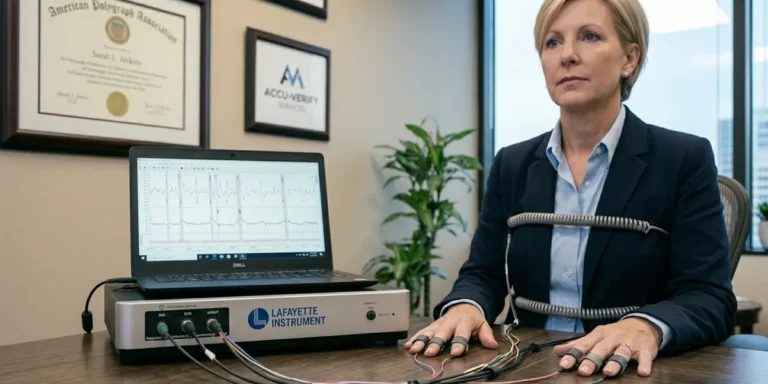
How a Lie Detector Works: Physiology, Technology, and Stages of a Polygraph Test The term "lie detector" is familiar to...
Read more →Certified SPU examiners work across Europe, Asia and North America — choose your country


1
2