
The Polygraph Examiners Union of Ukraine (SPU) runs certified lie detector tests in Glasgow — at our room on West Regent Street, at an address you name across the city, or anywhere else in Scotland the examiner can reach. You hear the preliminary conclusion on the day itself.
A private lie detector test in Glasgow costs £365 for the standard examination: one person on one topic, 1.5–2.5 hours covering the interview and the testing, at 95–98% accuracy. Sessions take place at 1 West Regent Street, Glasgow G2 1RW, or at a place of your choosing — a flat in the West End, premises in Govan, a meeting room in Paisley — and the examiner travels elsewhere in Scotland on the same terms. You are given the preliminary outcome in person before you leave; the signed report follows within 3–5 business days at no additional cost. Online sessions are £150. Anyone examining under the SPU name is recorded on the official Register of Polygraph Examiners of Ukraine. That opening conversation carries no fee.
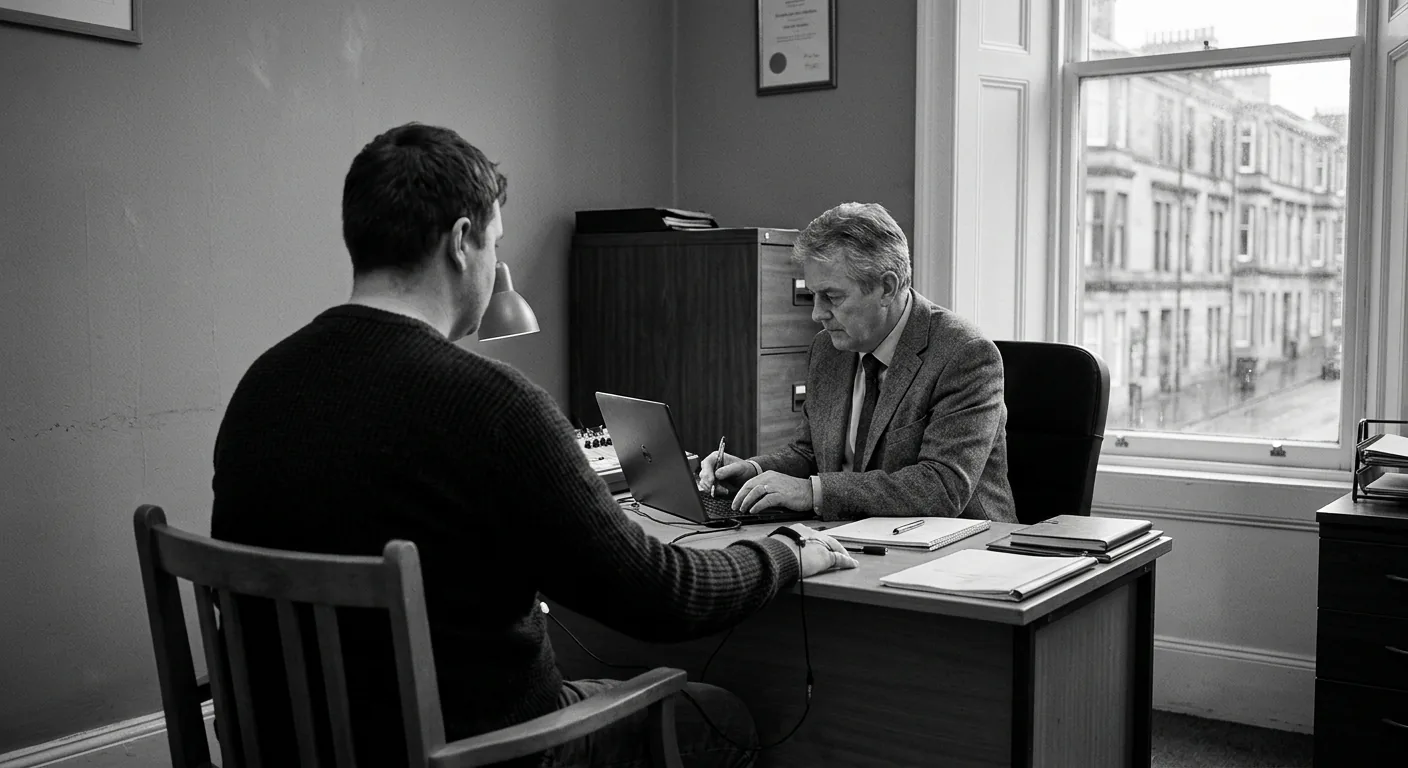
The call rarely comes early. It comes once the thing has been aired, denied, aired again and then left alone, and once it is plain that another round of talking will land precisely where the last four landed. These are the requests that reach us most often here.
This is a large city that behaves in places like a much smaller one. People stay near where they grew up, families and friendships overlap, and word travels through a neighbourhood faster than through any formal channel. That has a cost when something is alleged: an accusation does not stay between the two people involved, and by the time anyone thinks of an examination, half a street has already reached its own verdict. A signed report matters here partly because there is an audience for it.
Hospitality supplies a steady share of the business cases. Bars, restaurants, clubs and hotels employ a great many people on shifts, with keys passed around and stock counted by eye. Losses in that setting are gradual, never quite provable, and by the point an owner acts they are usually looking at a rota of six names rather than a single suspect.
Then there is the geography of the rest of the country. This city is where people come in from — from Ayrshire, Lanarkshire, the coast, sometimes considerably further north. A journey of two hours each way is a normal part of a working day for a lot of clients, which is why so many sessions are arranged at their own address instead.
Everything begins with agreeing the precise wording of what gets asked. Not a single question enters the test unless you have read it and accepted it first. This takes up the largest part of the appointment and decides the largest part of the result.
Sitting the examination is a choice and the paperwork treats it as one. Whoever is tested can stop at any moment they choose, and they are told this before anything is connected.
Breathing, cardiovascular activity and skin conductance are recorded as the agreed questions run through several standardised sequences. Nothing hurts and nothing enters the body.
The examiner reads the charts immediately and gives you the preliminary finding face to face. The signed written report reaches you inside 3–5 business days.
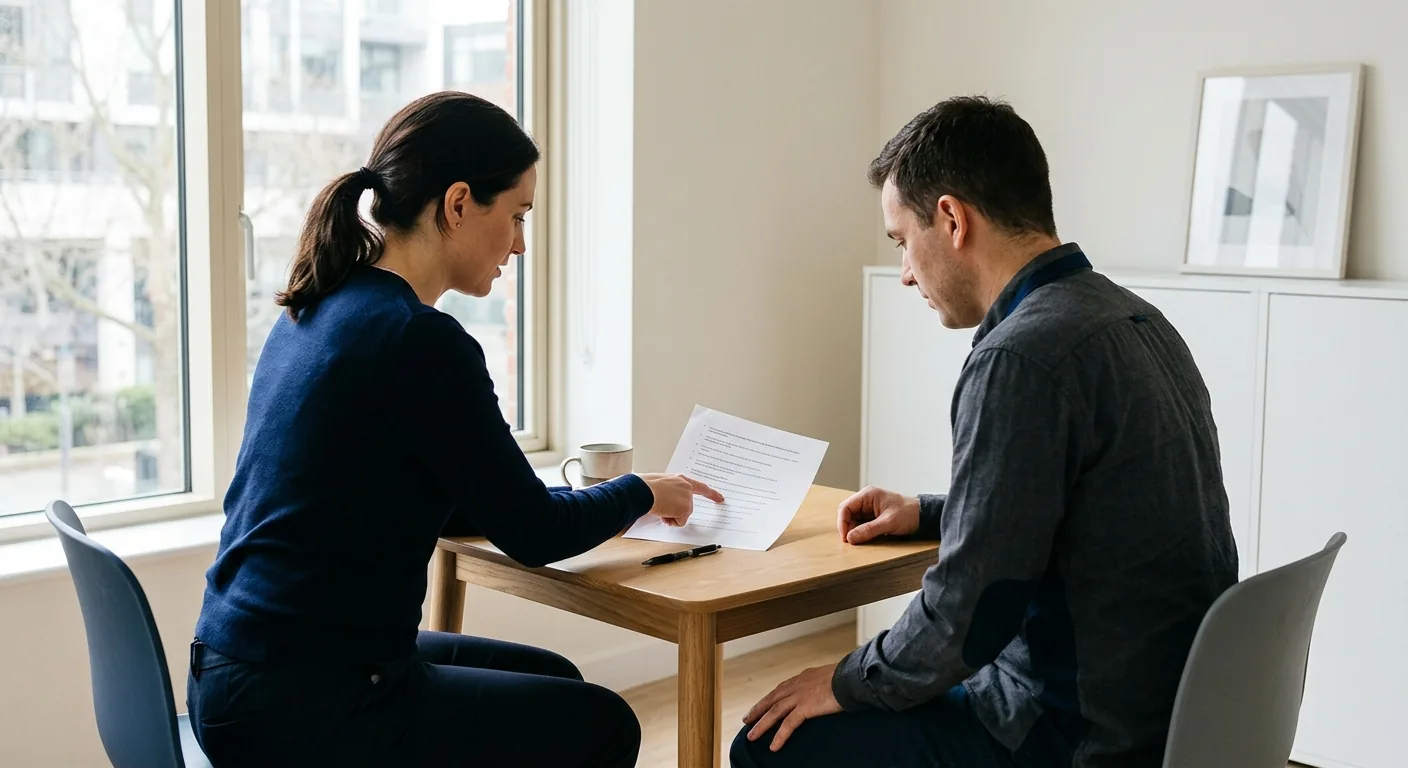
One figure for a standard examination rather than a clock running, so the cost is settled before anything is arranged. The conversation beforehand costs nothing and the written report sits inside the price instead of arriving as an addition. The rate here is the national one, with no premium for the city and no charge for the examiner's journey anywhere in the west of the country.
| Format | What it covers | Price, GBP |
|---|---|---|
| Standard lie detector examination | One person, one topic; the interview and testing together run 1.5–2.5 hours; signed report included | £365 |
| Online-format examination | Where those concerned are in different countries and one room was never going to hold them | £150 |
| Testing in a foreign language | Added where the session has to be conducted outside the examiner's working languages | +£70 |
| Multi-topic or corporate examination | Several people, a company matter, or a date the diary has to be opened up for | Quoted individually |
The standard rate absorbs most of what private clients ask for: a disagreement within a family, an examination ahead of a wedding, testing instructed by a legal adviser, an appointment at an address of your own. Only screening for a post sits outside it, and only because the hours involved climb with every extra candidate.
Take the table as an opening position. What you actually pay is fixed at the consultation, once the number of questions and the number of people are known.
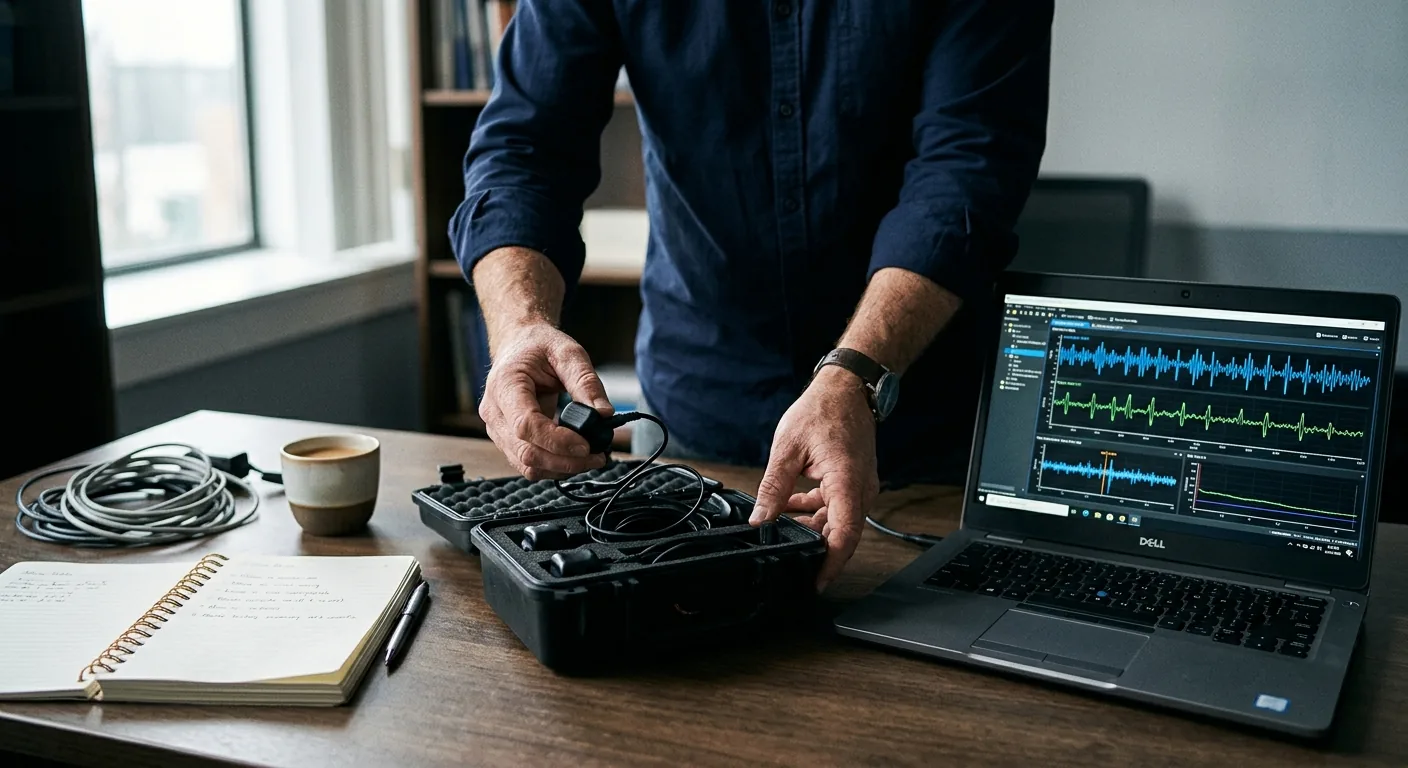
Two groups do the work: examiners certified by the union and partners based locally, bound to the same protocols and to a consent procedure that does not vary. No names go on the website, and that is deliberate — the nature of these cases is private and clients would rather it stayed private. Ahead of the appointment you will be told who is coming.
Takes the cases where an owner needs one specific fact established rather than a general impression of who is to blame — where a cellar shortfall began, whether stock left through the back door, what a candidate's account of a dismissal is actually worth. Works with the client to narrow a broad suspicion into something a test can answer, which is the stage most such enquiries never get to.
Takes the appointments people think about for months before making. Gives the pre-test interview more time than the recording occupies, since the hard part of a private case is reducing years of accumulated history into three or four questions that can be answered with a yes or a no.
A city-centre bar was running about four per cent behind on stock every month — small enough to blame on wastage, persistent enough that it clearly was not. Five people had cellar access and the manager had already begun watching all five, which was doing more damage than the losses. Four volunteered for examinations and the fifth followed the next week. The finding cleared four of them outright, and the matter was resolved without a police report, a dismissal for gross misconduct or a bar staffed by people who no longer trusted each other.
Three flatmates, one of whom had lost a month's rent in cash from a locked drawer, and a lease with eight months to run. Nobody wanted to involve the police over three people who had been friends before they were tenants, and nobody could quite let it lie either. All three sat examinations on questions they drafted together. The result took the suspicion off every one of them and pointed instead at a set of keys that had been copied during the previous tenancy. The locks were changed and the flat stayed intact.
Two men who had run a small contracting firm in Paisley together fell out over what had been agreed when they split it. Each had a completely different account of a conversation that had never been written down, and both were being asked by the same suppliers whose story to believe. There was nothing for a solicitor to work with. They agreed to be examined the same afternoon, on four questions each covering the same conversation. It did not make them friends, but it settled which account the suppliers acted on.
Nineteen thousand pounds had passed between them four years earlier, and the two of them remembered entirely different terms — a gift, said one; a loan against the house, said the other. It had gone unspoken through two Christmases and had begun to involve the rest of the family. They were examined separately on the same day. What came back suggested neither of them was lying: both were describing, accurately, an agreement that had never actually been made explicit at the time. That turned out to be the answer they both needed.
People bring us things they have never said aloud to anybody. Discretion in this work is a procedure written down with steps that can be checked, not a form of words offered at the door.

CQT and CIT protocols applied as standard on professional equipment

West Regent Street, or the examiner travels to you anywhere in the country

The finding is given in person that day; the document follows in 3–5 business days

Signed consent, a closed room and a confidentiality procedure that exists on paper

Examiners listed publicly and accountable to the union, not just to themselves

Agreed before the booking, with the written report already inside it
The offer is an employer's to make; the requirement is not theirs to impose. Whoever sits the test does so by choice, gives written and informed consent, and everything captured falls under the same duties that attach to any other personal data. Businesses in this city keep their use of testing narrow: a single incident already identified and needing to be closed, screening offered voluntarily for posts with responsibility for money, keys or customer records, and scheduled checks the workforce knew about in advance. The finding is one input into a human decision. It cannot replace a fair procedure, and no examiner worth instructing will stand by while it is used as though it could.
Testing several people. From five respondents upwards we work to a case rate and fit the schedule around your trading hours — in practice early starts or a weekend day at your own premises. Send a message and you will hear back the same day.
Our room is at 1 West Regent Street, Glasgow G2 1RW, a short walk from Queen Street and straightforward from either station. More often the examiner travels: the city centre and Merchant City, the West End, Partick, Dennistoun, Shawlands and the Southside, Govan, Bearsden, Newton Mearns and Rutherglen, then out through Paisley, Clydebank, East Kilbride, Hamilton, Motherwell, Greenock and Ayr.
Sessions elsewhere in the country are arranged on the same terms, with travel included — Edinburgh, Stirling, Perth, Dundee, Aberdeen and Inverness among the places we regularly reach. Any quiet closed room of about 10 m² is enough: a room at home, a meeting room, a rented office, a hotel room. What the appointment asks for is a closed door and two hours nobody interrupts; the sort of building makes no difference at all. Work further south runs on the same basis — nationwide lie detector testing covers it.
Reply times: WhatsApp, Telegram and Viber are watched every day from 06:00 to 20:00 local time.
Scotland has its own legal system and its own rules of evidence, separate from those applying further south, and it is worth being clear about what that does and does not change. Private, voluntary testing is lawful, and you finish with a signed document from a certified examiner. The courts here, like those elsewhere in the country, do not treat lie detector findings as evidence in the ordinary sense, and no report of this kind will decide a case on its own. What it does reliably is support a position when it sits alongside other material — in a private dispute, a negotiation, a family matter or a decision taken inside a business, which is where the overwhelming majority of our Scottish clients use it. If proceedings are a genuine prospect, speak to your solicitor about the format before booking and the examination will be prepared with that in mind.
Nothing about this can be revised for, which is the part people struggle most to accept. Sleep the way you normally sleep, leave alcohol and sedatives out of the day before, eat your usual breakfast, and allow enough time that the M8 does not determine how the morning goes. Prescribed medication causes no difficulty — raise it in the interview and it is accounted for, as it is routinely.
Being on edge is ordinary and it does not skew anything. Every question will have been settled with you well beforehand, and telling nerves apart from a concealment response is precisely what the methodology is built to do. The single genuine interference is trying to manage your breathing, which registers on the chart and assists nobody. For a sense of what actually gets asked, see our rundown of the questions used on a polygraph.
£365 for the standard examination: one person, one topic, 1.5–2.5 hours, with the signed report inside that figure. Online it is £150, and running the session outside the examiner's working languages adds £70. Cases with several people or several topics are quoted individually after the free consultation. There is no city premium, and travel across the west of the country is not charged for.
In most cases the examiner comes to you rather than the other way round. Sessions run at 1 West Regent Street in G2, or at an address you name — the West End, Partick, Shawlands, Dennistoun, Govan, Bearsden, Newton Mearns, Paisley, Clydebank, East Kilbride, Hamilton and Ayr included. All that is needed is a closed room of about 10 m², at home, in a rented office or in a hotel.
Yes, and on the same terms, with travel included in the price. Edinburgh, Stirling, Perth, Dundee, Aberdeen and Inverness are places we reach regularly, and smaller towns in between are no obstacle. Sessions outside the central belt usually need a little more notice, which we agree with you when the date is set.
Set aside an hour and a half to two and a half. The greater share goes on the interview rather than the recording, since each question has to be drafted and approved with you before it can be asked. The preliminary finding is delivered face to face on the day, and the signed report reaches you 3–5 business days afterwards.
Ninety-five to ninety-eight per cent, given three things: standardised CQT and CIT protocols, professional equipment, and someone fit to be tested on the day. What pulls the figure down is a question framed too loosely to take a yes or a no — the reason the interview, and not the recording, is where the accuracy is actually won.
Not as ordinary evidence. Scotland has its own legal system and its own rules of evidence, but on this point the position matches the rest of the country: the courts do not treat lie detector findings as evidence in the usual sense, and a report will not decide a case by itself. Alongside other material it can support a position, and in private disputes it frequently does. Where proceedings are realistic, settle the format with your solicitor before booking.
They have no such power. Proposing it is permitted; compelling it is not. Consent must be informed, written and genuinely free, and turning the offer down establishes nothing about the person who does. Consent that looks engineered means we return the instruction — a conversation we have with the employer, not with the member of staff.
Only with a parent or guardian consenting in writing and remaining in the room from start to finish, and only if the young person is willing. It is not unusual for the interview to reveal that the real subject is a conflict inside the household rather than anything a test could resolve; when it does, we say so and recommend against continuing.
Send over what has happened and you will get a direct answer on whether testing can settle it. That costs nothing, and nothing follows from it unless you decide otherwise.
Give us a name and one way to reach you. Open dates and a fixed price come back the same day. Where time matters, WhatsApp or Telegram will reach us before the form will.
Address: 1 West Regent Street, Glasgow G2 1RW
Email: contact@polygraph-spu.com
Hours: daily, 06:00–20:00
What Questions Are Asked on a Polygraph: Types, Examples and What You Cannot Ask Editorial Team, Polygraph Examiners...
Read more →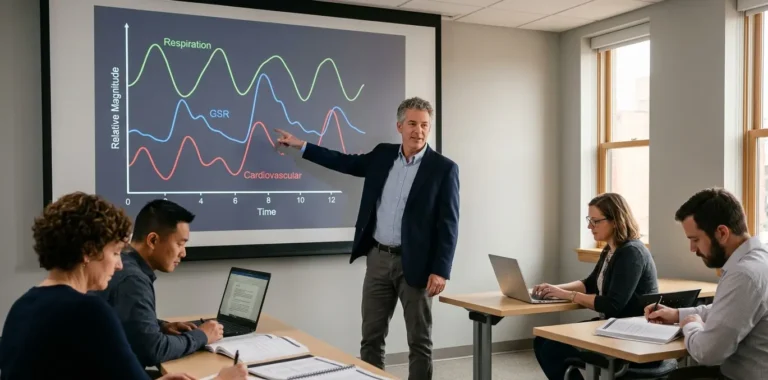
How to Become an Expert Polygraph Examiner: Training, Certification and the Path to Professionalism Editorial Team,...
Read more →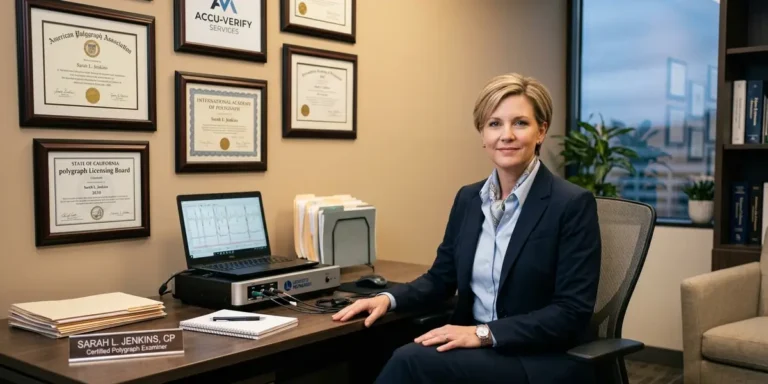
How to Choose a Reliable Polygraph Examiner: 7 Signs of a True Professional A lie detector test is a serious procedure...
Read more →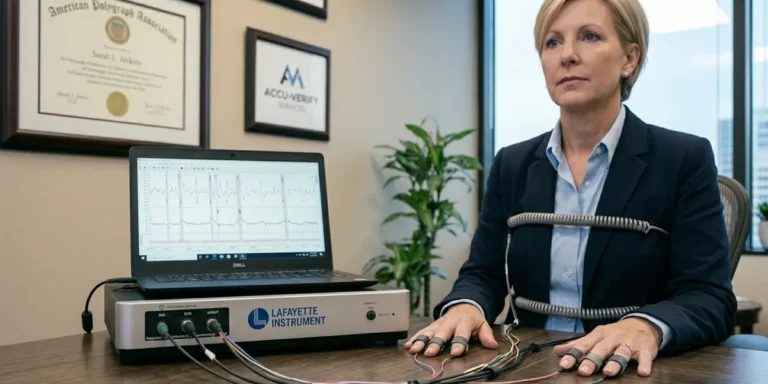
How a Lie Detector Works: Physiology, Technology, and Stages of a Polygraph Test The term "lie detector" is familiar to...
Read more →Certified SPU examiners work across Europe, Asia and North America — choose your country


1
2