
In an arbitrage team one person holds the ad accounts, the payment instruments and the working bundles. The cost of a hiring mistake is measured not by the salary but by the budget that person runs and by the material they take with them when they leave.
The consultation is free of charge. Call-backs are made between 08:00 and 22:00, seven days a week.
The risk profile of an arbitrage team differs from ordinary recruitment. A buyer, a farmer or a team lead works with someone else's money and with assets that have a market value of their own, and most teams are spread across cities and never meet in person. Four topics account for the bulk of enquiries.
All four topics need not be taken at once. A single test is built around a single subject, so the consultation establishes which topics go into this session of lie detector testing and which move to the next one.
Enquiries follow three scenarios, and the scenario determines the set of questions.
The candidate has passed the interview, and the question of past commitments has to be closed before accounts and cards are handed over.
Material or accounts have gone to the side and the circle of people with access is limited to a few names.
Regular testing of everyone who disposes of budgets and credentials, at a known interval.
The scheduled format behaves differently from a one-off check: it is known at the hiring stage, written into the arrangements, and read as procedure rather than accusation. In the experience of our examiners, that predictability removes most of the resistance.
The procedure is identical for a candidate and for a current employee. The only difference lies in which episodes are discussed during the pre-test interview.
The client states the task; the examiner rules out topics the method cannot answer
The employee reads the list of topics and signs a voluntary consent form
Wordings are checked: every question must mean the same thing to both sides
1.5–2.5 hours; sensors record breathing, pulse, blood pressure and skin response
Verbally on the day of the session, in writing within 24 hours

The client is not present during the session: an audience changes the examinee's behaviour and distorts the recording. Results are delivered after analysis, question by question. When several people from one team are tested, the sessions are spaced out so that nobody learns the wordings in advance.
Questions address actions, not personality and not opinions. A wording has to allow a yes or no answer and rest on a verifiable fact within a defined period.

The tighter the period and the subject, the clearer the conclusion. "Have you worked honestly?" is useless, because everyone defines honest work differently. "Have you passed working bundles outside the team between January and June?" is verifiable, and wordings of that kind are what reach the final list for an arbitrage team test.
A lie detector records responses to the questions put to the examinee. It does not reconstruct events and it does not replace a statistics audit or a review of logs.
| It shows | It does not show |
|---|---|
| Whether the person passed specific material outside the team | How much money was involved, if no question covered it |
| Whether they took payment from a supplier | Who else took part, if those names were never put in a question |
| Whether they worked for another team in the stated period | What they will do in the future |
| Whether they are concealing a fact they are asked about | Professional skill and the ability to deliver results |
Important. An examiner's report is not legal evidence and not grounds for automatic dismissal. It is one argument for the client's internal decision, to be weighed with everything else they know.
The conclusion for each question takes one of three forms: responses typical of a truthful answer; responses typical of a deceptive answer; or an inconclusive result. The last of these means the data is insufficient, not that the person is guilty. A repeat test on reworded questions is possible in that case.
Testing employees of an arbitrage team is possible on a voluntary basis only. A refusal is not a disciplinary offence, and no employment decision can rest on the refusal itself.
In practice, once the procedure is announced in advance and applies to everyone including heads of departments, lie detector testing stops being a contentious subject inside the team.
Below are the questions owners and team leads raise most often at the consultation.
No. Written voluntary consent is required. Beyond the formal grounds there is a methodological limit: under coercion physiological responses change and the reliability of the result falls.
A refusal is not confirmation of concealment and is never framed that way in the report. The hiring decision stays with the client and rests on everything they know. In practice some refusals disappear once the person has read the list of topics: what they feared were questions about private life, which the test does not contain.
Countermeasures — holding the breath, tensing muscles, counting silently, taking medication — are documented in the professional literature and leave characteristic traces on the chart. Multi-channel recording separates them from a natural response: the examiner logs the attempt separately and states the conclusion as an attempt at countermeasures.
Sessions are held at offices across Ukraine and in a number of other countries where our examiners work. The methodology and the equipment are the same everywhere, so results for different members of the same team can be compared with one another.
One examiner runs two or three full sessions a day. Larger volumes are covered by several examiners or split into stages. The schedule is agreed in advance so that the employees being tested do not cross paths.
A verbal conclusion on the day of the session and a written report within 24 hours. The document states the methodology, the question list in the wordings actually used, the recorded responses on each channel, a conclusion for every question and the examiner's signature.
The fee for lie detector testing is calculated per examinee: from UAH 3,000 for one person and from UAH 5,500 for two, with three or more quoted individually. There are no regional surcharges inside Ukraine; sessions held in other countries are quoted per country.
The exact figure is given at the consultation, before anything is booked. The countries where our examiners work are listed at the foot of this page.
Sessions for arbitrage teams are run by an examiner with specialist training and at least five years of practice. The polygraph records no fewer than four physiological channels at once, and equipment and methodology are identical at every office.
The examiner does not assess anyone's professional ability and takes no part in internal disputes: the task is to obtain a correct answer to an agreed question and to sign for every conclusion in the report.
Training and specialisation of each examiner are published in the register of polygraph examiners of Ukraine.
If an incident has already happened and the task is to work through the episode rather than to screen one member of the arbitrage team, it belongs to an internal official investigation. For routine work with staff, a scheduled check of the personnel is the better fit.
The examiner will tell you which topics fit into one test, how many sessions the task needs and how consent is documented.
Your enquiry is confidential. Your data is never passed to third parties.

What Questions Are Asked on a Polygraph: Types, Examples and What You Cannot Ask Editorial Team, Polygraph Examiners...
Read more →
How to Become an Expert Polygraph Examiner: Training, Certification and the Path to Professionalism Editorial Team...
Read more →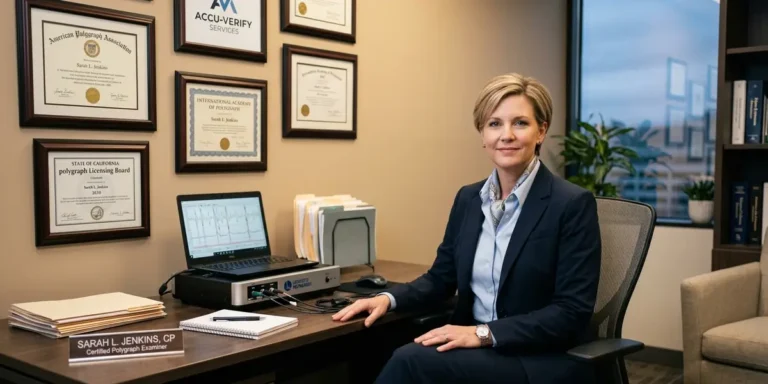
How to Choose a Reliable Polygraph Examiner: 7 Signs of a True Professional A lie detector test is a serious procedure...
Read more →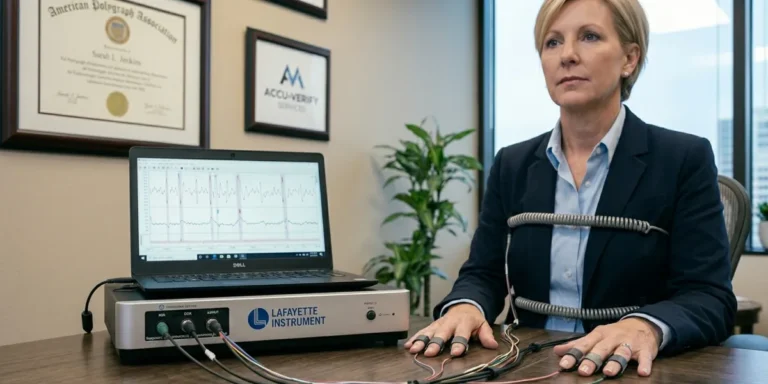
How a Lie Detector Works: Physiology, Technology, and Stages of a Polygraph Test The term "lie detector" is familiar to...
Read more →Certified SPU examiners work across Europe, Asia and North America — choose your country


1
2