The Union of Ukrainian Polygraphologists (SPU) conducts professional lie detector tests in the Czech Republic for individuals and businesses. Certified polygraphologists, state-of-the-art equipment, complete confidentiality.
A standard polygraph examination in the Czech Republic costs €300 and covers one person on one topic. The session runs 1–2 hours including the pre-test interview, and accuracy under a properly followed protocol is 95–98%. Sessions are held at the Prague office, Rybná 682/14, or at an address you name. You hear the preliminary conclusion the same day; the official written report is prepared within 3–5 business days. The online format is €175 and testing in a foreign language adds €80. The preliminary consultation is free.
Suspicion erodes from within — quietly and surely — far more destructively than any open confrontation. Sleepless nights where every detail feels ominous. An endless inner monologue that grants no peace by day or by night. There comes a point when words are no longer enough, and you need an objective tool that can deliver a clear answer instead of guesses. That need is felt most acutely among Ukrainians who found themselves in the Czech Republic after 2022: when a partner stayed behind, and thousands of kilometres only deepen the uncertainty and widen the space for doubt. It is precisely in situations like these that a polygraph test in Czech Republic from the Union of Ukrainian Polygraphologists becomes the solution that restores clarity.
A polygraph is not magic, and it is not a movie prop. It is certified psychophysiological equipment that records involuntary bodily reactions: changes in breathing, heart rate, skin conductance, and tremor. No person can consciously control all of these parameters simultaneously at the moment they are telling a lie — and that is exactly where physiology proves more honest than words. Modern digital polygraphs register five to eight independent channels, and when operated by a qualified specialist the accuracy of results reaches 95–98%. A lie detector test in Czech Republic from SPU is not a scene from a thriller — it is a science that operates under a strict, validated protocol.
The Union of Ukrainian Polygraphologists has over 15 years of experience and brings together certified specialists who conduct polygraph testing in Czech Republic — in Prague and across the country. Every polygraphologist holds specialist psychophysiological qualifications, undergoes regular certification, and is listed in the official SPU registry. Testing takes place in comfortable, calm surroundings — no pressure, no intimidation. Complete confidentiality is guaranteed at every stage, from the first phone call to the secure storage of all materials.
Whether the matter is a family question, a corporate problem, or the need for legal protection — a polygraph test in Prague from SPU delivers not guesses but a scientifically grounded result. You leave the session not with new questions but with answers. That is precisely what distinguishes a polygraph examination from any other method of establishing the truth.
Many people put off testing not because they are afraid of the truth, but because they do not understand exactly how the procedure works. Some worry about pain or discomfort from the sensors; others question the objectivity of the method; others simply do not know where to start. Let us walk through it step by step — what a polygraph test in Czech Republic actually involves, and why the procedure is far simpler and more comfortable than it might appear at first glance.
A polygraph is a multi-channel instrument for recording the body's psychophysiological reactions. It simultaneously captures several independent indicators: the rate and depth of breathing, the galvanic skin response (changes in skin conductance caused by stress), cardiovascular activity (pulse, blood pressure, blood vessel volume), and tremor — subtle micro-movements of the body. None of these processes can be fully controlled consciously, so any attempt to conceal the truth inevitably leaves a trace in the physiological data.
It is important to understand: a polygraph does not read minds and does not detect what you are thinking. It detects involuntary stress reactions that arise at the moment of deception — reactions that are a direct consequence of the autonomic nervous system. SPU uses the latest generation of certified digital equipment, and every specialist applies internationally validated analysis methods. When the protocol is properly followed, accuracy reaches 95–98%.
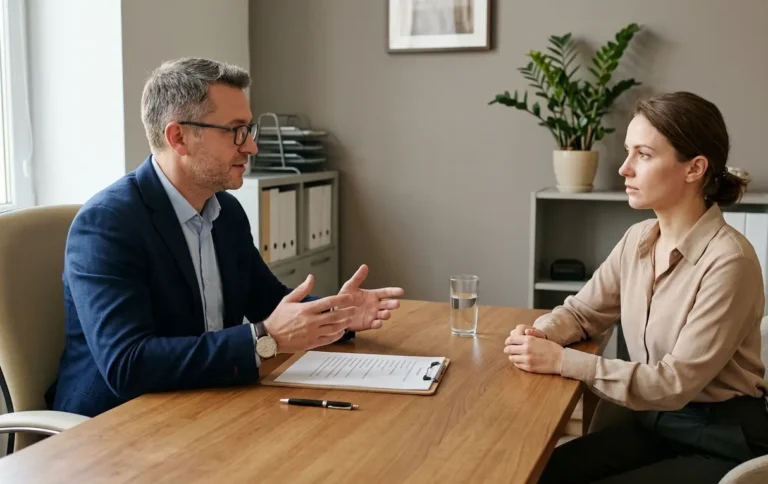
Pre-test interview (20–30 minutes). The polygraphologist meets the examinee, explains the procedure, and reviews every question that will be asked during the test. Nothing unexpected — every question is agreed upon in advance. This interview also allows the specialist to establish the individual's personal physiological baseline, which increases the accuracy of the subsequent analysis.
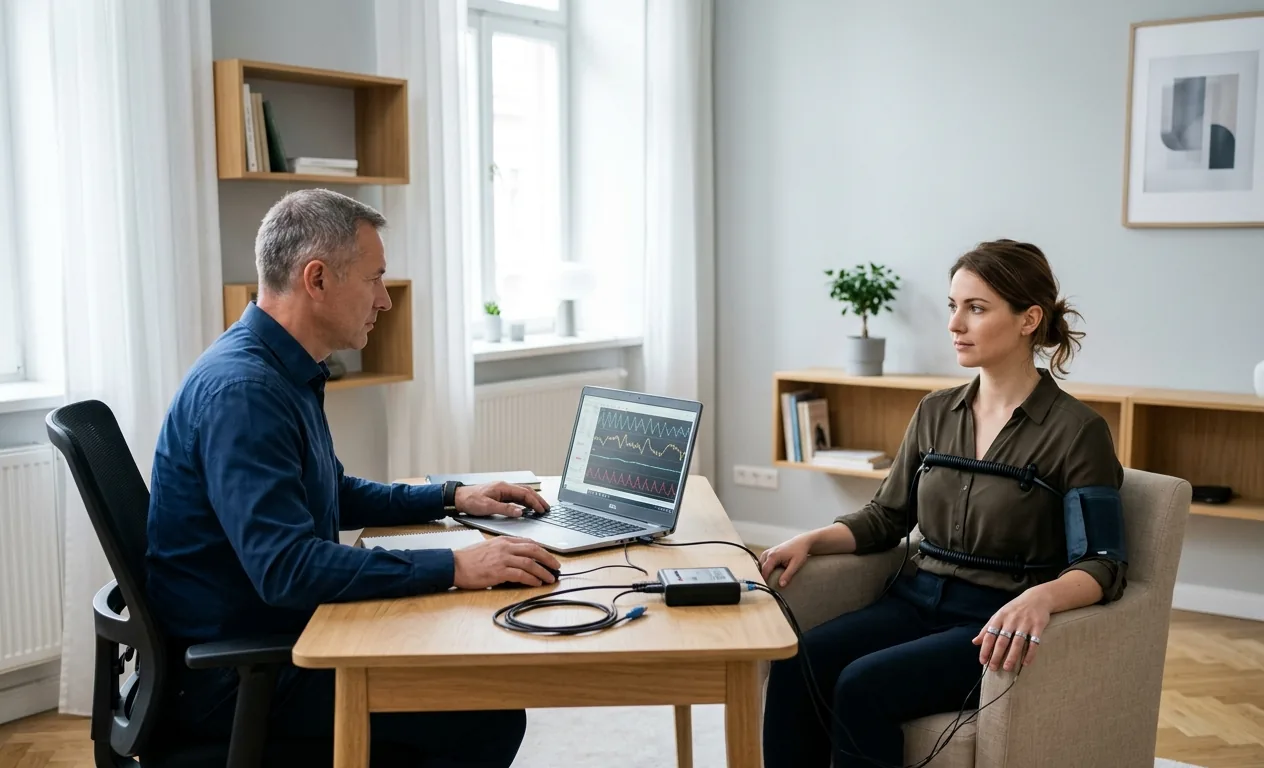
Sensor attachment (5–10 minutes). Sensors are placed on the body: pneumatic tubes around the chest and abdomen (breathing), electrodes on the fingers (skin conductance), and a cuff on the arm (pulse and blood pressure). The procedure is entirely painless — the sensation is no stronger than a routine blood pressure check at a clinic.
Testing (1.5–3 hours). The polygraphologist poses the pre-agreed questions in a yes/no format. Pauses are taken between questions to allow physiological indicators to return to baseline. The test is run in several series to increase reliability: repetition filters out random reactions and confirms genuine patterns.
Analysis of results (30–60 minutes). The expert processes the collected data using specialist software, applies validated scoring methods, and formulates a conclusion. Nothing is required of the examinee at this stage — they may rest.
Delivery of results. A verbal conclusion is provided on the day of testing, immediately after data analysis. An official written report is available on request within 3–5 business days. The report may be used for legal and corporate purposes.
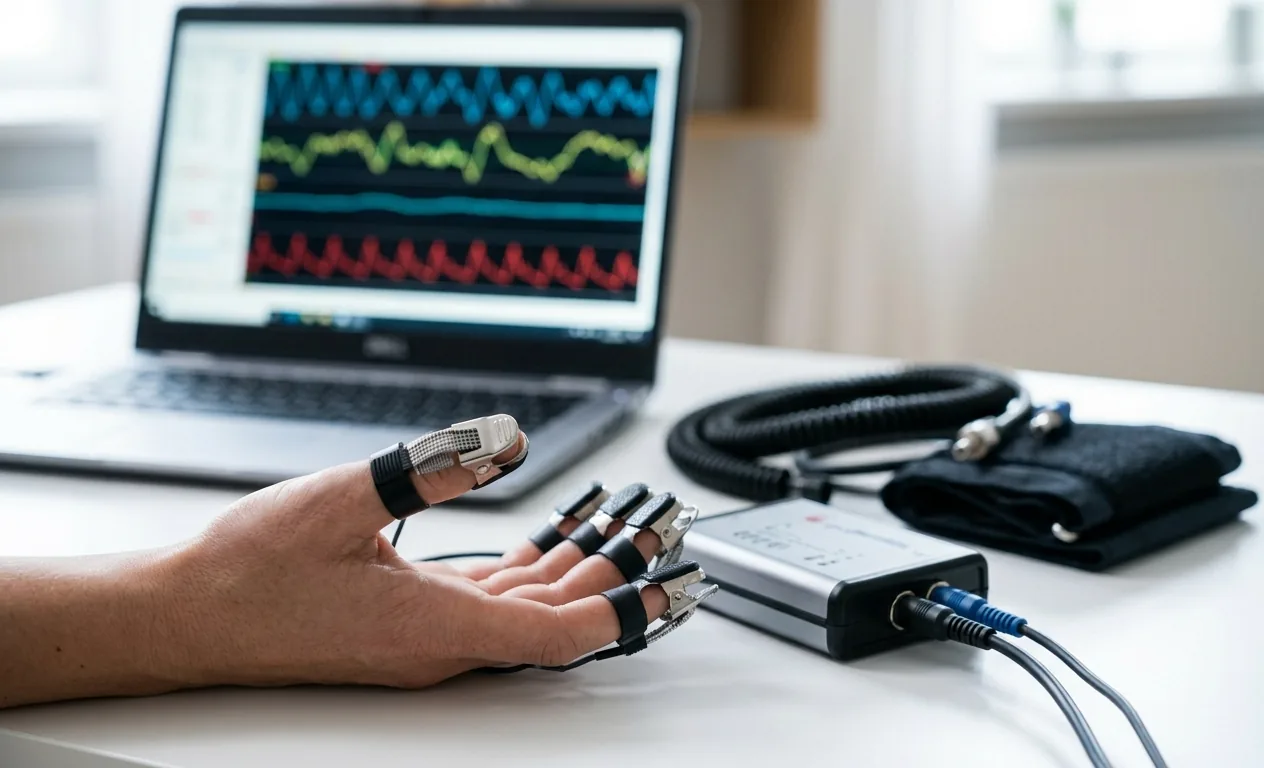
A modern digital polygraph simultaneously records the following channels:
It is precisely the simultaneous recording of 5–8 independent channels that makes deception practically impossible. Even if a person deliberately tries to control their breathing, the heart rate responds independently. If they focus on the pulse, skin conductance rises. The nervous system cannot switch off all channels at once. International studies conducted in the United States, Israel, and Japan confirm that when a standardised protocol is followed, polygraph accuracy reaches 95–98%.
At the same time, result accuracy depends directly on the specialist's qualifications: correct question formulation, accurate baseline calibration, and skilled data interpretation are abilities built over years of practice and continuous training. That is why choosing a verified, certified polygraphologist is the critical step — and it is why SPU clients receive consistently reliable results across 15 years of the organisation's work.
A polygraph is a versatile tool for obtaining an objective answer in situations where conventional methods have already fallen short. Family disputes, corporate investigations, legal proceedings, personal security concerns — in all of these areas a lie detector provides something no other method can: a documented, science-based conclusion grounded not in subjective judgment but in physiological data.
The most common reason people turn to a polygraphologist is suspicion of infidelity or a breach of trust between close individuals. For Ukrainians in Czech Republic, this situation carries an added dimension: the distance between countries acts as a catalyst for doubt. A partner remained in Ukraine, communication is largely over the phone, and new circumstances on both sides create room for suspicions that are difficult to either confirm or dismiss through words alone. An infidelity check provides objective facts without surveillance, confrontation, or mutual accusations — just a clear result on which to base a well-considered decision.
A polygraph also helps in situations that go beyond fidelity: financial disputes within a family, concealment of important information from loved ones, or checking a teenager's involvement with prohibited substances. In each case, the test result removes uncertainty and opens the door to an honest conversation grounded in facts.
Ukrainian entrepreneurs doing business in the Czech Republic face the same challenges as their counterparts throughout the European Union: unreliable employees, leaks of commercial information, internal theft, the need for thorough vetting of candidates for sensitive positions. In multinational teams where cultural differences make reading behaviour harder, a polygraph becomes an especially valuable instrument. HR screening with a lie detector allows risks to be minimised at the hiring stage, before any damage is done.
Scheduled staff screening builds a culture of accountability within a team and significantly reduces the likelihood of internal misconduct. For small and medium-sized businesses where every employee has access to critical resources, this is not a luxury — it is a basic security measure. Testing a new hire before they start costs incomparably less than the losses that dishonest recruitment can cause.
Polygraph examination results are increasingly used in legal practice: to defend against false accusations, to affirm one's innocence, or to challenge the testimony of another party. In the Czech Republic, as in most EU countries, a properly prepared polygraphologist's report can influence the course of an investigation or court proceeding. A forensic psychophysiological examination from a certified SPU specialist meets the requirements for official documentation and can be submitted as part of a case file.
Such an examination can be initiated by the person who needs protection, by their lawyer, or by an employer. Notably, voluntarily undergoing testing and obtaining a positive result is in itself a powerful argument in favour of a person's credibility — even where a court is not bound to treat the data as direct evidence, it substantially changes the overall picture of the case.
Entrusting a stranger with the care of your home, children, or elderly relatives is a decision that demands maximum certainty. References on social media and a polished CV do not guarantee honesty or responsibility. Polygraph screening and selection of household staff allows hidden motivations to be uncovered, stated experience to be verified, and a candidate's past — the parts they would rather not disclose — to be examined. This is especially relevant for families with young children at home or elderly parents who require constant care.
Before making a decision, many people consider alternatives: hiring a private detective, installing surveillance cameras, or simply having an honest conversation. Each method has its strengths and limitations — here is a straightforward comparison so you can make an informed choice.
| Criterion | Polygraph (SPU) | Private Detective | Video Surveillance | Direct Conversation |
|---|---|---|---|---|
| Result accuracy | 95–98% | Depends on the situation | Records actions, not motives | Subjective |
| Speed of getting an answer | Same-day result | Days to weeks | Requires footage review | Immediate, but no guarantees |
| Confidentiality | Complete | Risk of leaks | Depends on storage | Depends on participants |
| Cost | €300 | from $400 | from $200 (equipment) | Free |
| Objectivity | Scientific methodology | Depends on the specialist | Objective but limited | Subjective |
| Comfort for the examinee | Painless, voluntary | Surveillance without consent | Covert monitoring | Pressure, conflict |
| Legal significance | Admissible in legal proceedings | Limited | Limited | None |
| Applicability to hidden motives | Yes — uncovers what is hidden | Behaviour only | Actions only | Only what is said |
Choosing a polygraphologist is a decision that affects not only the accuracy of the result but also how comfortable and secure the entire procedure feels. Here is why hundreds of clients from Ukraine and the Czech Republic place their trust in the Union of Ukrainian Polygraphologists.
SPU uses the latest generation of equipment and applies exclusively validated international testing methodologies. A rigorous protocol — from question formulation through to result interpretation — minimises the influence of human error. Over 15+ years of work, the organisation's specialists have conducted thousands of successful examinations across different countries and circumstances: from family matters to complex corporate investigations.
High accuracy is achieved not through equipment alone but through the analyst's experience: a skilled polygraphologist can distinguish a deceptive reaction from ordinary nervousness, correctly calibrate baseline indicators, and accurately interpret difficult cases. This is a craft built on science, and it is precisely what separates a certified specialist from an untrained operator with a device.
Waiting weeks is unacceptable when a question is urgent and time matters. A verbal conclusion is delivered on the day of testing, immediately after data analysis. Should an official written report be required, it is prepared within 3–5 business days. No bureaucratic delays, no unexplained waiting: you have your answer on the same day you came for testing.
The very fact that you contacted SPU is strictly confidential. We do not disclose the names of clients or examinees without their written consent. All materials — recordings, polygraph data, reports — are stored securely and destroyed after the established retention period. Even the fact that you reached out to us remains your private information.

Confidentiality is not a marketing phrase. It is a legally binding obligation set out in the contract signed before any procedures begin. You always know who may access the results and under what conditions — and only you decide to whom those results are provided.
Every SPU specialist holds specialist psychophysiological qualifications, undergoes regular certification, and is listed in the official Union of Ukrainian Polygraphologists registry. You can always verify the credentials of your specialist — this information is publicly available. Our polygraphologists do not merely know the theory: they have documented practical experience across different testing fields and continuously update their qualifications in line with international standards.
Testing takes place in a calm, relaxed atmosphere — no pressure, no attempts to "break" or intimidate anyone. Sensors are attached externally, causing absolutely no pain. The polygraphologist explains every step in advance and shares every question that will be asked — no surprises whatsoever. Most people report after the session that the experience was far less stressful than they had expected.
The cost of testing is calculated individually based on the type of questions and the number of thematic blocks involved. The free preliminary consultation allows you to establish the exact amount before any procedures begin. No additional charges mid-session, no hidden fees — the price quoted at the consultation is the final price. A specific figure for a specific request, with nothing left vague.
The booking process is straightforward and takes minimal time. From the first call to receiving your result, every step is transparent and predictable. Here is a clear guide — no searching for who to call, what to write, or what to say.
Abstract information about the benefits of a polygraph becomes far more tangible when you see how it works in real life. Below are typical situations that bring clients connected to the Czech Republic to SPU. Names have been changed and details generalised for confidentiality.
Olena came to Czech Republic in 2022, when Prague became her temporary home. Her husband stayed behind in Ukraine — at first out of necessity, and then by habit. In the early months they called each other every day, but gradually the conversations grew shorter and the answers less specific. New "work acquaintances" appeared that Olena knew nothing about, and attempts at an honest talk kept ending in arguments — each accusing the other of being suspicious or inattentive.
After several months of inner conflict she decided to find out the truth not through a confrontation but through facts. SPU arranged testing for her husband in Ukraine. The result surprised them both: the suspicions were not confirmed. He was genuinely overwhelmed by work and personal anxieties that he had kept to himself so as not to worry her. The polygraph conclusion gave them both a firm point of reference — and opened the door to the honest conversation they had been putting off for months.

This case illustrates an important nuance: a polygraph is equally valuable when suspicions are confirmed and when they are disproven. In both situations, the person steps out of uncertainty and gains the ability to make decisions based on real facts rather than assumptions.
An entrepreneur from Kharkiv who relocated part of his business to Prague in 2023 was looking for a personal assistant with access to financial documents and corporate accounts. The candidate's CV looked flawless and she had references — but they were vague. The question "what if I am wrong?" would not let go. A pre-hire polygraph examination confirmed that the candidate had no hidden debts, was not in a conflict of interest with any competitors, and that her stated experience matched reality. The hiring decision was made with full confidence, not a leap of faith.
Nine months later the entrepreneur noted that this examination had turned out to be one of the smartest investments when entering a new market. The time and money spent on testing were nothing compared to the risk averted by having objective information at the outset.
The manager of a small company owned by a Kyiv-based businessman in the Czech Republic discovered systematic cash shortfalls. Security cameras covered only common areas and provided no specific evidence. The team was small — everyone had known each other for years — and the atmosphere of general suspicion quickly became unbearable. Filing an official police report would have meant a scandal and, in all likelihood, the collapse of the team.
They decided to conduct polygraph testing with the employees who had access to the cash register — voluntarily and confidentially. The results clearly pointed to one individual while simultaneously clearing everyone else. The company stopped losing money, and the team recovered its normal working atmosphere far faster than it would have if the situation had dragged on through months of official proceedings.
An employee of an international company in Prague was accused of leaking commercial information to a competitor. There was no direct evidence, but the suspicion hung in the air — and management was already discussing dismissal. The person himself initiated polygraph testing: he wanted not simply to deny the accusations in words but to back his claim with objective data.
The test results confirmed that he had no involvement in the information leak. The official report was submitted to management, after which the accusations were dropped. A subsequent internal investigation identified the actual source of the leak — in an entirely different department. In this case, the polygraph not only protected a person from injustice — it accelerated the discovery of the real problem and gave the company the opportunity to address it before greater damage occurred.
When you contact us, you are entrusting us with highly sensitive personal information. We understand the weight of that trust and treat it with the utmost seriousness. Confidentiality is not a marketing slogan — it is a legally binding obligation set out in the contract before any procedures begin.

We operate in full compliance with Ukrainian and Czech legislation on personal data protection. The collection, storage, and processing of any data is carried out exclusively within legally defined parameters and only with the consent of all parties involved. If you have questions about exactly how your data is stored and who has access to it — ask at the consultation: we answer directly and without evasion.
Stop living with uncertainty. Find out the truth today — call us and we will find the best testing format for your specific situation. Free consultation, transparent pricing, complete confidentiality. We work every day from 08:00 to 22:00, including weekends.
Or call: +380 677 309 900
Viber · Telegram · WhatsApp — daily 08:00–22:00
The cost depends on the type of examination and the number of thematic blocks to be covered. A standard examination — one person, one topic — costs €300. The online format is €175 and testing in a foreign language adds €80. Multi-topic and corporate cases are quoted separately; you receive an exact figure during the free preliminary consultation, where a specialist will learn the details of your situation and select the optimal format. No hidden charges or mid-session extras — the price quoted at the consultation is the final price. Call for a consultation: +380 677 309 900.
Yes, polygraph testing is fully legal in the Czech Republic provided participation is voluntary and the examinee has given written consent. Czech civil procedure permits a properly prepared polygraphologist's report to be used as additional evidentiary material. Test results are also used in corporate investigations and legal practice. Our specialists prepare documentation in accordance with established requirements, making it suitable for use in legal proceedings.
SPU conducts testing in Ukrainian, Russian, and English. For Ukrainian clients, their native language is the optimal choice: it minimises cognitive load when answering questions and improves the accuracy of physiological responses, since the person does not expend extra mental resources on translation or word selection. Testing in Czech is available upon prior arrangement at the time of booking — please confirm availability when you call.
Testing in Prague is conducted at: Rybná 682/14, Prague. For clients from other cities in the Czech Republic, on-site visits are arranged individually at the time of booking. All details — the exact address, directions, parking, or a convenient landmark — are confirmed by phone or messenger before your appointment.
No special preparation is needed. The basic recommendations are: get a good night's sleep the evening before, abstain from alcohol for at least 24 hours prior to the test, and avoid sedative or psychoactive medications without prior discussion with the specialist. Arrive in a normal state — not hungry, but not immediately after a heavy meal, and not overtired. The polygraphologist will answer all your questions during the pre-test interview and help ease any tension. Every question to be asked during the test will be shared with you in advance — no surprises.
A full session runs from 1.5 to 3 hours depending on the number of thematic blocks. The pre-test interview takes 20–30 minutes, sensor attachment 5–10 minutes, the actual testing 1–2 hours, and data analysis 30–60 minutes. A verbal conclusion is delivered on the same day immediately after analysis is complete. An official written report is prepared on request within 3–5 business days.
Yes, this is possible. SPU has specialists in many European countries, so we can arrange testing in whichever country the person is currently located. The one mandatory condition is that the person being tested must be informed about the procedure in advance and give voluntary written consent. Arranging such a test without the person's knowledge is impossible and unethical — SPU polygraphologists uphold this principle without exception.
Yes, cancellation is possible at any stage — there are no penalties for rescheduling or cancelling an appointment. Moreover, the person undergoing testing may stop the procedure at any moment, without explanation and without consequences — this is an unconditional right set out in the contract. All materials collected up to the point of stopping remain strictly confidential regardless of the result or the reason for ending the session.
What Questions Are Asked on a Polygraph: Types, Examples and What You Cannot Ask Editorial Team, Polygraph Examiners...
Read more →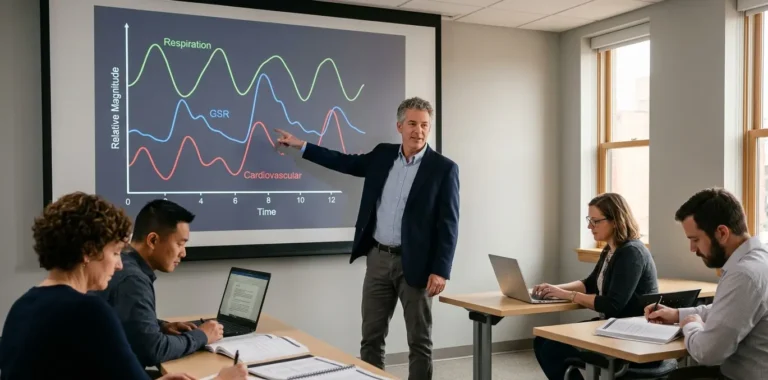
How to Become an Expert Polygraph Examiner: Training, Certification and the Path to Professionalism Editorial Team,...
Read more →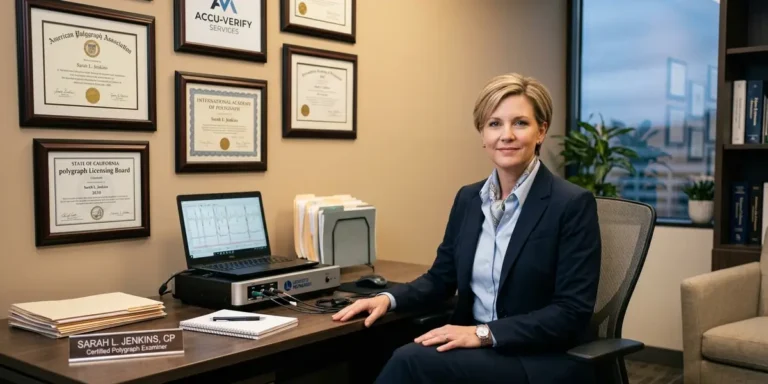
How to Choose a Reliable Polygraph Examiner: 7 Signs of a True Professional A lie detector test is a serious procedure...
Read more →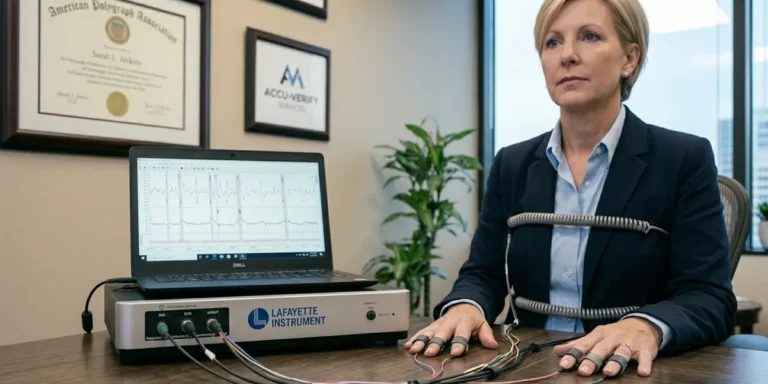
How a Lie Detector Works: Physiology, Technology, and Stages of a Polygraph Test The term "lie detector" is familiar to...
Read more →Certified SPU examiners work across Europe, Asia and North America — choose your country

1
2