The Polygraph Examiners Union of Ukraine (SPU) runs private lie detector tests across Ireland — in Cork, Limerick, Galway, Waterford and anywhere else you ask us to come. Voluntary, confidential, with the preliminary conclusion given on the day of the session.
In short: a private lie detector test in Ireland costs €425 for a standard single-topic examination, takes 1.5–2.5 hours and delivers 95–98% accuracy. Sessions are held in a private room in Cork, Limerick, Galway, Waterford or at an address you name. You hear the preliminary conclusion immediately after the session, and the signed written report arrives within 3–5 business days at no extra cost. Testing is voluntary and requires written consent; SPU examiners are listed in the official Register of Polygraph Examiners of Ukraine, and our local partner examiners work to the same protocols.
A lot of life here runs on informal arrangements. House shares hold four adults who met through a listing, small family firms hire on a handshake, and a childminder gets a door code within a week of the first interview. Trust is extended early and, when something goes wrong, there is usually nothing on paper to fall back on.
A lie detector test is the narrow tool for exactly that gap: it will not mend a relationship or replace a solicitor, but it turns a question that has been running for months into one documented answer. These are the requests we hear most often here.

Suspicion of an affair, an unexplained absence, a story that has been retold three different ways.
Infidelity test →
Childminders, carers, cleaners and house-share tenants — the people trusted with your door code.
Household staff vetting →
A psychophysiological examination when your name is at stake and there is no evidence either way.
Forensic testing →
Private loans, deposits and informal partnerships where the terms live only in two people's memories.
Borrower assessment →
Voluntary screening of candidates who will handle cash, stock, keys or client data.
Personnel screening →
Vapes and substances, money going missing at home, a new group of friends nobody has met.
Teen testing →Ireland is small enough that a dispute rarely stays private for long. Four adults share a house they found through a listing; a family business hires the neighbour’s son; a childminder holds the door code to a home she has worked in for years. Trust is extended quickly here, and when it breaks there is usually nothing on paper to fall back on.
The most common personal request is a relationship one — an accusation repeated until neither side remembers how it started, or a message someone was not meant to see. An examination is not a way to corner a partner: more often than not the result confirms their account, and the value is that the subject finally closes. Testing runs only on informed written consent, never behind anyone’s back, and any question can be withdrawn without a reason.
Then there is money moved on trust: a deposit, a loan to a cousin, a share in a small venture agreed over a pint. When such an arrangement falls apart, a court case costs more than the sum in dispute and ends the relationship for good. Two hours of structured work often settles what months of argument could not.
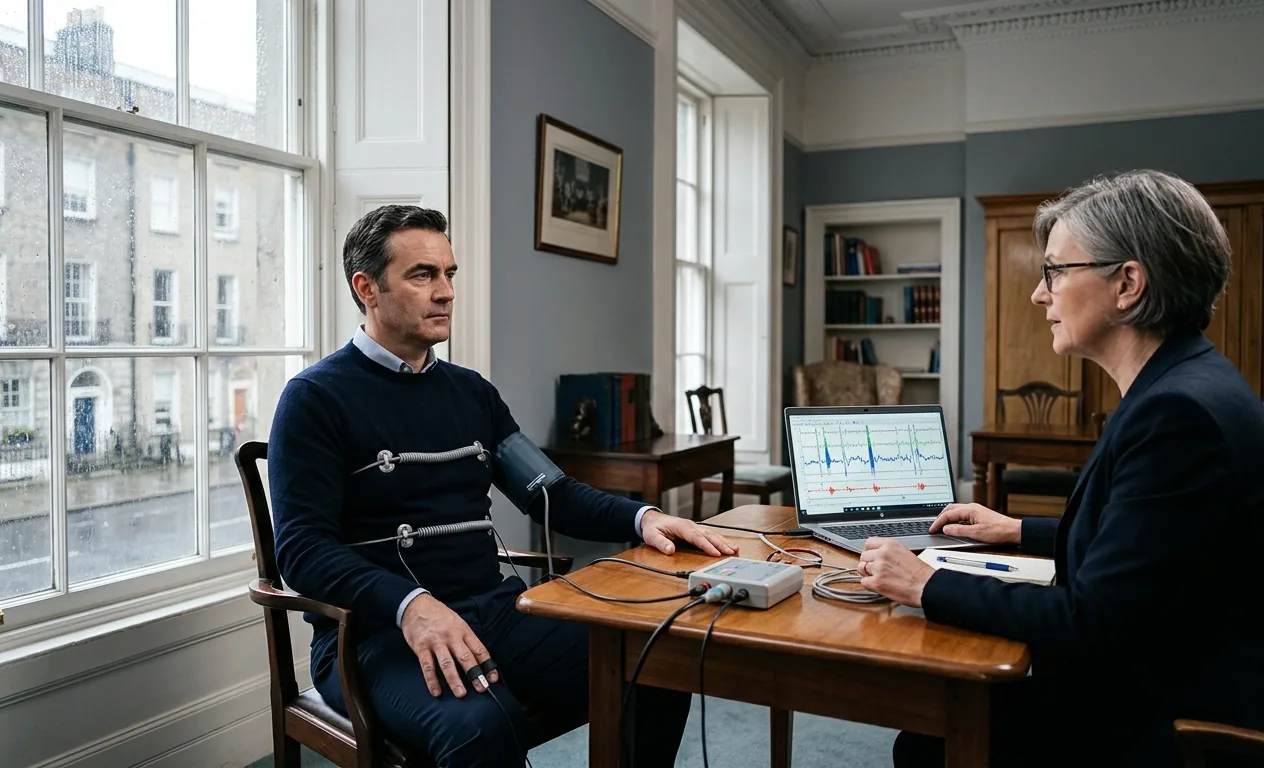
A polygraph records several physiological channels at once — breathing, cardiovascular activity, blood pressure and electrodermal response. Concealment produces involuntary changes in those channels that cannot be switched off deliberately.
SPU examiners follow the standardised CQT and CIT protocols on professional equipment. Accuracy under protocol is 95–98%.
The situation is clarified and every question is worded and agreed with you. Nothing is asked during the test that you have not already seen.
Written consent is signed first; the sensors are non-invasive and record only your own physiology.
Yes/no questions across several charts, so that one chance reaction never decides an outcome.
Verbal preliminary conclusion the same day; the signed written report within 3–5 business days.
A lie detector does not read minds and does not identify a lie directly. It compares reactions to relevant questions with reactions to control questions across four channels, and looks for a stable difference between them. Because those reactions are involuntary, they appear before a person has finished choosing their words.
No conclusion rests on a single spike. What counts is a pattern that repeats across several presentations — which is exactly what filters out ordinary nervousness, and why deliberate countermeasures usually make a chart easier to read rather than harder. The mechanics are set out step by step in our guide to how a lie detector works.
Being honest about the limits is part of the job. An examination answers factual questions about events — whether money was taken, whether a meeting happened, whether something was concealed at hiring. It cannot measure feelings, predict what someone will do next, or decide who was in the right during an argument.
That is why the interview matters more than the instrument. A good share of enquiries end with us saying that three precisely worded questions will do what fifteen vague ones cannot, or that a polygraph is simply the wrong tool for the situation. That conversation is free and happens before anything is booked.
We charge one clear price for a standard examination rather than an hourly rate, so the cost is known before you book. The preliminary consultation is free and the written report is included — there is no separate fee for the document.
| Format | What it covers | Price, EUR |
|---|---|---|
| Standard polygraph examination | One subject, one topic; 1.5–2.5 hours including the interview; written report included | €425 |
| Online-format examination | When the parties are in different countries and meeting in person is not realistic | €175 |
| Testing in a foreign language | Surcharge when the session runs outside the examiner's working languages | +€80 |
| Multi-topic or corporate examination | Several respondents, an internal investigation, urgent scheduling | Quoted individually |
The standard price covers most private requests, including resolving a family conflict, a check before marriage, establishing who took what, an examination at a solicitor's request and a visit by the examiner to your address. Company formats such as an internal investigation or a scheduled staff check are priced per case, because the workload depends on how many people take part.
Prices are indicative and confirmed after the free consultation — the final figure depends on the number of topics, the number of respondents and the location of the session.
| Criterion | SPU | Independent examiner |
|---|---|---|
| Certification | ✓ Entry in the official register | Varies; often unverifiable |
| Methodology | CQT + CIT, standardised protocols | Down to the individual |
| Quality control | Charts can be reviewed by a second examiner | None |
| Consent procedure | Standard written forms for every session | Not regulated |
| Accountability | Collegial, through the union | Personal only |

Examinations in Ireland are carried out by local certified partner examiners of the Polygraph Examiners Union of Ukraine. Which of them takes your case depends on its nature — corporate and legal work and delicate family matters call for different experience.
Both work to SPU methodology and under the union's quality control: the question list is agreed in advance, the charts can be re-read by a second examiner, and the conclusion is issued on a union form. We name the examiner assigned to you when the appointment is confirmed.
Tell us the situation and we will say honestly whether a test will answer your question. The advice is free.
Get a consultationFour tenants sharing a house watched cash and small items disappear over two months. Nobody wanted to accuse anybody, but nobody could relax either, and the landlord had no interest in getting involved. Three of them proposed a voluntary examination and all four agreed in writing. One session identified where the pattern came from and cleared the rest — the house stayed together, which had seemed impossible a week earlier.
A screenshot forwarded by a friend put a fourteen-year relationship on hold. It proved nothing either way, but neither of them could let it go, and both had started rehearsing the argument in advance. They came in together, agreed on four questions, and left with an answer that the screenshot could never have given them.
Two partners in a small restaurant fell out over stock that never matched the invoices. Each suspected the other of quietly taking a cut; a legal dispute would have cost more than the business earned in a season. Both agreed to an examination arranged through their solicitor, and the outcome let them dissolve the partnership on agreed terms instead of in court.
A family in Limerick suspected their childminder of taking money from a drawer. She asked for the test herself, having worked with the family for two years and refusing to leave under a shadow. The result supported her account, the money turned out to have been moved by a relative, and the examination did what it does at its best — protected an honest person rather than exposed a dishonest one.
People arrive with situations they have not discussed with their closest friends, and a lie detector test is not something anyone wants talked about afterwards. Discretion here is procedural, not a promise in passing.

Standardised CQT and CIT protocols on professional equipment

Our own room, or a visit to yours in Cork, Limerick, Galway and beyond

Verbal conclusion right after the session, signed report in 3–5 business days

Written consent, a private setting and a documented confidentiality procedure

SPU-certified examiners working to union protocols and quality control

The wording of every question is agreed with you before the test begins
Irish law does not forbid an employer from proposing an examination, and it does not create a right to insist on one: participation is voluntary, consent must be informed and in writing, and personal data collected in the process falls under normal data-protection duties. Within those limits companies use testing for three narrow purposes — clarifying a specific incident such as a shortage or a leak, voluntary screening for roles with access to cash and stock, and periodic checks agreed in advance with the people concerned. A result informs a decision; it does not replace a fair internal process.
Group testing. For five respondents or more we agree a per-case rate and a schedule that does not stop the working day. Ask in WhatsApp or Telegram — we reply the same day.
Most sessions take place at our address in the capital — 77 Sir John Rogerson's Quay, Dublin 2, D02 VK60; everything specific to the city is set out on the lie detector test in Dublin page. Examiners also travel to Cork, Limerick, Galway, Waterford, Drogheda, Dundalk, Kilkenny, Sligo and smaller towns; a session at your own address is often simpler than a trip to the capital.
Any quiet closed room of about 10 m² is enough: a room at home, a meeting room, a rented office or a hotel room. What matters is privacy and two uninterrupted hours, not how the room looks.
When we reply: messages on WhatsApp, Telegram and Viber are answered daily, 06:00–20:00 local time.
Private, voluntary polygraph testing is lawful here, and you receive a signed report from a certified examiner. Irish courts do not treat polygraph results as ordinary evidence: as a rule they are not admitted, though a judge may allow a report to be put before the court and will decide what weight, if any, to give it — and in practice the examiner would need to attend as a witness for it to count for anything. On its own such a report is rarely decisive; alongside other material it can support a position. Most of our Irish clients use it exactly where it works best: in private disputes, negotiations, family matters and internal company decisions. If your case may reach a courtroom, agree the format with your solicitor first and we will prepare the examination accordingly.
There is nothing to rehearse before a lie detector test. Sleep normally, avoid alcohol and sedatives the day before, eat as you usually do, and leave enough time so that you are not arriving in a rush. Prescribed medication is not an obstacle — mention it during the interview and the examiner will take it into account, as they do routinely.
Being nervous is expected and changes nothing: you will have seen and approved every question in advance, and the method is built to tell ordinary anxiety apart from a concealment reaction. Trying to control your breathing, by contrast, shows up clearly on the chart and helps nobody.
The procedure is safe and painless, but a few conditions make a result unreliable: acute cardiovascular or neurological illness, pregnancy, acute grief or crisis, and alcohol or sedatives taken within the previous day. Anyone under 18 is tested only with the written consent and presence of a parent or guardian.
All of this is checked during the mandatory pre-test interview, which is why candour there matters more than anywhere else in the process. If you feel unwell on the day, moving the appointment by a few days costs nothing and protects the accuracy of the answer.
A standard examination costs €425 — one subject, one topic, 1.5–2.5 hours including the pre-test interview, with the signed written report included. The online format is €175 and testing in a foreign language adds €80. Multi-topic and corporate cases are quoted after the free consultation.
In most cases you do not travel: the examiner comes to you. Sessions take place at our address at 77 Sir John Rogerson's Quay, or at an address you name in Cork, Limerick, Galway, Waterford and other towns. A closed room of about 10 m² is all that is needed — at home, in a rented office or in a hotel.
Usually within a few days in the capital, and with a little more notice elsewhere in the country, depending on the schedule. Urgent bookings are possible — tell us your town and we will name the earliest realistic date.
English, and on request Spanish, Russian or Ukrainian. The language is settled before the session, because the wording of every question is agreed with you in advance — that agreement is part of the methodology rather than a formality.
As a rule polygraph results are not admitted as evidence in Ireland, but a judge may allow a report to be submitted and will decide what weight to give it; the examiner would normally have to attend as a witness. On its own the report is rarely decisive — it works best alongside other material, or outside court altogether, in private disputes and negotiations. Discuss court use with your solicitor before booking.
No. Participation is voluntary in every case and requires your informed written consent. An employer may propose an examination, but a refusal is not in itself grounds for a disciplinary outcome, and the report cannot replace a fair internal process.
It happens in a small share of cases — usually because of a medical condition, medication, or a topic worded too broadly to test cleanly. We say so plainly rather than dressing an unclear chart up as an answer. Depending on the reason, we either reword the questions and repeat the relevant part of the test at no extra charge, or advise that a polygraph cannot resolve this particular question.
Yes, on three conditions: written consent and the presence of a parent or legal guardian, genuine willingness from the teenager, and an adapted question set. If the young person refuses, we do not run the session — a test taken under pressure is worthless in both senses.
Free consultation — we will match the format and the examiner to your situation
Describe the situation in a couple of sentences. We will come back to you, say honestly whether an examination will answer your question, and name the price and the nearest available date. The consultation costs nothing and commits you to nothing.
Prefer to write? Any of these reaches us directly:

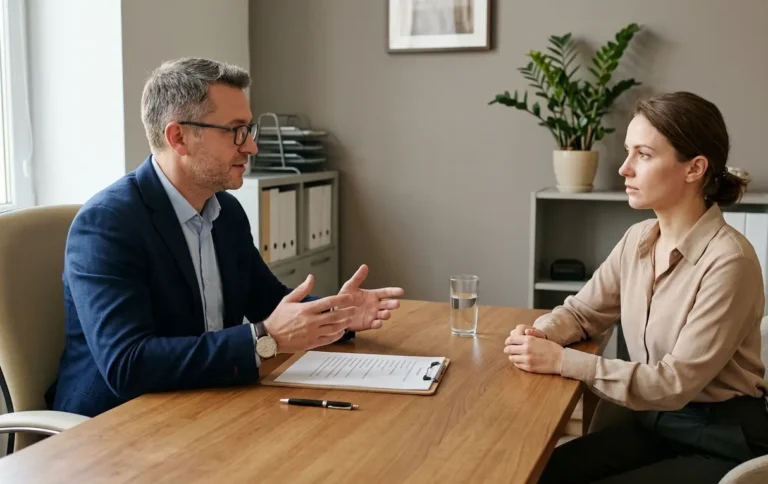
What Questions Are Asked on a Polygraph: Types, Examples and What You Cannot Ask Editorial Team, Polygraph Examiners...
Read more →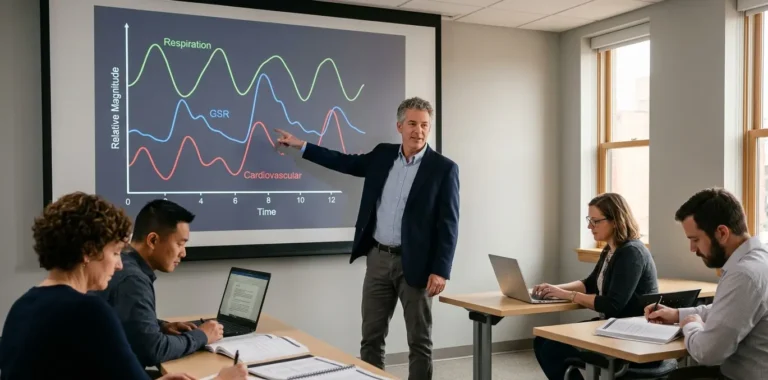
How to Become an Expert Polygraph Examiner: Training, Certification and the Path to Professionalism Editorial Team,...
Read more →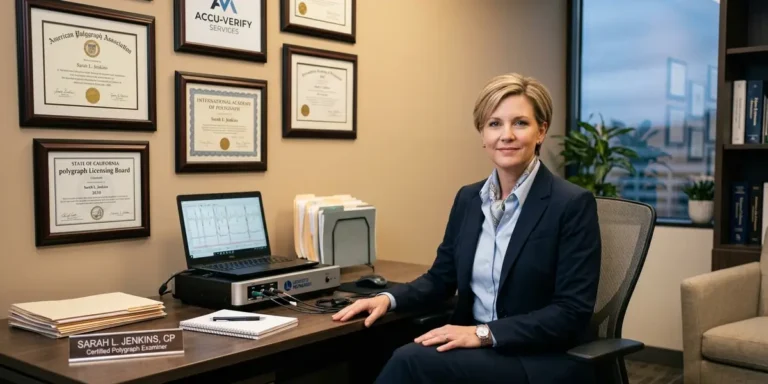
How to Choose a Reliable Polygraph Examiner: 7 Signs of a True Professional A lie detector test is a serious procedure...
Read more →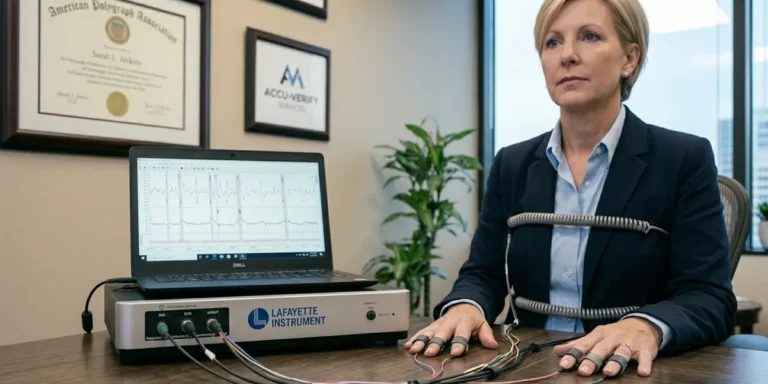
How a Lie Detector Works: Physiology, Technology, and Stages of a Polygraph Test The term "lie detector" is familiar to...
Read more →Certified SPU examiners work across Europe, Asia and North America — choose your country

1
2