The Polygraph Examiners Union of Ukraine (SPU) runs certified lie detector tests in Dublin — at our room on Sir John Rogerson's Quay or at an address you name anywhere in the city and the commuter belt. You hear the preliminary conclusion on the day of the test.
A standard private lie detector test in Dublin is €425, covers one subject on one topic, and runs 1.5–2.5 hours from the interview to the conclusion. Accuracy is 95–98%. Sessions are held at 77 Sir John Rogerson's Quay, Dublin 2, or at an address you choose — a home in Rathmines, an office in the Docklands, a meeting room in Swords. You hear the preliminary conclusion immediately after the session; the signed written report follows within 3–5 business days and is included in the price. The online format costs €175. Every SPU examiner is listed in the official Register of Polygraph Examiners of Ukraine, and the preliminary consultation costs nothing.
Almost nobody arrives out of curiosity. People come when a question has stopped being answerable by talking about it — when the same conversation has run four times and ended four times in the same place. Below are the requests we see most often from Dublin clients.
Dublin produces a particular kind of case, and it comes from how people here actually live. A very large share of adults share accommodation well into their thirties, often with people they did not choose and barely knew a year earlier. When cash goes missing from a shared kitchen, there is no manager to escalate it to and no version of the conversation that does not damage the house.
The second pattern comes from small companies. A city of start-ups, agencies and contractors means teams of eight or twelve where everyone has access to everything, and where a leaked figure or a shortfall cannot be traced through any system, because there is no system — there is a shared drive and a lot of trust. An internal investigation in that setting is not an HR procedure; it is a conversation nobody knows how to start.
The third is distance. Families split between Dublin and somewhere else — another county, another country — carry suspicions that never get tested in person. Those are the cases that most often end in the online format rather than a room.
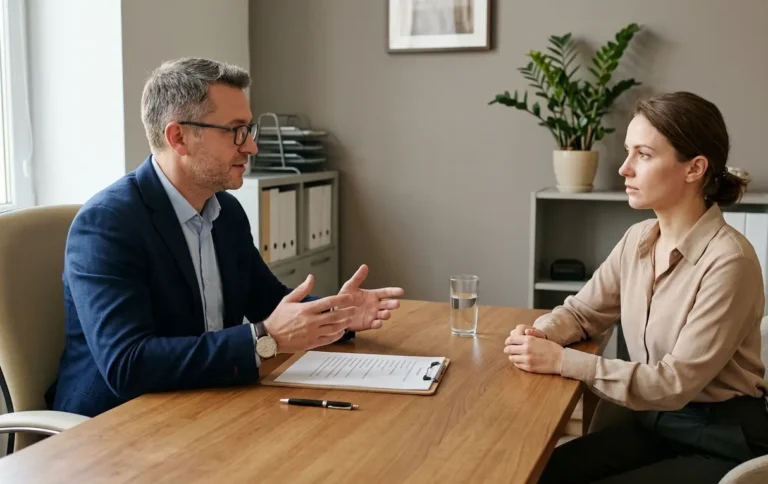
You and the examiner agree the exact wording of every question. Nothing is asked during the test that you have not seen and approved. This part takes the longest and matters the most.
Participation is voluntary and documented. The examinee can stop the session at any point without giving a reason, and that right is explained before anything is connected.
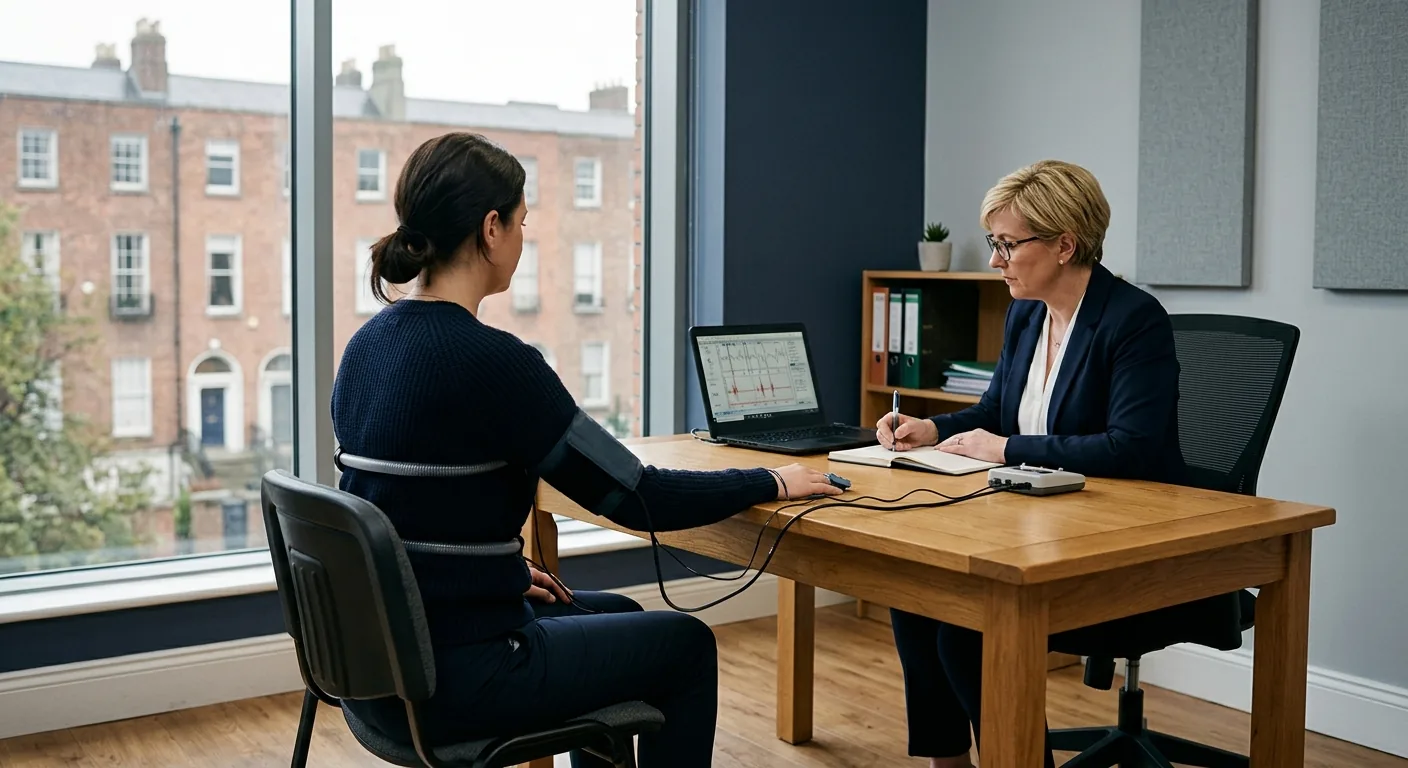
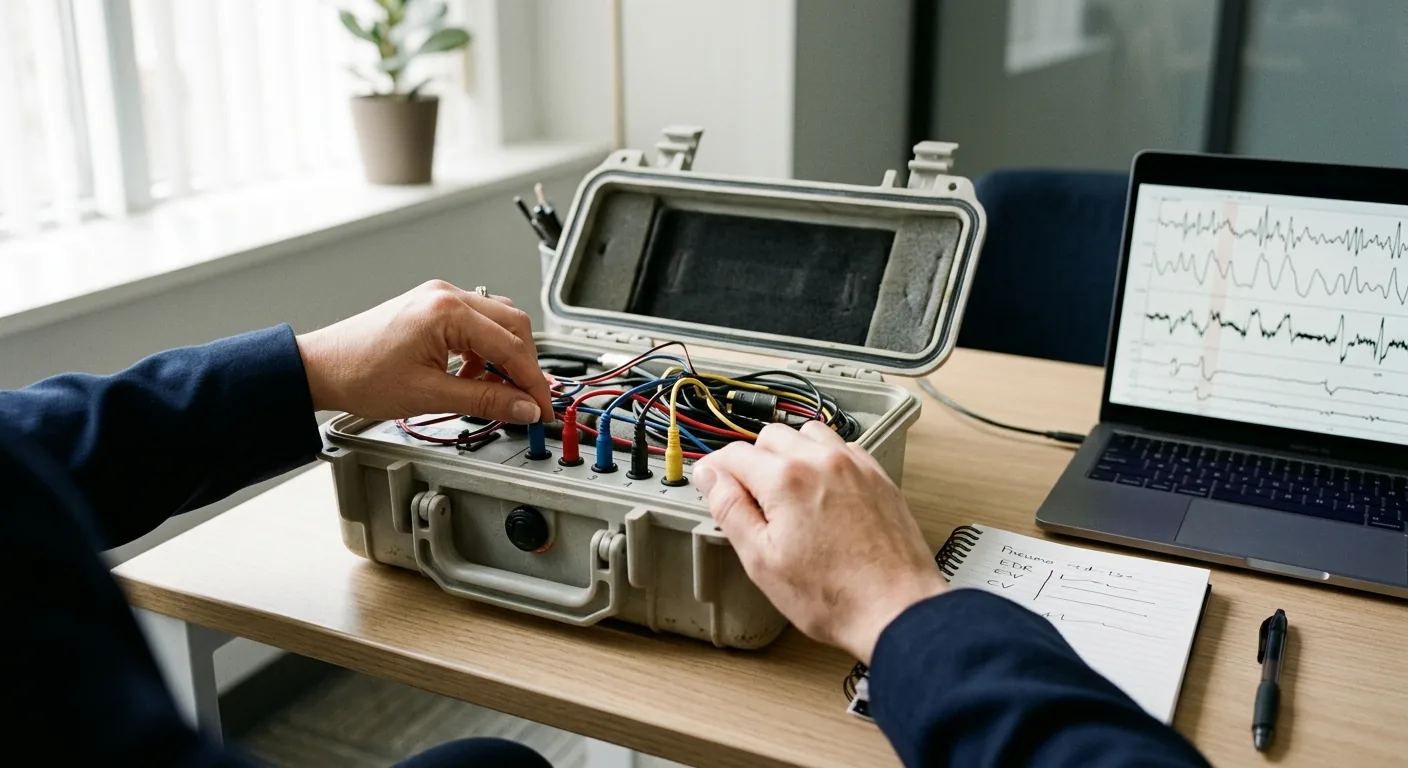
Sensors record breathing, cardiovascular activity and skin conductance while the agreed questions are put in several standardised sequences. Nothing hurts and nothing is invasive.
The examiner reads the charts and gives you a preliminary answer verbally before you leave. The signed written report arrives within 3–5 business days.

One price for a standard examination, not an hourly rate, so you know the cost before booking. The consultation beforehand is free and the written report is included — there is no separate charge for the document. Dublin prices are the national ones: there is no city surcharge and no travel fee inside the county.
| Format | What it covers | Price, EUR |
|---|---|---|
| Standard lie detector examination | One person, one question; interview and testing together take 1.5–2.5 hours; the signed report is part of the price | €425 |
| Online-format examination | Used when the people concerned live apart and no single room could hold both of them | €175 |
| Testing in a foreign language | Applies if the session has to be conducted outside the languages the examiner works in | +€80 |
| Multi-topic or corporate examination | More than one person, a company investigation, or a date we have to clear the diary for | Quoted individually |
The standard price covers most private requests, including settling a family conflict, a check before marriage, an examination at a solicitor's request and a visit by the examiner to your own address. An internal company investigation is quoted on its own terms: the cost there follows the number of people and the number of sittings, not a list price.
The figures above are a starting point. What you actually pay is fixed during the consultation, once we know how many questions and how many people the case involves.
Dublin sessions are run by SPU-certified examiners and by local partner examiners working to the same union protocols and the same consent procedure. We do not publish names on the site: a good part of our work is confidential by its nature, and clients ask us not to. You will know exactly who is coming before the appointment.
Handles cases where a company needs an answer about a specific incident — stock that does not reconcile, a figure that reached a competitor, a shortfall nobody will claim. Works with the owner or the solicitor to define the question narrowly enough to be testable, which is where most corporate requests fall down before they start.
Handles the sessions people find hardest to book. Spends longer on the pre-test interview than the test itself takes, because in private cases the real work is turning a painful, sprawling story into three or four questions that can actually be answered yes or no.
A twelve-person agency in the Docklands found that its pay figures were being discussed by a client. Four people had access to the file and all four denied it, and the owner was a fortnight away from letting the wrong person go on instinct. All four volunteered for an examination and signed consent. The session identified the route the file had taken and, just as importantly, cleared three people who had spent a month under quiet suspicion from colleagues they still had to sit beside.
After a funeral in Drumcondra, a car and a small sum of money became the thing two brothers stopped speaking over. Neither wanted a solicitor and neither would drop it. They agreed to one examination each, with four questions they wrote together at the kitchen table. The result did not settle who deserved what — that was never the test's job — but it removed the accusation that had been making any conversation impossible, and they divided the estate themselves a month later.
A ring went missing from a bedroom in Rathgar and the family's cleaner of six years understood perfectly what was being implied, though nobody had said it. She contacted us before the family did and asked to be tested. The examination supported her account; the ring turned up three weeks afterwards in a coat pocket. This is the use of the method we are most often glad of: it protected someone honest rather than exposed anyone.
A man in Tallaght was accused, in messages circulated among mutual friends, of something he said had never happened. There was nothing to investigate and nothing to disprove — only a story that had already reached everyone he knew. He asked for an examination and for a signed report he could show. The report did not undo the messages, but it gave him something to put in front of people that was not simply his word again.
People arrive with situations they have not described to their closest friends. Discretion here is a written procedure, not a reassurance offered in passing.

Standardised CQT and CIT protocols on professional equipment

Sir John Rogerson's Quay, or the examiner travels anywhere in the county

The examiner tells you the outcome before you leave; the document follows in 3–5 business days

Signed consent, a closed room and a confidentiality procedure that is written down, not implied

Every examiner is in the public register and answerable to the union, not only to themselves

One price agreed before booking, with the written report included
An employer here may propose an examination but cannot require one: participation is voluntary, consent must be informed and in writing, and anything recorded falls under ordinary data-protection duties. Inside those limits, city companies use testing for three narrow purposes — clarifying one specific incident such as a shortage or a leak, voluntary screening for roles with access to cash, stock or client data, and periodic checks agreed with staff in advance. A result informs a decision; it does not replace a fair internal process, and no reputable examiner will let it be used as one.
Several people at once. From five respondents upwards we set a case rate and work around your hours — in practice that means early starts or a Saturday on your own premises. Message us and you will have an answer the same day.
Most sessions take place at 77 Sir John Rogerson's Quay, Dublin 2, D02 VK60 — a short walk from the Docklands and easy to reach from the south quays. The examiner also travels: Rathmines, Ranelagh, Clontarf, Drumcondra, Dundrum, Sandyford, Blackrock, Dún Laoghaire, Swords, Malahide, Blanchardstown, Tallaght, Clondalkin and Lucan, and out into the commuter towns — Bray, Greystones, Maynooth, Leixlip, Ashbourne. For many clients a session at their own address is simply easier than a trip into the centre.
Any quiet closed room of about 10 m² will do: a room at home, a meeting room, a rented office, a hotel room. What the session needs is privacy and two uninterrupted hours, not a particular kind of space. If your case sits outside the county, the same terms apply elsewhere in the country — see lie detector testing across Ireland.
When we reply: messages on WhatsApp, Telegram and Viber are answered daily, 06:00–20:00 local time.
Testing privately and voluntarily is lawful here, and what you are left with is a signed document from a certified examiner. Courts, though, do not hold lie detector findings to be evidence in the ordinary sense; admission is the exception rather than the rule, and where a judge does let a report in, its weight is entirely at their discretion. Expect it to carry a case by itself and you will be disappointed. Set beside other material — in a private dispute, a negotiation, a family matter, a decision taken inside a company — it does the job our Dublin clients actually need doing. Where litigation is a real prospect, talk to your solicitor about the format before booking and we will build the examination around that.
Preparation is not really a thing you can do. Get a normal night's sleep, leave alcohol and sedatives alone for the previous day, eat as you would on any other morning, and give yourself enough margin not to walk in off a delayed bus. Medication on prescription changes nothing — say so during the interview and it is taken into account, as a matter of routine.
Being nervous is the norm and affects nothing: every question will have been agreed with you beforehand, and the method exists precisely to separate ordinary nerves from a concealment response. What does show up, clearly and unhelpfully, is any attempt to manage your own breathing. If you want to know what tends to be asked, our guide to the questions used on a polygraph covers it.
€425 for the standard examination: one person, one topic, 1.5–2.5 hours, signed report part of the price. Online it is €175, and a session outside the examiner's working languages adds €80. Anything involving several people or several topics gets a figure of its own after the free consultation. Nothing is added for being in Dublin, and travel inside the county is not charged.
They are two names for one procedure. The instrument is a polygraph; “lie detector” is what almost everyone calls it. Whichever term brought you here, what you book in Dublin is identical — the same equipment, the same pre-test interview and the same €425 for a standard single-topic examination. The wording changes nothing about the session.
In most cases you do not travel far: the examiner comes to you. Sessions take place at 77 Sir John Rogerson's Quay in Dublin 2, or at an address you name — Rathmines, Clontarf, Dundrum, Swords, Blanchardstown, Tallaght, Dún Laoghaire and the commuter towns included. A closed room of about 10 m² is all that is needed, at home, in a rented office or in a hotel.
Between 1.5 and 2.5 hours from arrival to conclusion. Most of that is the pre-test interview, where the wording of every question is agreed with you; the recording itself is the shorter part. You hear the preliminary answer before you leave and receive the signed report within 3–5 business days.
95–98% when the examination is run to standardised CQT and CIT protocols on professional equipment, with questions agreed in advance and the examinee in a fit state to be tested. Accuracy falls when the question is too broad to be answered yes or no, which is why the interview matters more than anything else in the process.
Not as ordinary evidence. As a rule the courts do not admit lie detector results, although a judge may allow a report to be put before the court and decide what weight to give it. A report on its own is rarely decisive; alongside other material it can support a position. If a courtroom is a realistic prospect, agree the format with your solicitor before booking.
No. An employer may propose an examination, but participation is voluntary and requires informed written consent, and a refusal is not a finding. We will not run a session where the consent looks less than genuine, and we say so to the company rather than to the employee.
Anyone under 18 is examined only with the written consent of a parent or guardian, who is present throughout, and only if the young person agrees. If the interview suggests the request is really about a family conflict rather than a testable question, we say so and recommend against the session.
Yes, for €175, and it is the usual choice when the people involved are in different countries. It follows the same interview and consent procedure. Where an in-person session is realistic we recommend it: the examiner sees the whole person rather than a frame of video.
Describe the situation in a message and we will tell you honestly whether an examination will answer your question. The consultation costs nothing and commits you to nothing.
Leave your name and a contact and we will come back the same day with available times and a firm price. If the request is urgent, a message on WhatsApp or Telegram reaches us faster than the form.
Address: 77 Sir John Rogerson's Quay, Dublin 2, D02 VK60
Email: contact@polygraph-spu.com
Hours: daily, 06:00–20:00
What Questions Are Asked on a Polygraph: Types, Examples and What You Cannot Ask Editorial Team, Polygraph Examiners...
Read more →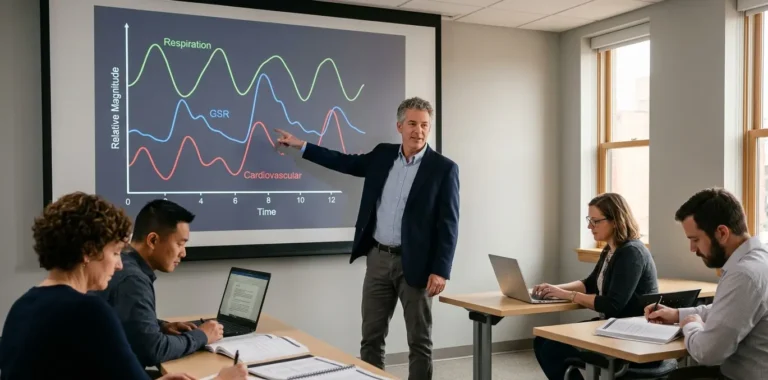
How to Become an Expert Polygraph Examiner: Training, Certification and the Path to Professionalism Editorial Team,...
Read more →
How to Choose a Reliable Polygraph Examiner: 7 Signs of a True Professional A lie detector test is a serious procedure...
Read more →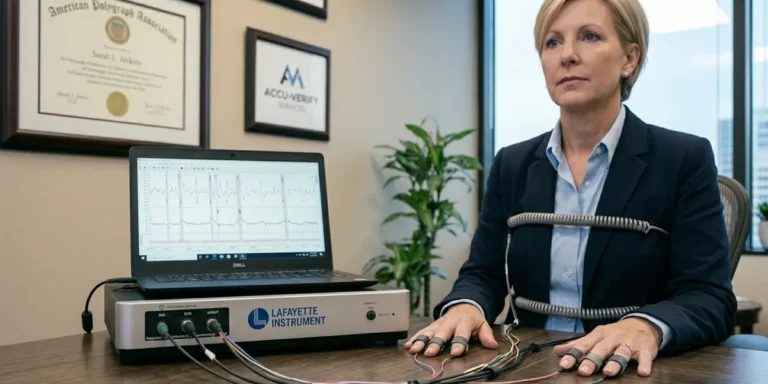
How a Lie Detector Works: Physiology, Technology, and Stages of a Polygraph Test The term "lie detector" is familiar to...
Read more →Certified SPU examiners work across Europe, Asia and North America — choose your country

1
2