The Polygraph Examiners Union of Ukraine (SPU) runs certified lie detector tests across the United Kingdom — England, Scotland, Wales and Northern Ireland. A local SPU examiner meets you in your city, and you hear the preliminary conclusion on the day of the test.
In short: a private lie detector test in the UK costs £365 for a standard single-topic examination, takes 1.5–2.5 hours and delivers 95–98% accuracy. The session is held in a private room in your city — Leeds, Liverpool, Sheffield, Cardiff, Belfast, Newcastle or anywhere else in the country. You hear the preliminary conclusion right after the test; the written report follows within 3–5 business days and is included in the price. SPU examiners are listed in the official Register of Polygraph Examiners of Ukraine, and our local partner examiners work to the same protocols, and the preliminary consultation costs nothing.
Britain has one of the oldest private polygraph markets in Europe, and people here rarely arrive with a vague worry. A small business loses cash from the till with four keyholders on shift; a relationship stalls on an accusation neither side can prove; someone is named in an incident at work where no camera covers the spot. Trust breaks quickly in all three, and there is rarely a document or a neutral witness to settle it.
That is the gap a lie detector fills. It does not replace a conversation or a solicitor; it gives one verifiable answer to a question that has been circling for months. Below are the requests we receive most often from clients in the UK.

Months of doubt, screenshots read a hundred times, an argument that restarts every evening. One session ends the guessing.
Infidelity test →
Voluntary screening of candidates for roles with access to cash, keys, client data or stock.
Personnel screening →
A psychophysiological examination when you are accused without evidence and need something more than your word.
Forensic testing →
Checking the intentions of a partner or a borrower before you sign, lend or invest.
Borrower assessment →
Nannies, carers, cleaners and drivers — the people who hold your keys while you are at work.
Household staff vetting →
Vapes and substances, money vanishing at home, a new circle of friends nobody has met.
Teen testing →Almost every request we take in Britain comes down to one specific factual question that two people cannot settle between themselves: whether money left the till, whether a message meant what it looked like, whether someone was where they said they were. Private testing is a familiar service here, and people usually arrive knowing exactly what they want asked.
The single most common reason is a relationship under strain — an accusation repeated for months, or one anonymous message that landed and refused to go away. A test is not a way to corner a partner: in most cases the result confirms the person’s account, and what changes is that the same argument stops reopening every evening. We work only on informed written consent, never behind anyone’s back, and any question can be withdrawn without explanation.
After that come money and reputation. Cash goes missing from a shop with four keyholders; an accusation is made at work where no camera covers the aisle; a private loan is remembered as a gift by one side and as a debt by the other. In all of them the value of an examination is the same — a documented answer instead of an opinion repeated louder.
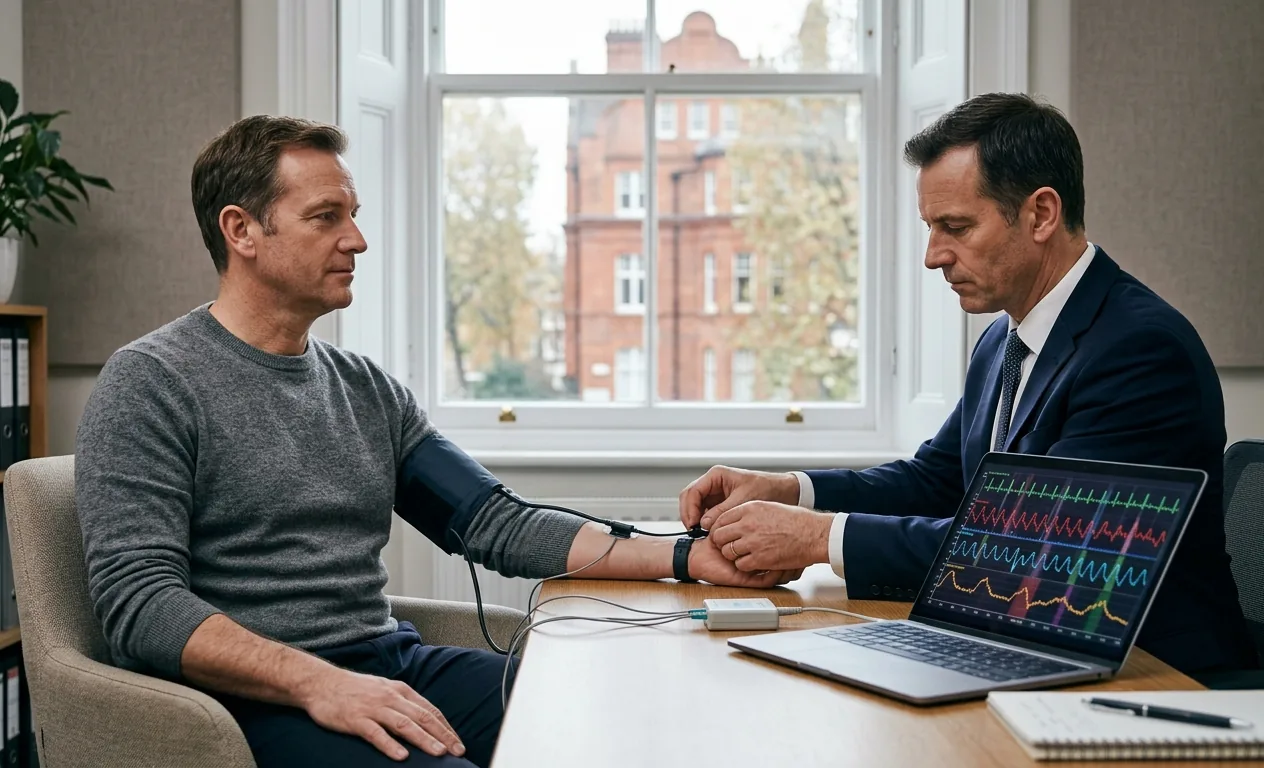
A polygraph records several physiological channels at the same time: breathing, cardiovascular activity, blood pressure and electrodermal response. Attempting to conceal information produces involuntary changes that a person cannot suppress on command.
SPU examiners work to the standardised CQT and CIT protocols used by law-enforcement and government agencies internationally. Accuracy under protocol is 95–98%.
The examiner clarifies the situation and agrees the exact wording of every question with you. Nothing is asked that you have not seen in advance.
Painless and non-invasive. The sensors only record parameters your body produces anyway.
A series of yes/no questions, repeated in several charts so that a chance reaction cannot decide the outcome.
A verbal preliminary conclusion immediately after the session; the signed written report within 3–5 business days.
A polygraph does not read thoughts and does not detect a lie as such. It compares how the body reacts to relevant questions against how it reacts to control questions, across four channels at once. Because those reactions are involuntary, they appear before a person has finished deciding what to say.
A conclusion is never drawn from one spike on one chart. What matters is a consistent pattern repeated across several presentations — which is precisely what filters out ordinary nervousness, and why deliberate countermeasures tend to make a chart more obvious rather than less. If you want the mechanics in detail, our editorial team explains them step by step in the guide on how a lie detector works.
Being honest about the limits is part of doing this properly. A lie detector test answers narrow, factual questions about events: whether money was taken, whether a specific meeting happened, whether a candidate concealed a dismissal. It cannot measure feelings, predict future behaviour or establish who was morally right in a quarrel — and any examiner who promises that is selling something else.
That is why the pre-test interview matters more than the equipment. Half the cases we are called about turn out to need two or three sharply worded questions instead of the fifteen the client arrived with, and occasionally we say plainly that a polygraph is the wrong instrument for the situation. That conversation is free, and it happens before you pay anything.
We charge a single transparent price for a standard examination rather than an hourly rate, so you know the cost before you book. The preliminary consultation is free, and the written report is included — there is no separate charge for the document.
| Format | What it covers | Price, GBP |
|---|---|---|
| Standard polygraph examination | One subject, one topic; 1.5–2.5 hours including the interview; written report included | £365 |
| Online-format examination | When the parties are in different countries and an in-person session is impossible | £150 |
| Testing in a foreign language | Surcharge when the session is run in a language other than the examiner's working ones | +£70 |
| Multi-topic or corporate examination | Several respondents, an internal investigation, urgent scheduling | Quoted individually |
The standard price applies to the great majority of private requests, including resolving family conflicts, a check before marriage, theft detection, testing at a solicitor's request and an examiner's visit to your address. Business formats such as an internal investigation or a scheduled staff check are priced per case, because the workload depends on the number of people involved.
Prices are indicative and confirmed after the free preliminary consultation — the final figure depends on the number of topics, the number of respondents and the testing location.
| Criterion | SPU | Independent examiner |
|---|---|---|
| Certification | ✓ Entry in the official register | Varies; often unverifiable |
| Methodology | CQT + CIT, standardised protocols | Down to the individual |
| Quality control | Charts reviewable by a second examiner | None |
| Accountability | Collegial, through the union | Personal only |
| Confidentiality | Documented procedure and consent forms | Not regulated |

Tests in Britain are run by local certified partner examiners of the Polygraph Examiners Union of Ukraine. Which of them takes your case depends on the subject — corporate and legal work and personal matters call for different experience.
Both work to SPU methodology and under the union's quality control: the question list is agreed in advance, the charts can be re-read by a second examiner, and the conclusion is issued on a union form. We name the examiner assigned to you when the appointment is confirmed.
Not sure which format fits your situation? Describe it — the consultation is free and costs you nothing to ask.
Get a consultationThe owner of a small café had been losing money from the till for four months. Three people had access to it, all of them denied any involvement, and dismissing everyone would have closed the business. A voluntary screening of the staff identified the person responsible and cleared the other two, who stayed on. The written report supported a quiet, lawful dismissal instead of a public accusation.
A couple had spent four months on the same argument after an anonymous message claimed one of them was seeing someone else. There was nothing to check and nobody to ask. They booked a session together, agreed the wording of three questions and got a clear answer within two hours. The message turned out to have come from a former colleague with a grudge; the marriage survived what the rumour had nearly ended.
Two acquaintances disagreed about the terms of a private loan of several thousand pounds: one insisted it was an investment, the other that it was a debt. Rather than starting a claim neither could afford, both agreed to a lie detector test arranged through their solicitor. The dispute was settled privately within a fortnight.
A young warehouse worker in Leeds was suspected by colleagues of taking stock. There was no CCTV covering the aisle and no evidence either way, but the atmosphere on the shift had become unbearable. He requested the test himself. The result supported his account, and the examination did what it does at its best — protected an honest person rather than exposed a dishonest one.
People come to us with situations they have not discussed with their closest friends, and a lie detector test is not something anyone wants talked about afterwards. Discretion is therefore built into how we work, not promised in passing.

Standardised CQT and CIT protocols on professional American instruments

A session at our own address or a visit to yours anywhere in the country

Verbal conclusion right after the session, signed report in 3–5 business days

Written consent, a private setting and a documented confidentiality procedure

SPU-certified examiners working to union protocols and quality control

The wording of every question is agreed with you before the test begins
British law does not prohibit an employer from proposing a lie detector test, but it does not create a right to insist on one either: participation is voluntary, consent must be informed and in writing, and the outcome cannot substitute for a fair disciplinary process. Within those limits, companies use testing for three things — screening candidates for roles with access to cash and stock, resolving a specific incident such as a leak or a shortage, and periodic checks of sensitive positions where the alternative is suspicion of the whole team.
Group testing. For five respondents or more we agree a per-case rate and a schedule that does not stop the working day. Ask in WhatsApp or Telegram — we reply the same day.
Our address is 4–12 Regent Street, SW1Y 4RG, and everything specific to the capital is on the lie detector test in London page. Three other cities have pages of their own — Manchester, Birmingham and Glasgow. Sessions are also held on request in Liverpool, Leeds, Sheffield, Bristol, Cardiff, Edinburgh, Belfast, Newcastle, Nottingham, Coventry, Leicester and other cities across England, Scotland, Wales and Northern Ireland.
For a visit, any quiet room of about 10 m² is enough: a meeting room, a study at home, a serviced office or a hotel room. What matters is that the room is closed, reasonably quiet and free of interruptions for two hours — not that it looks like a clinic.
When we reply: messages on WhatsApp, Telegram and Viber are answered daily, 06:00–20:00 local time.
Private, voluntary polygraph testing is entirely lawful in the United Kingdom, and you receive a signed report from a certified examiner. In criminal proceedings a polygraph result is not admitted as evidence of guilt or innocence; in civil and family matters a judge may allow it to be put before the court, though it is treated as one element among others rather than as proof on its own. In practice most of our British clients use the report exactly where it works best — in private disputes, negotiations, internal company decisions and family situations. If your case is heading to court, agree the required format with your solicitor first and we will prepare the examination accordingly.
There is nothing to revise and nothing to prepare before a lie detector test. The best condition to arrive in is an ordinary one: a normal night's sleep, no alcohol or sedatives the day before, your usual meals, and enough time so that you are not running from a train. If a doctor has prescribed you medication, simply say so during the interview — that is a routine part of the procedure and almost never a reason to postpone.
Rehearsing answers is counterproductive. You will see and approve every question beforehand, and the method is built to distinguish natural nervousness from a concealment reaction. Practically everyone is anxious in the first ten minutes; the charts account for that.
The procedure is safe and painless, but there are situations in which the result would not be reliable: an acute cardiovascular or neurological condition, pregnancy, severe acute stress or bereavement, and alcohol or sedatives taken within the previous day. Anyone under 18 is tested only with the written consent and presence of a parent or guardian.
The examiner screens for these during the mandatory pre-test interview, so it pays to be candid about how you feel and what you take. If you are unwell on the day, moving the appointment by several days costs nothing and protects the accuracy of the outcome.
A standard examination costs £365. That covers one subject and one topic, 1.5–2.5 hours of work including the pre-test interview, and the signed written report. The online format is £150, and testing in a foreign language adds £70. Multi-topic and corporate cases are quoted after the free consultation.
In most cases you do not travel at all — the examiner comes to you. Sessions take place at our address at 4–12 Regent Street, or at an address you name in Leeds, Liverpool, Sheffield, Cardiff, Belfast, Newcastle and other cities. Any closed room of about 10 m² is suitable, including a room at home or a booked meeting room.
Usually within a few days in the capital and with a little more notice elsewhere in the country, depending on the schedule. Urgent bookings are possible — call and we will name the earliest slot available.
English, and on request Spanish, Russian or Ukrainian. The language is fixed before the session, because the wording of every question is agreed with you in advance — that agreement is part of the methodology, not a formality.
Not in criminal proceedings: polygraph results are not admitted there as evidence. In civil and family matters a judge may permit the report to be submitted, weighing it alongside other material rather than on its own. Most clients use the report in private disputes, negotiations and internal company decisions — discuss court use with your solicitor before booking.
No. Participation is voluntary in every case, and it requires your informed written consent. An employer may propose an examination, but refusing one is not in itself grounds for a disciplinary outcome, and the report cannot replace a fair process.
Yes, with three conditions: written consent and the presence of a parent or legal guardian, genuine willingness on the teenager's part, and an adapted set of questions. If the young person refuses, we do not run the session — a test taken under pressure is worthless in both senses.
Free consultation — we will match the format and the examiner to your situation
Describe the situation in a couple of sentences. We will come back to you, say honestly whether an examination will answer your question, and name the price and the nearest available date. The consultation costs nothing and commits you to nothing.
Prefer to write? Any of these reaches us directly:
What Questions Are Asked on a Polygraph: Types, Examples and What You Cannot Ask Editorial Team, Polygraph Examiners...
Read more →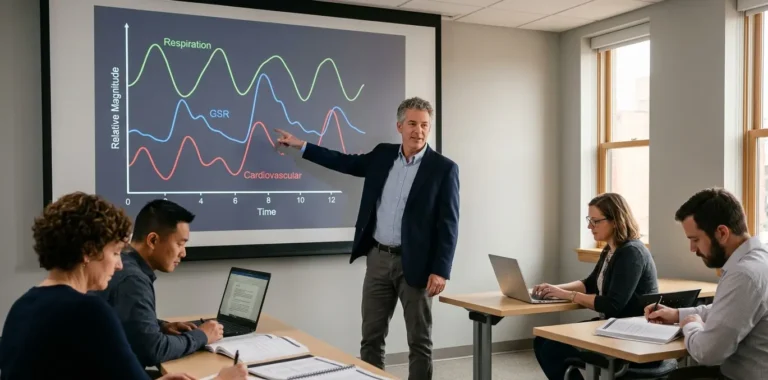
How to Become an Expert Polygraph Examiner: Training, Certification and the Path to Professionalism Editorial Team,...
Read more →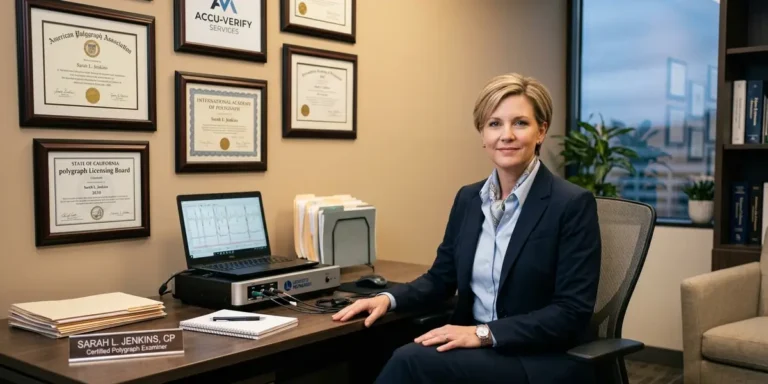
How to Choose a Reliable Polygraph Examiner: 7 Signs of a True Professional A lie detector test is a serious procedure...
Read more →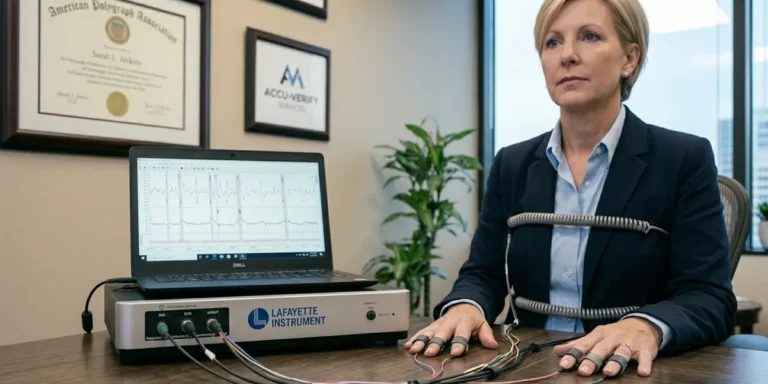
How a Lie Detector Works: Physiology, Technology, and Stages of a Polygraph Test The term "lie detector" is familiar to...
Read more →Certified SPU examiners work across Europe, Asia and North America — choose your country


1
2