Between a course graduate and a real expert lies a distance of several years. In addition, it means hundreds of exams and a deliberate growth strategy. However, at the start this distance is almost always underestimated. It seems as if a certificate is enough to work on par with recognized specialists.
A basic certificate earned in 4–6 weeks does open the door to the profession. However, on its own it does not make a graduate a specialist for serious cases. After all, courts, corporations and lawyers must trust their conclusions. Therefore, this article is about how to become a polygraph examiner and cover the whole distance. We will look at where to study, how many years and how much money to spend, and which certificates to collect.
Below we will cover each layer of the profession in order. First, the formal requirements for a candidate. Second, international APA and EPA certification. Third, internships and forensic accreditation. In addition, we will count the real budget and market salaries. So if your goal is recognized status rather than a "piece of paper", the plan will become clear.
In short. To become a polygraph examiner in Ukraine, you need a basic course. That is 250–300 hours, 4–6 weeks and $1,200–3,000. Then comes an internship on dozens of real tests and an association license. So the path to a practitioner level takes about 1–1.5 years. But reaching a recognized expert with APA/EPA certification takes 5–7 years and $15,000–40,000. At the same time, "weekend" courses do not exist. After all, the cost of an examiner's mistake is too high.
Fact: in 2025, the National Qualifications Agency of Ukraine approved the "Polygraph Examiner" professional standard. This happened for the first time in the country's history. In addition, a leading examiners' association was named the authorized body. So the profession left the "grey zone" and gained a formal framework.
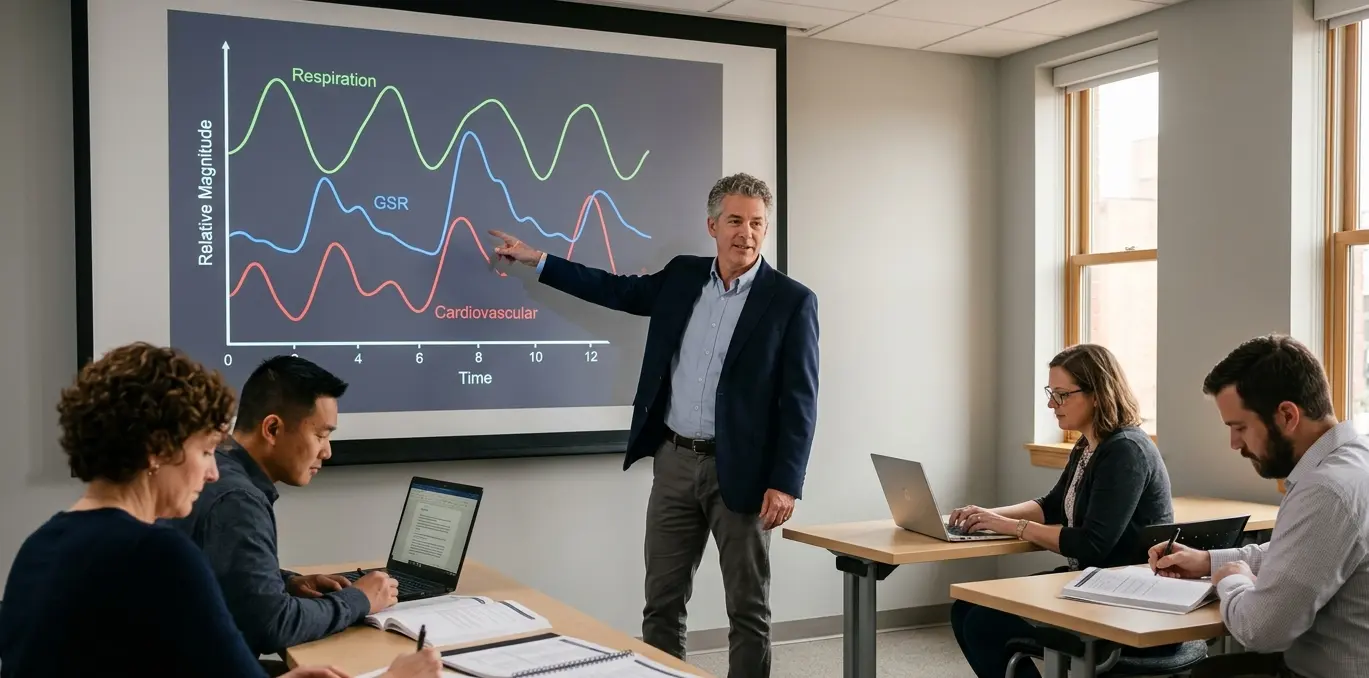
From the outside, an examiner often looks like a device operator. Supposedly, they only press buttons and watch the lines. This image took hold in movies. However, in practice it is different. A large part of the work happens before the chair. In addition, it continues long after the sensors come off. Any full session splits into three stages. Each of them requires separate skills. At the same time, a failure at the first stage cancels the rest.
The pre-test interview. First, the expert builds contact with the client. Then they explain the procedure and check the psychophysiological state. Next, they agree on every question that will be recorded. So this is mainly a communicative and psychological task. Therefore, it needs human skills, not technical ones.
The test. But at this stage the work is already technical. It is the correct placement of sensors and control of recording quality. In addition, it is the choice of method and correct presentation of question series.
Chart analysis. This is the most analytical stage. The expert compares reactions to different question categories. For this, they apply a validated numeric scale. In addition, they detect artifacts. Next, they separate a reaction to stress from a reaction to a lie. As a result, they form a written conclusion. This document can pass review in court.
Between sessions there is plenty of work too. The examiner reads case files and agrees wordings. In addition, they write reports and calibrate equipment. So this is work at the crossroads of psychology, physiology, law and data analysis.
Polygraphy is a broad field. Therefore, over time an expert focuses on one or two areas. After all, the skills for a family case and a criminal one barely overlap.
The most common area is personnel screening. These are checks of candidates for "sensitive" positions. Most careers start here. After all, the volume of orders is steadily high and the format is repeatable.
The next level is corporate investigations. These are internal official investigations of theft and leaks. Here, skills for working with groups are needed. In addition, legal literacy matters.
The hardest areas are criminal studies and forensic psychophysiological testing. They require years of experience. In addition, separate forensic accreditation is needed.
A separate large group is family matters. These are marital fidelity testing and testing teenagers. Formally they are simpler. However, they are emotionally heavier than many criminal cases. Therefore, communication skills are critical here.
There is also a narrow international specialization — PCSOT. In England and Wales it is mandatory by law. It is used to test released offenders on probation. In addition, it requires at least 40 hours of extra training.
Ads for a "three-day course" appear on the market regularly. Behind them is either a cut-down program or outright fraud. Either way, a serious certificate in a week is impossible. After all, a minimal serious program in Ukraine is about 250 hours. In addition, APA and EPA standards require 400 hours or more.
The reason is simple. An examiner's mistake is costly, and other people pay for it. For example, a false positive ruins an innocent person's career. And a false negative lets the guilty avoid responsibility. Therefore, for 95–99% accuracy a specialist masters more than the device. They study dozens of methods and interpretation norms. Above all, they learn to tell stress from a lie. This takes hundreds of repetitions on real people.
Formal requirements vary from country to country. However, the typical Ukrainian picture looks like this. First, higher education — preferably in psychology, law or medicine. Second, at least three years of professional experience. And this is not a formality. After all, psychophysiology rests on anatomy, psychology and statistics. Therefore, candidates without this base fall behind quickly.
The American path is tougher. APA schools require at least an associate's degree. In addition, they require two years of investigative experience. For example, in police, the army or corporate security. But the European model is closer to the American one. Membership in the EPA needs more than 400 hours of training. In addition, a reference on moral reliability is required.
Education can be supplemented, but character cannot. After all, an examiner constantly works with people under stress. For example, they must stay calm with a suspect. At the same time, they show empathy to a wife who suspects cheating.
Therefore, the basic set of qualities is not up for debate. These are stress resistance, observation and emotional stability. In addition, discipline and a taste for analytical work are needed. An ethical core matters just as much. After all, the specialist is constantly under pressure. For example, one could "tweak" wording in one side's favor. However, the association code and personal principles help you resist.
Technical requirements are added to the formal ones. Most centers expect a laptop with Windows 10 or newer. In addition, an Intel i3 processor and at least 8 GB of memory are needed. After all, polygraph software is resource-heavy. There are also direct limits for candidates. For example, people with an unspent conviction are not accepted. Likewise, active substance dependence leads to refusal.
Important: suppose you have no higher education but do have military or law-enforcement experience. Then many centers accept you on a shortened track. The same applies to combat veterans. In addition, such categories often get discounts of 20% or more. And for veterans with a disability — up to 50%.
Ukraine has a relatively mature training system. About five or six serious-level centers work on the market. In addition, there are dozens of smaller operators of varying integrity. Three signs define a center's quality. First, its own teaching base. Second, practitioner instructors with proven experience. Third, practice on real examinees, not just "training" scenarios.
Below is an overview by format and average prices. However, it is without names and ratings. After all, the specific center is better chosen on your own. For example, study instructor reputation and graduate reviews.
This is the most common format on the Ukrainian market. It lasts 4–6 full-time weeks. Usually it runs 9:00 to 15:00 six days a week. In addition, homework is included. The total load is 250–300 academic hours. That is roughly 8.5–10 ECTS credits. The program combines theory with work on equipment.
A mandatory part of the course is sessions with real respondents. As a rule, that is at least 15–20 "live" tests. On completion, the student receives a set of documents. First, a certificate from a state-accredited institution. Second, an examiner's license from the association for 3 years. Third, inclusion in the national register of specialists.
In addition, most centers give mentoring support for 3–6 months. And this is a critical period. After all, the graduate builds technique on their first cases. Therefore, advice from a senior colleague is very useful. The cost in this segment is $1,200–3,000. At the same time, some categories get reduced rates.
This is the same amount of theory and practice, but with one student. In addition, it has a flexible schedule and a goal-based program. For example, for corporate investigations or forensic exams. However, the cost is much higher — $5,000–10,000 and more. Therefore, this format is often chosen by specialists from related fields. For example, HR managers, lawyers or security officers. After all, they add polygraphy without leaving their main job.
The blended format is a compromise for students from the regions. First, three or four weeks of theory are taken remotely. Then one or two weeks of in-person practice in Kyiv or Lviv. The cost of this format is $2,000–3,500.
But the purely distance format is the cheapest. It costs $800–2,200. However, it is also the most limited in result. A certificate can be obtained. However, the right to independent practice — practically not. After all, without live respondents a graduate cannot run tests correctly. Therefore, this format makes sense only as a supplement to an in-person course.
Most centers are concentrated in Kyiv. One more large center works in Lviv. In addition, there is a mobile format. Then an instructor comes to the student's city with equipment. However, this costs $1,000–1,500 more. When choosing a course, it is worth clarifying a few details. First, at which institution the certificate is registered. Second, its accreditation level (level 4 minimum). Third, which documents exactly you will receive. After all, the difference between a university diploma and a private center's certificate can be crucial. This is especially so if you plan forensic work.
| Training format | Cost (USD) | Duration |
|---|---|---|
| Basic in-person course | 1,200 – 3,000 | 4–6 weeks |
| Extended program | 3,500 – 5,000 | 6–10 weeks |
| Online course (theory only) | 800 – 2,200 | 2–8 weeks |
| Continuing education | 400 – 1,400 | 1–3 weeks |
| Individual one-to-one program | 5,000 – 10,000+ | by arrangement |
Extra costs should be budgeted alongside the course. First, your own polygraph — practice is impossible without it. Second, specialist literature and analysis software. In addition, conferences and association membership. So with equipment, entering the profession costs $5,000–8,000. But for an expert path the budget differs — $15,000–40,000 over 5–7 years.
Suppose you plan to work on the international market. Then you will need a certificate recognized outside Ukraine. Two main standards apply here. These are the American APA and the European EPA. Both require more hours and money than Ukrainian programs. However, they open a different level of opportunity.
APA is the toughest and most authoritative program. It was founded in 1966. In addition, it belongs to the world's largest examiners' association. A certificate requires finishing an accredited school. That is at least 400 hours, or 10–17 weeks of full-time study. The basic program costs $5,000–6,500. In addition, accommodation and travel costs are added.
After the school, the graduate must complete an internship. That is at least 200 exams under a mentor's supervision. Without it, the certificate is not confirmed. So the right to independent practice does not arise either. Most APA schools are in the US. For example, in California, Georgia and Arizona. But outside the US, only a few programs are accredited. In addition, membership requires 30 hours of study every two years. At the same time, in some states losing membership means losing the right to practice.
The European Polygraph Association unites over 500 specialists from 35 countries. It is considered the second most influential after APA. Training runs through the European Polygraph Academy. At the same time, there are several formats. First, the basic Polygraph Fundamentals — 200 hours and 10 ECTS. Second, professional certification — 525 hours and 20 credits. Third, the Master in Forensic Psychophysiology — 750 hours and 25 ECTS. In addition, it is the only program that grants instructor status.
The training format is blended. It is an online platform for theory plus in-person workshops. The theory module costs $1,500–3,900. In addition, a workshop costs $500–800 more. So this is about 80% cheaper than APA. Membership in the EPA needs at least 400 hours of training. In addition, a reliability reference is required. It also needs three months of temporary membership before permanent status.
The UK has no APA schools of its own. Therefore, local specialists study in the US or Europe. Then they join national associations. For example, UKPA, BPS or BEPA. In addition, the British market has a feature. It is the Offender Management Act of 2007. Under it, testing released offenders is mandatory. So this creates steady demand for PCSOT specialists.
Poland, the Czech Republic and Germany also lack large national schools. Therefore, specialists train at an APA school or through the European Polygraph Academy. Then they join the EPA or local bodies. In addition, there is no state licensing like in the US. So membership in the EPA or APA effectively grants the right to practice.
| Parameter | APA (US) | EPA (Europe) | Ukrainian course |
|---|---|---|---|
| Training volume | from 400 hours | 200–750 hours | 250–300 hours |
| Duration | 10–17 weeks | blended format | 4–6 weeks |
| Training cost | $5,000 – 6,500 | $1,500 – 3,900 | $1,200 – 3,000 |
| Internship | 200 supervised tests | in-person workshop | 15–20 tests + 6 mo. mentoring |
| Recognition | US, Canada, English-speaking world | 35 European countries | Ukraine |
| Continuing education | 30 hours every 2 years | regular continuing education | membership renewal every 3 years |
The country and center may differ. However, a professional program is always built around six blocks. Suppose the course ad is missing one of them. Then it is a reason to doubt the quality. So the rough "skeleton" of serious training looks like this:
This is the foundation of the whole profession. It covers the autonomic nervous system and the "fight or flight" response. In addition, the mechanism of cognitive load during deception. It also covers neuroscience models of lying. For example, the work of Sean Spence and Daniel Langleben. In addition, statistical methods and the classics are added. Without this block, an expert cannot tell arousal from a lie. So any of their conclusions would be a guess.
There are three families of methods, and a specialist must master all. First, CQT (the control question method) is the most common. It compares the reaction to a relevant and a control question. Second, GKT/CIT works differently. Here, a series of alternatives is presented. At the same time, a reaction appears only to the one "familiar" to the true participant. Third, R/I is historically the oldest scheme. Today it is used sparingly, mainly in screening. However, mastering the methods is not enough. After all, choosing the wrong method nullifies the result.
A legal and ethical base is mandatory for any course. It is the data protection law and consent rules. In addition, professional ethics and the ban on coercion. But for forensic work a separate module is added. It covers preparing a conclusion for court. In Europe, GDPR is also studied by default. After all, breaking it costs tens of thousands of euros.
Working with equipment is the hands-on mastery of polygraphs. In Ukraine this is usually three types of devices. First, the Ukrainian RUBICON. Second, the American Lafayette LX5000 and LX6. Third, the premium Axciton. Students learn to attach sensors correctly. For example, pneumographs, a cardio cuff and a plethysmograph. Then they calibrate channels and detect artifacts.
Building and analyzing charts is the hardest block. Students learn numeric scoring of reactions. For this, there are different scales. For example, the Empirical Scoring System and the 7-Position Scale. Then the scores are combined into a conclusion. It is "Deceptive", "Non-Deceptive" or "Inconclusive". This is exactly where an expert and a novice differ most.
The sixth block closes the program — practice on people. In a quality course, it takes 30–40% of the time. The student runs real tests under supervision. In addition, they analyze their own mistakes. After all, no lecture replaces the first stress of the sensors. So practice is a mandatory part of a real program.
Finishing the course is only half the path. After all, the real weight depends less on the document. In fact, it depends on the internship and portfolio. For now, the Ukrainian system coexists with the international one. Associations issue an examiner's license for 3 years. In addition, they add the graduate to the national register.
Since 2025, the "Polygraph Examiner" national standard has applied. The National Qualifications Agency approved it. So this is a step toward future state licensing. The top step in Ukraine is forensic accreditation. It is a separate procedure for work in courts. The Ministry of Justice commissions run it. In addition, it requires experience and a special exam.
APA certification is arranged differently. First, the graduate gets Provisional Member status. This is for the internship of 200 exams. Then the status becomes Full Member. In addition, the certificate is recognized in English-speaking countries. For example, it is required in international corporate projects.
But EPA certification is closer to the European logic. First, the candidate completes a program of 400 hours or more. Then they submit a final project. Next, they get temporary membership for 3 months. So without violations it becomes permanent. In addition, keeping membership requires continuing education.
The internship is the tightest bottleneck of the whole path. In addition, it is most often underestimated. Good centers give built-in practice. That is 20–30 "live" tests plus six months of mentoring. However, this is not enough. After all, a graduate needs another 100–200 supervised tests. But APA outright requires 200 exams. Without them, the certificate is not confirmed.
So the realistic ways to gather practice are as follows:
Independent practice without an internship is technically possible. However, it is strongly not recommended. After all, it almost surely leads to serious mistakes. And the cost of these mistakes is high — for the client and for the reputation.
Independent practice is impossible without your own polygraph. The basic kit includes a sensor unit and five sensors. In addition, it is software and consumables. So the main models on the market are as follows:
More costs should be added to the device. First, software with paid updates. Second, literature and database subscriptions — $200–500 a year. Third, association fees — $200–400 a year. In addition, professional liability insurance. So the total budget to launch a practice is $8,000–25,000.
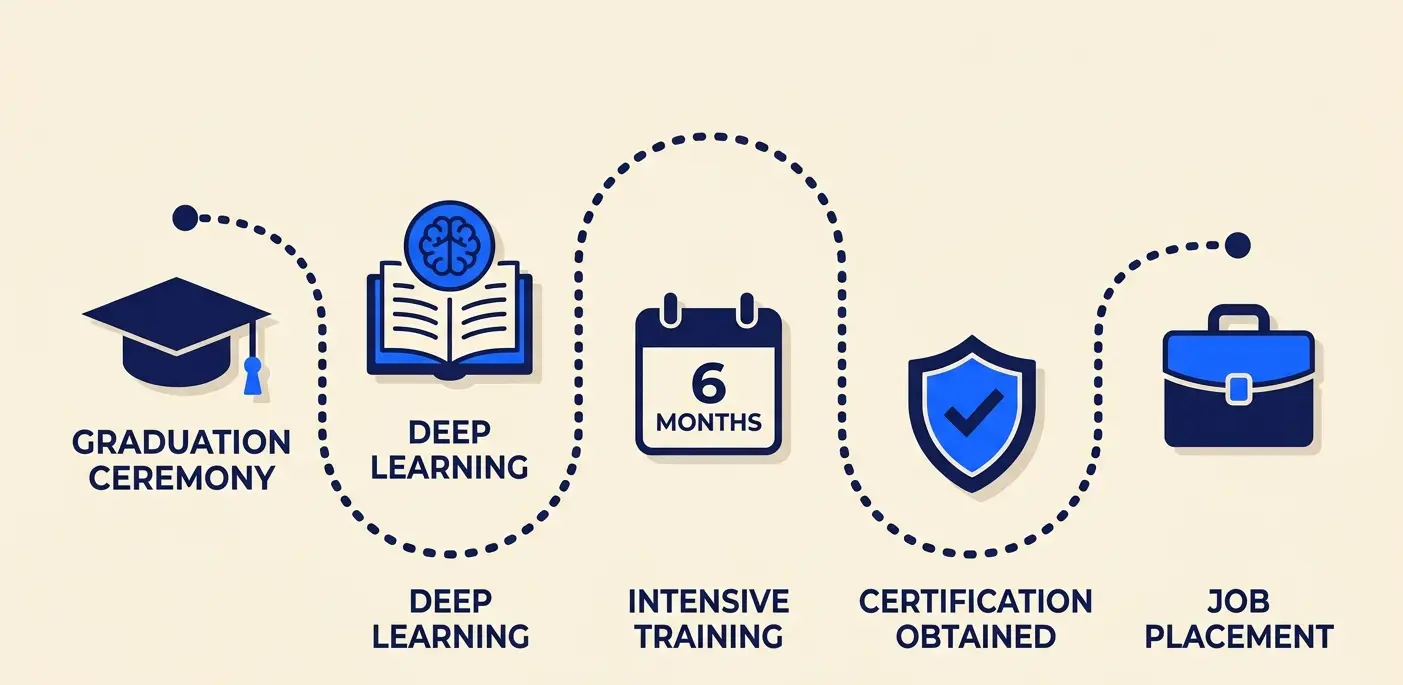
Consider the Ukrainian variant. First, it is 4–6 weeks of the basic course. Then six months of mentoring support. Next, 6–12 months of work as an assistant. So together this is about 1–1.5 years to independent practice. But in the APA system the timeline differs. It is 10–17 weeks of school plus 1–2 years of internship. That is 1.5–2.5 years to the same level.
However, the path to expert status is longer. Add another 3–5 years of steady practice. In addition, 300+ independent exams are needed. APA/EPA certification and forensic accreditation are also required. So the route "from zero to expert" is 5–7 years. And this figure is not an exaggeration. After all, such specialists are far fewer than course graduates. That is exactly why their conclusions are valued.
The basic start costs $5,000–8,000 with equipment. This is enough for mass formats. For example, for screening and family checks. But the expert path is more expensive. It costs $15,000–40,000 over 5–7 years. After all, this includes certification, premium equipment and conferences.
This is a large sum. However, it returns through higher income. After all, an expert earns 3–5 times more than a novice. You can reach self-sufficiency in 1.5–2 years. However, this needs access to practice. Without real cases, the path stretches out. So training without an internship is just a paper certificate.
Need not years of training but a concrete result right now? Suppose the polygraph is needed for one situation. For example, to check staff or get a conclusion for court. Then ordering a test from an active SPU expert is much faster and cheaper.
Staff positions fall in the range of UAH 25,000–65,000 per month. So the breakdown by segment looks like this:
But private practice is arranged more complexly. One session in Kyiv costs from UAH 2,000 to 5,000+. Suppose the load is 15–20 sessions a month. Then it yields UAH 30,000–100,000 in gross income. However, this is before rent and taxes. In addition, experts with a reputation earn substantially more.
American figures are an order higher. This is due to a more developed system and higher rates. For example, starting police positions pay $35,000–65,000 a year. The industry average is about $75,000. But federal positions are higher — $54,000–118,000. Experienced private practitioners earn $75,000–150,000. In addition, an established practice brings $120,000–200,000 and up. At the same time, the price per test is $150–2,500.
| Segment | Ukraine (UAH/mo) | US (USD/yr) |
|---|---|---|
| Novice at an agency | 25,000 – 35,000 | 35,000 – 65,000 |
| Corporate examiner | 30,000 – 55,000 | 60,000 – 90,000 |
| Military examiner | 50,000 – 65,000 | 54,000 – 118,000 (federal) |
| Private practice (experienced) | 60,000 – 100,000+ | 75,000 – 150,000 |
| Expert with international reputation | from 150,000+ | 120,000 – 200,000+ |
| Price per test | UAH 2,000 – 5,000+ | $150 – 2,500 |
Income in polygraphy depends on three factors. At the same time, each works independently. First, specialization. For example, forensic experts earn more than family ones. Second, geography. After all, rates are higher in big cities than in the provinces. Third, reputation. Therefore, clients line up for a well-known expert. But a novice needs years for a portfolio.
In addition, forecasts for the US market are encouraging. By the late 2020s, a shortage of private specialists is expected. After all, the 1960s generation is retiring en masse. So now is a favorable moment to enter the profession. A similar trend exists in the Ukrainian market.
Polygraphy is a fast-developing field. For example, new analysis methods appear every two or three years. In addition, software is updated. Associations formally require continuing education. However, it is not only about the formal requirement. After all, refusing to update knowledge is a path to "dinosaur" status. Then a specialist works by outdated methods. So their accuracy is knowingly lower. In addition, a reputation collapses faster than it was built.
So the standard continuing education formats are as follows:
One seminar usually costs $300–1,500. But a conference with accommodation is $1,500–3,500. Therefore, a serious specialist budgets $2,000–5,000 a year. So the profession has no final point. After all, a top-level expert keeps learning as long as they work.
Expert polygraphy is a profession for a certain type of person. For example, it needs analytical thinking and emotional stability. In addition, readiness for long and costly training. It also needs readiness to work with lies, fear and pain. So this is not "easy money" or a "quick start". After all, the path to expert level takes 5–7 years. In addition, the budget is $15,000–40,000 across all stages.
Suppose you are ready to go the whole way. Then the market will open. After all, a shortage of experts in Ukraine and Europe remains. In addition, certification is moving to a more formal level. Demand for "weighty" conclusions is also rising steadily. But if time and money are limited, the picture differs. For example, a study is needed "once, for a specific situation". Then ordering a session from an active expert is far cheaper and faster.
In the end, polygraphy is a profession for those who enjoy the process itself. That is, working with people, physiology and data. So it is not just a tool for a one-off problem. Suppose this caveat is crucial for you. Then the best strategy is obvious. Turn to a specialist who has already walked this path. And focus your own time and resources on what is truly yours.
An important note: the Polygraph Examiners Union of Ukraine is a professional service organization. Therefore, we do not provide training for examiners. Likewise, we do not issue training certificates. However, we can help with something else. For example, review the register of our experts. In addition, you can order forensic psychophysiological testing — call or message us via our contacts.
The basic course in Ukraine lasts 4–6 weeks. In addition, there are 6 months of mentoring and 6–12 months of assistant work. So a practitioner level is reached in 1–1.5 years. But the expert level takes longer. Add another 3–5 years of practice and 300+ exams. APA/EPA certification and forensic accreditation are also needed. Together this is about 5–7 years.
Yes, but with limits. For example, many centers accept candidates with military experience on a shortened track. But in the US, APA requires an associate's degree plus two years of investigative experience. In addition, corporate employers more often choose specialists with higher education. Therefore, it gives a higher base salary at the start.
The basic course costs $1,200–3,000. But extended programs are $3,500–5,000. Individual programs are $5,000–10,000 and up. In addition, equipment must be added. For example, a RUBICON polygraph — from $3,200. So the full budget to start a practice is about $5,000–8,000.
There is no direct automatic recognition. After all, a Ukrainian certificate is valid only in Ukraine. Therefore, work in the US or the EU needs APA or EPA certification. For example, many specialists supplement the course with a 400-hour EPA program. And those working with American corporations go to an APA school.
Staff positions pay UAH 25,000–65,000 a month. In particular, military examiners earn UAH 50,000–65,000. But private practice varies. For example, at 15–20 sessions a month the income is UAH 60,000–100,000. In addition, income depends on specialization, geography and reputation.
The most affordable option is the domestic RUBICON at $3,200–3,850. This is especially so for course graduates who get a discount. But for international clients, Lafayette LX5000 or LX6 is better. That is $6,000–8,500 and the world's most common standard. In addition, there is the premium Axciton. However, it usually remains the choice of experienced specialists.
The realistic paths are as follows. For example, an assistant at an agency or to an experienced examiner. A staff position in a security service also fits. In addition, these are project teams for investigations. And many centers give mentoring support for 6 months. So this is the best window to find a first internship.
The test itself requires personal contact. After all, sensors must be placed and reactions recorded. Therefore, a remote polygraph does not physically exist. However, related tasks are often done remotely. For example, writing conclusions and consultations. In addition, a mobile examiner format with their own equipment is possible.
What Questions Are Asked on a Polygraph: Types, Examples and What You Cannot Ask Editorial Team, Polygraph Examiners...
Read more →
How to Choose a Reliable Polygraph Examiner: 7 Signs of a True Professional A lie detector test is a serious procedure...
Read more →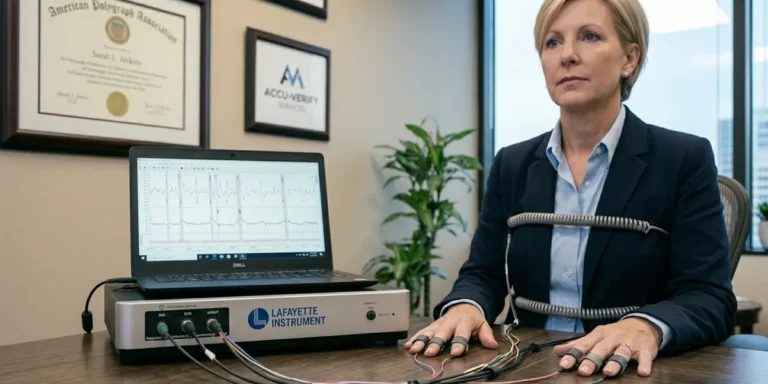
How a Lie Detector Works: Physiology, Technology, and Stages of a Polygraph Test The term "lie detector" is familiar to...
Read more →Certified SPU examiners work across Europe, Asia and North America — choose your country

1
2