The Union of Ukrainian Polygraphologists (SPU) conducts professional lie detector tests in Poland for individuals and businesses. Offices in Warsaw and Wroclaw, certified polygraphologists, complete confidentiality.
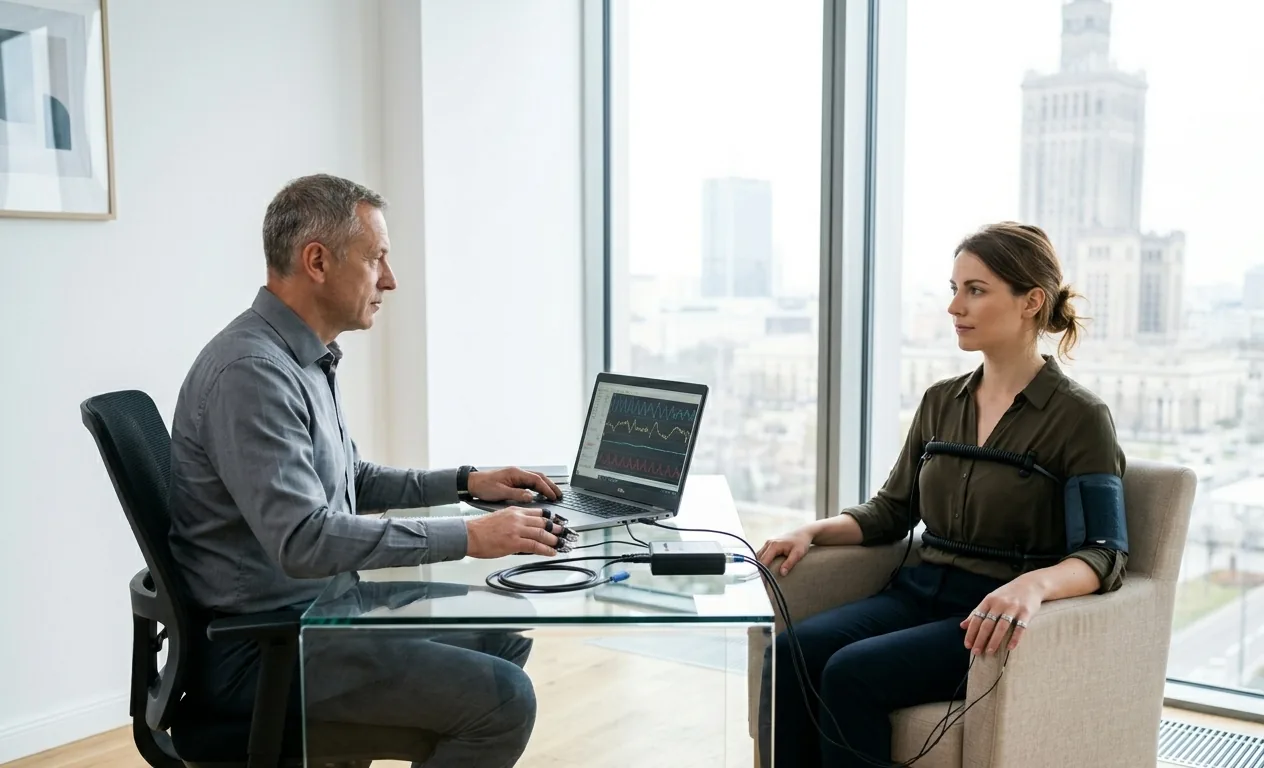
Poland is home to the largest Ukrainian diaspora in Europe. Over a million Ukrainians have settled in Warsaw, Wroclaw, and other Polish cities — some fleeing the war, others building a new life by choice. The forced relocation brought with it challenges that no one anticipated: a partner left behind in Ukraine, new surroundings on both sides, and the distance that amplifies every doubt. In precisely this kind of situation, a lie detector test in Poland from the Union of Ukrainian Polygraphologists becomes a reliable instrument for getting a clear, objective answer — without speculation, without accusations, and without the paralysing uncertainty that makes it impossible to move forward.
A polygraph is not a dramatic prop from a crime film. It is certified psychophysiological equipment that continuously records involuntary bodily reactions: changes in breathing, skin conductance, cardiovascular activity, and tremor. No person can consciously suppress all of these physiological channels simultaneously at the moment of deception — which is precisely why the method, in the hands of a qualified specialist, delivers accuracy of 95–99%. A polygraph test in Poland from SPU is not intuition — it is science operating under a strict, internationally validated protocol.
The Union of Ukrainian Polygraphologists has over 15 years of experience and maintains offices in Warsaw (Bonifraterska 17) and Wroclaw (Grabarska 1). Our specialists work with clients from across Poland and conduct testing in conditions of maximum comfort and full confidentiality. Warsaw polygraph testing and a lie detector in Wroclaw are not just geographical references — they are real addresses where you can come this week and receive qualified help from a team that understands your situation.
Whether your question is personal, corporate, or legal — a polygraph examination from SPU delivers not guesses but a scientifically grounded result. You leave the session not with more questions but with facts that allow you to make a decision. That is what distinguishes a professional polygraph test from every other approach to establishing the truth.
Most people who contact us for the first time have only a vague idea of what a polygraph test actually involves. Some worry about the sensors; others question the objectivity of the method; many simply do not know where to begin. Below is a step-by-step account of exactly what happens during a polygraph test in Poland — so you can arrive prepared, rather than anxious about the unknown.
A polygraph is a multi-channel recording instrument that continuously captures the body's physiological reactions as a person answers questions. Sensors measure changes in breathing rate and depth, galvanic skin response (fluctuations in skin conductance caused by emotional stress), cardiovascular activity (pulse rate, blood pressure, blood vessel volume), and tremor — subtle involuntary body movements. When a person gives a deceptive answer, the brain generates elevated cognitive load and emotional arousal that inevitably appear in these channels — and it is those deviations that a polygraphologist analyses.
It is important to understand what a polygraph does not do: it does not read minds and does not "know" the truth in advance. It measures the degree to which the body reacts to specific stimuli. When the protocol is properly followed by a qualified specialist, accuracy reaches 95–99% — a figure confirmed by decades of independent research and thousands of operational examinations worldwide. SPU polygraphologists undergo regular certification and adhere to international standards of psychophysiological research.
Pre-test interview (20–30 minutes). The polygraphologist meets the examinee, explains the full procedure, and goes over every question that will be asked during the test. Every question is agreed upon in advance — nothing unexpected, no surprises. This interview also allows the specialist to establish the individual's personal physiological baseline, which improves the accuracy of subsequent analysis.
Sensor attachment (5–10 minutes). Pneumatic breathing tubes are placed around the chest and abdomen, galvanic electrodes are attached to the fingertips, and a blood pressure cuff is placed on the upper arm. The procedure is entirely painless — the sensation is no more intense than a routine blood pressure check at a clinic.
Testing (1.5–3 hours). Questions are posed in a calm, measured pace and answered with "yes" or "no." Each series of questions is repeated several times to build a reliable statistical baseline. You are not required to explain or elaborate — only to answer. Pauses are taken between series to allow physiological indicators to return to baseline.
Analysis of results (30–60 minutes). The polygraphologist analyses the collected data using specialised software and a validated scoring methodology. Each channel is reviewed independently; the overall conclusion is based on the combined pattern of all indicators.
Delivery of results. A verbal conclusion is provided on the day of testing, before you leave the office. An official written report with polygraph charts and detailed commentary is prepared within 3–5 business days — in a format suitable for presentation to third parties.
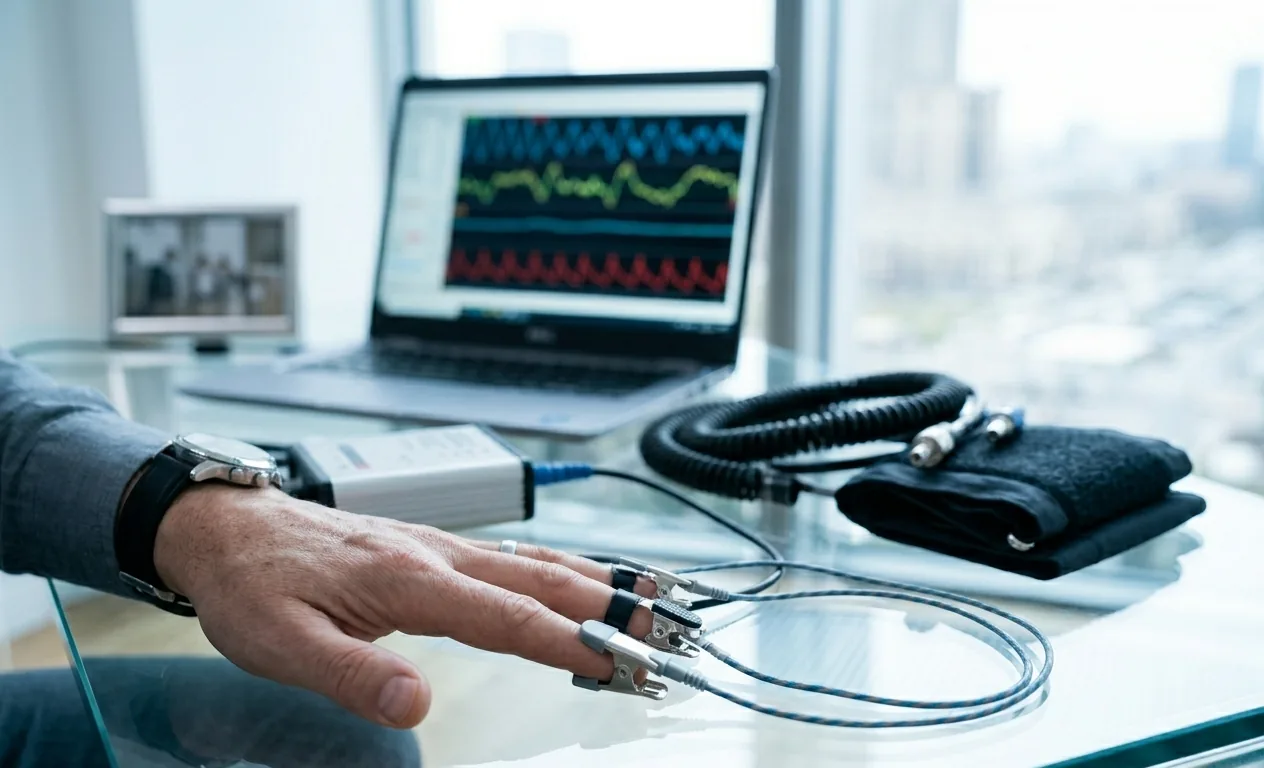
A modern digital polygraph simultaneously records the following channels:
The simultaneous recording of 5–8 independent channels makes deception practically impossible to sustain. If a person consciously attempts to control their breathing, the galvanic skin response and heart rate react autonomously. If they focus on the pulse, skin conductance rises independently. No self-control technique or medication can suppress all channels simultaneously without producing obvious anomalies — which are themselves indicators of countermeasure attempts. That is precisely what makes a polygraph the most reliable verification tool available to a qualified specialist.
Result accuracy is not determined by equipment alone. Correct question formulation, precise baseline calibration, and skilled interpretation of the resulting data are abilities built over years of rigorous practice. This is a craft grounded in science — and it is why choosing a certified, verified polygraphologist is the single most important decision you will make before booking a test.
Requests to polygraphologists in Poland come from every walk of life — and each one reflects a real person in genuine distress. From anxiety about a partner's fidelity to protecting a business from internal fraud, a lie detector in Poland offers objective answers where other methods have already failed. Below are the most common situations our clients across Poland come to us with.
Poland hosts the world's largest community of Ukrainian migrants — and one of the most painful problems within that community is distance. One partner relocated to Poland; the other stayed behind in Ukraine. Phone calls replaced daily life together, and doubt began to fill the space where trust once lived. Meetings grew less frequent, behaviour shifted, and suspicion quietly became unbearable. In situations like these, a polygraph provides what no amount of surveillance or confrontation can: an objective physiological answer, free from manipulation or pressure. An infidelity check gives you the truth you need to make a decision grounded in facts rather than speculation.
Thousands of Ukrainians have opened businesses in Poland or manage Polish branches of Ukrainian companies. Hiring staff in a new country is always a risk: references are hard to verify, motivation is difficult to read, and entrusting strangers with access to finances, client data, or production secrets is practically unavoidable. A lie detector test in Poland helps minimise these risks before any damage is done — at the hiring stage, rather than after. HR screening with a polygraph is equally valuable for pre-hire vetting and for internal investigations into theft, information leaks, or abuse of authority in mixed Ukrainian-Polish teams.
Polygraph examination results are increasingly used in Polish legal proceedings: lawyers commission psychophysiological studies to strengthen their position in court, and private individuals initiate testing to rebut false accusations. In criminal cases a polygraph may serve as an additional investigative tool; in civil disputes a private expert report can materially influence how the evidence is assessed. A forensic psychophysiological examination from a certified SPU specialist meets the requirements for official documentation and can be submitted as part of a case file by the client, their lawyer, or an employer.
Ukrainians living in Poland often hire household staff — nannies for children, carers for elderly parents, cleaners, or housekeepers. Trusting a stranger with house keys, access to valuables, and the safety of those closest to you is a decision that deserves thorough verification. Polygraph screening of household staff uncovers hidden motivations, checks the accuracy of stated experience, and gives you the confidence you need before handing over responsibility for your home and family — while fully preserving the dignity of a candidate who has nothing to hide.
Before making a decision, many people weigh up alternatives: a private detective, surveillance cameras, or simply an honest conversation. Each approach has its strengths and real limitations. Here is a straightforward comparison to help you make an informed choice.
| Criterion | Polygraph (SPU) | Private Detective | Video Surveillance | Direct Conversation |
|---|---|---|---|---|
| Cost | from $100 | from $400 | from $200 | Free |
| Result accuracy | 95–99% | Depends on the situation | Records actions, not motives | Low — easy to deceive |
| Speed of result | Same day | Weeks or months | Requires extended monitoring | Immediate, but unreliable |
| Confidentiality | Full guarantee | Partial | Risk of recordings leaking | Depends on both parties |
| Documentary evidence | Official expert report | Surveillance report | Video footage | None |
| Psychological impact | Minimal, comfortable | Stress of being followed | Sense of privacy violation | Conflict, resentment |
| Legal applicability | Admissible as private expert evidence | Limited | If lawfully obtained | None |
| Scope of questions | Any agreed topic | Current behaviour only | What is on camera only | Depends on candour |
Several polygraphologists operate in Poland — both local and international. What sets SPU apart, and why do hundreds of Ukrainians in Warsaw, Wroclaw, and other Polish cities place their trust in us? The difference is not simply that we speak your language. It is a combination of advantages that directly affect the quality of the result.
SPU uses the latest generation of certified equipment from leading manufacturers and applies exclusively validated, scientifically grounded testing methodologies. High accuracy is not a marketing claim — it is the result of three factors working together: equipment, protocol, and the analyst's expertise. Every SPU polygraphologist has conducted hundreds of real-world examinations across multiple countries and undergoes regular recertification. We do not conduct "polygraph shows" — every session is a full psychophysiological procedure carried out to international standards.
A verbal conclusion is delivered on the day of testing, immediately after data analysis is complete. An official written report is prepared within 3–5 business days. We understand that prolonged uncertainty is painful, and we do not delay results without reason. If an official written report is needed urgently — for a lawyer or an upcoming court hearing — let us know when booking, and we will find a solution.
Confidentiality is not a marketing phrase. It is a legally binding obligation set out in the contract signed before any procedures begin. We do not store data beyond the agreed retention period. The client's name and the content of the test are not shared with third parties without explicit written consent. Staff sign non-disclosure agreements and bear legal responsibility for any breach. SPU offices in Warsaw and Wroclaw are specifically equipped to ensure complete privacy during every session.

Testing data is protected in accordance with Polish law and the GDPR. No third party — employer, partner, investigator — can access your results without your permission. Even the fact that you contacted us remains your private information.
All SPU specialists hold specialist higher education in psychophysiology or related disciplines, have completed dedicated polygraphologist training, and regularly update their qualifications. We are members of the Union of Ukrainian Polygraphologists, which requires adherence to a code of ethics and quality standards. Over 15+ years of operation our specialists have conducted thousands of examinations across different countries and subject areas.
Our offices in Warsaw and Wroclaw are designed as specialist examination rooms — quiet atmosphere, comfortable furniture, everything needed to help you feel at ease. No metal chairs, no stressful environment. Attaching the sensors resembles a routine medical check-up and causes no discomfort whatsoever. The polygraphologist explains every step in advance and shares every question to be asked — no surprises, at any point.
Testing starts from $100. The final cost depends on the complexity of the task, the number of thematic blocks, and the length of the session — all details are confirmed during the free preliminary consultation, before any commitments are made. No hidden charges, no mid-session extras: the price agreed at the consultation is the price you pay. A specific figure for a specific request, with nothing left vague.
The booking process is simple and requires no specialist knowledge or prior preparation on your part. From the first call to receiving your result — six clear, predictable steps.
Abstract descriptions of a service only go so far. Below are four real types of situation that bring clients connected to Poland to SPU. Names have been changed and details generalised to protect confidentiality. These cases illustrate a principle that runs through all of them: a polygraph is not about punishment or accusation — it is about restoring clarity in a space where it has been lost.
Taras relocated to Warsaw in 2022 following the start of the full-scale war. His wife stayed in Kharkiv with their children, waiting for better times and a reunion. At first they called every day, shared small details, made plans. But after a year the calls grew shorter, his wife more often responded with "late", "tired", "let's talk later". She began to avoid talking about a shared future, and Taras felt an invisible wall growing between them. A suspicion that had initially seemed absurd transformed into an obsessive thought that poisoned every day.

His wife came to Warsaw on a visit and agreed to take the test — not because she felt guilty, but because she wanted to put an end to the uncertainty. The result surprised them both: the suspicions were not confirmed. She had not been unfaithful. She had been quietly struggling with severe depression brought on by the long separation, fear for the future, and a sense of helplessness — and she had been hiding it so as not to worry him. She had simply withdrawn into herself.
The polygraph result became the starting point for the honest conversation they had been avoiding for months. The couple worked through the crisis together — because they had found the courage to check the facts rather than continuing to live among assumptions.
A small Ukrainian-owned retail company in Warsaw began experiencing systematic cash shortfalls and stock discrepancies. The internal investigation stalled: cameras covered only general areas, the evidence was circumstantial, and suspicion fell on several employees at once. The atmosphere in the team deteriorated week by week — mutual distrust was destroying both relationships and productivity.
The owners proposed voluntary polygraph testing to all employees with access to the till and the stockroom. Everyone agreed. The results identified one individual with characteristic reactions to the relevant topics; all the others were fully cleared. The company stopped losing money, and the working atmosphere recovered far more quickly than it would have if the accusations had continued without a definitive outcome.
The owner of a logistics company in Wroclaw was searching for a finance director with full access to accounts and financial flows. The stakes were too high to rely on a CV and two interviews alone. The candidate made an excellent impression — but the owner knew that impressions are easy to manufacture, while real motivation and actual history remain invisible.
The polygraph test confirmed the candidate's honesty: no hidden debts, no conflicts of interest, truthfulness across all critical areas. The owner hired with confidence rather than anxiety. The finance director completed a year at the company without a single incident — and himself considers the polygraph examination to have been the right step, one that established trust from day one.
A sales manager at the Polish branch of a Ukrainian IT company was accused of passing a client database to a competitor. There was no direct evidence, but the losses were real and management was moving towards dismissal. The employee decided to initiate testing himself — to protect his reputation with objective data, not simply with words.
The test results confirmed no involvement in the information leak across all topics examined. The polygraphologist's written report formed the basis of an internal review, and management reassessed the situation. The case was closed; the employee kept his position. This case underlines an important principle: a polygraph protects not only companies from dishonest employees — it protects honest people from false accusations.
When you contact us, you share details of your private life, family circumstances, or business situation. We understand how much it matters to know that this information is protected. That is why confidentiality at SPU is not a clause in a contract — it is a value built into every aspect of how we operate.
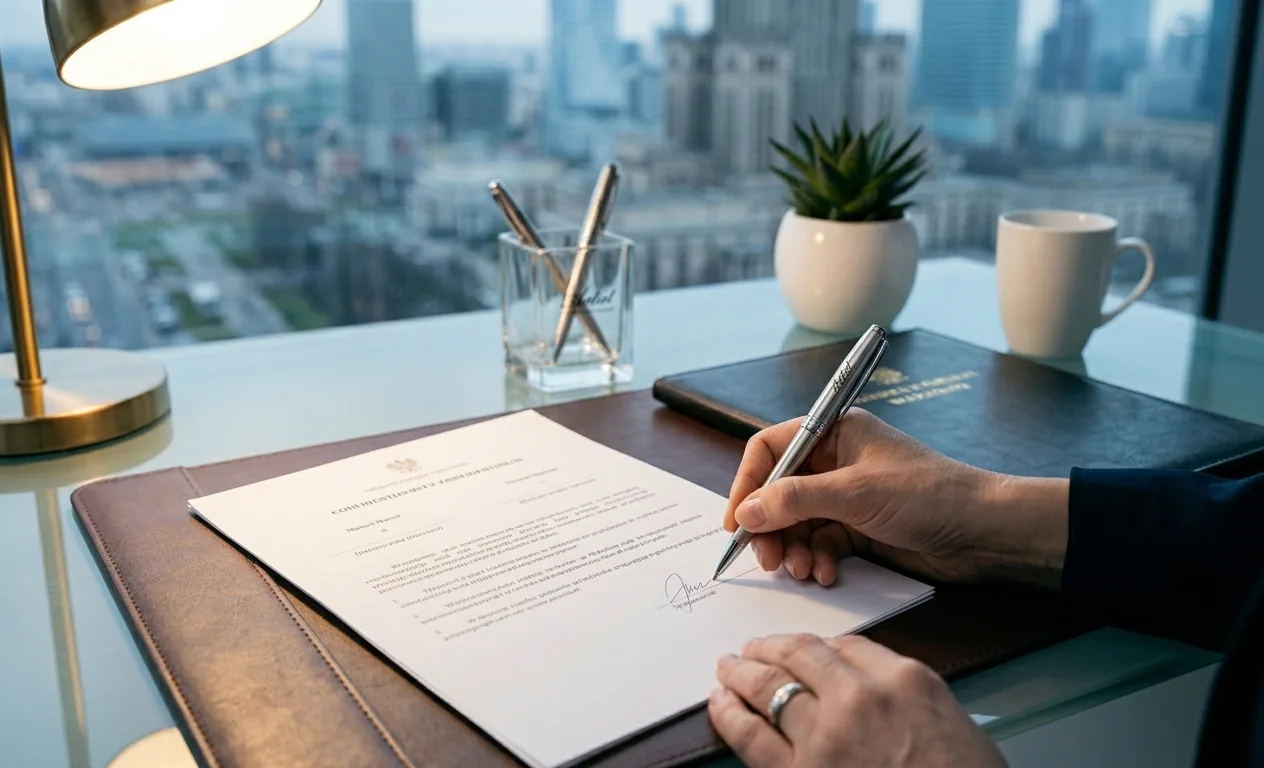
SPU operates in full compliance with Polish legislation. Polygraph testing is a lawful activity in Poland provided the principle of voluntariness is observed. Data obtained during a test is classified as sensitive personal information and protected under GDPR (Regulation EU 2016/679). Any coerced testing or unauthorised access to results constitutes a violation of Polish and EU law and carries legal liability.
Take the first step towards clarity today. A free consultation carries no obligation — it simply gives you answers and helps you understand whether a polygraph is the right solution for your specific situation. Our specialists are available daily from 08:00 to 22:00, including weekends.
Or call: +380 677 309 900
Viber · Telegram · WhatsApp — daily 08:00–22:00
Testing starts from $100. The final price depends on the type of examination, the number of thematic blocks, and the total duration of the session. You will receive an exact figure during the free preliminary consultation, where a specialist will learn the details of your situation and select the best format. No hidden charges, no mid-session extras — the price quoted at the consultation is the final price. Call to arrange a consultation: +380 677 309 900.
Yes, polygraph testing is fully legal in Poland provided participation is voluntary and the examinee has given written consent. Polish labour law permits voluntary testing for sensitive positions involving access to confidential information or financial resources. In criminal proceedings a polygraph may serve as an additional investigative tool; in civil cases a polygraphologist's report may be submitted as a private expert document. All data is protected under GDPR — the EU regulation on personal data protection. Any form of coercion into testing is unlawful and carries legal liability.
The SPU office in Warsaw is located at Bonifraterska 17. Detailed directions and landmarks are provided when you book. The office is conveniently situated and accessible from all districts of Warsaw and the surrounding areas. If you have any questions about getting there, our coordinator will help you plan your route.
The SPU office in Wroclaw is located at Grabarska 1. Directions and landmarks are confirmed at the time of booking. The office is convenient for clients from Wroclaw and nearby cities — Legnica, Walbrzych, Olawa, and other settlements in the region. Let us know your preferred time when you get in touch — we will find a suitable slot.
Testing is conducted in Ukrainian, Russian, and English. Testing in Polish is available upon prior arrangement at the time of booking. The language of the examination does not affect accuracy: a polygraph records physiological reactions, not the semantic content of answers. The most important thing is that the examinee clearly understands the questions — which is why we always choose the language in which a person feels most natural and at ease.
Preparation is straightforward: get a good night's sleep the evening before (at least 7–8 hours), avoid alcohol for at least 24 hours before the session, do not take sedative or sleep medications without discussing it with the polygraphologist first, and dress comfortably. Arrive in a normal state — not hungry, not overtired, not immediately after a heavy meal. The polygraphologist will explain everything you need to know during the free consultation and the pre-test interview. Every question that will be asked during the test will be shared with you in advance — there are no surprises.
A full session runs from 1.5 to 3 hours: pre-test interview — 20–30 minutes; sensor attachment — 5–10 minutes; testing — 1–2 hours depending on the number of thematic blocks; data analysis by the polygraphologist — 15–30 minutes. A verbal conclusion is provided on the same day, immediately after analysis is complete. An official written report with polygraph charts and commentary is prepared within 3–5 business days.
Yes, our services are available to everyone — Polish nationals, Polish employers, Polish lawyers, and individuals of any other nationality. For Polish-speaking clients, testing can be conducted in Polish upon prior arrangement. All clients receive the same standard of service, the same quality benchmarks, and full confidentiality, regardless of nationality, language, or the circumstances that brought them to us.
What Questions Are Asked on a Polygraph: Types, Examples and What You Cannot Ask Editorial Team, Polygraph Examiners...
Read more →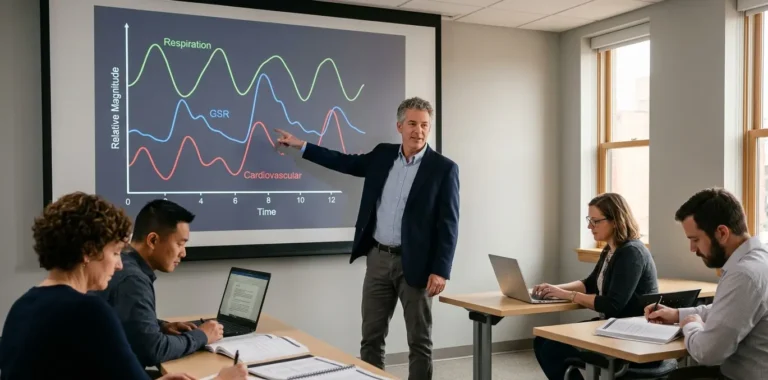
How to Become an Expert Polygraph Examiner: Training, Certification and the Path to Professionalism Editorial Team,...
Read more →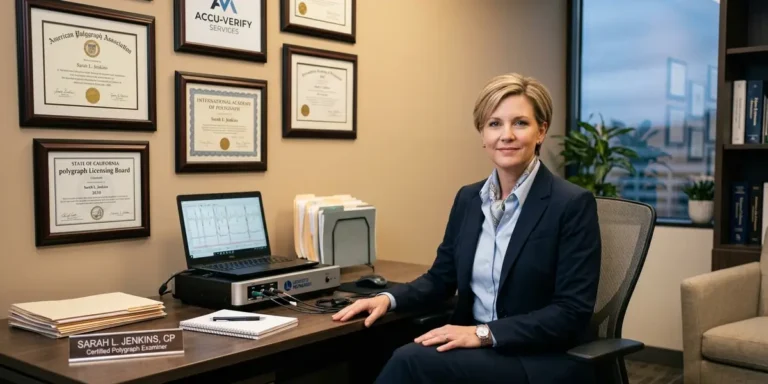
How to Choose a Reliable Polygraph Examiner: 7 Signs of a True Professional A lie detector test is a serious procedure...
Read more →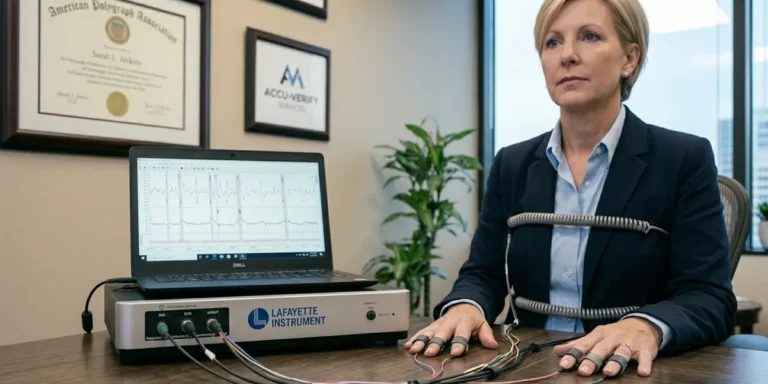
How a Lie Detector Works: Physiology, Technology, and Stages of a Polygraph Test The term "lie detector" is familiar to...
Read more →Certified SPU examiners work across Europe, Asia and North America — choose your country

1
2