The Polygraph Examiners Union of Ukraine (SPU) runs private lie detector tests across Estonia — Tallinn, Tartu, Narva, Pärnu and the smaller towns in between. Sessions are held in Russian or English, with the preliminary conclusion given on the day of the test.
In short: a private lie detector test in Estonia costs €300–365 for a standard single-topic examination, takes 1.5–2.5 hours and delivers 95–98% accuracy. Most sessions take place in Tallinn, and the examiner also travels to Tartu, Narva, Pärnu, Kohtla-Järve and other towns. The test can be run in English or Russian at no extra charge. A verbal conclusion follows immediately after the session; the signed written report arrives within 3–5 business days and is included in the price. Testing is voluntary and requires written consent, and SPU examiners are listed in the official Register of Polygraph Examiners of Ukraine, and our local partner examiners work to the same protocols.
Estonia is small and tightly connected. Work is often on the other side of the gulf, relatives on the other side of a border, and a business is frequently five to fifteen people who have known each other for years. Conflicts here rarely lack witnesses — but the witnesses are usually involved, and the paperwork usually is not there.
A lie detector test answers one question, and answers it properly. It does not repair a relationship or replace a lawyer, but it turns a suspicion that has been running for months into a documented answer. These are the requests we receive most often.

Long rotations away from home, an unexplained absence, a story that sounds slightly different each time.
Infidelity test →
Voluntary checks for people with access to cash, stock, client data or keys.
Personnel screening →
Loans to relatives and acquaintances, deposits, shares in a joint venture agreed verbally.
Borrower assessment →
A psychophysiological examination when your name is in question and neither side can show anything.
Forensic testing →
Nannies, carers and housekeepers — the people trusted with your keys and your children.
Household staff vetting →
Substances, betting apps, money vanishing at home, a new circle of friends.
Teen testing →Working two weeks on and two weeks off across the gulf is an ordinary arrangement here, and so is a company of five to fifteen people where everyone has known everyone for years. Both create the same blind spot: long stretches nobody can account for, and agreements that were never written down.
The most common personal request is a relationship one — an accusation that keeps returning at every homecoming, or a message that changed the atmosphere at home. In most such cases the result confirms the person’s account, and the value is that the subject finally stops opening every conversation. Testing runs only on informed written consent, never behind a partner’s back, and any question can be withdrawn without a reason.
The second is money that moved on trust: a loan to a relative, a deposit, a share in a joint venture agreed verbally. In a country this size a dispute like that quickly becomes public property, which is exactly why people prefer to settle it in one closed room rather than in court.
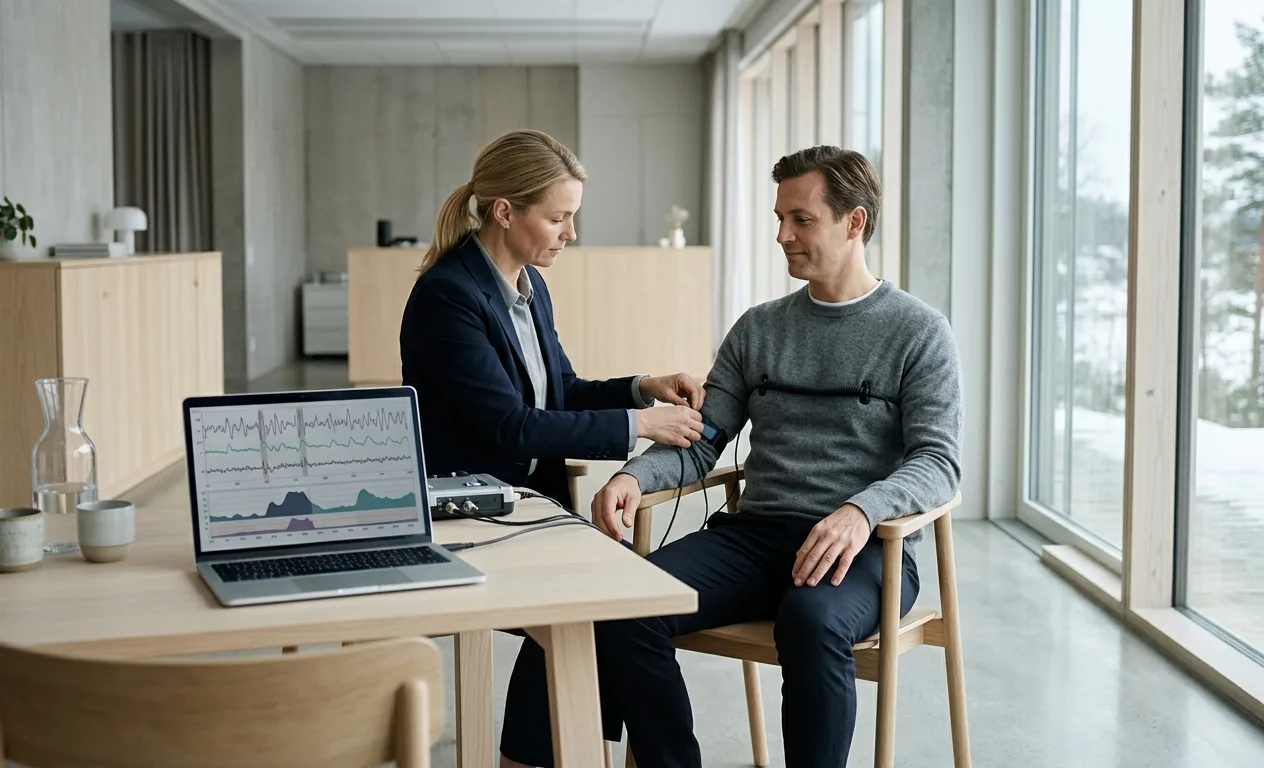
A lie detector records several physiological channels at once — breathing, cardiovascular activity, blood pressure and electrodermal response. Concealment produces involuntary shifts in those channels that cannot be suppressed at will.
SPU examiners work to the standardised CQT and CIT protocols on professional equipment. Accuracy under protocol is 95–98%.
We go through the situation and agree the wording of every question. Nothing unexpected is asked during the test itself.
Written consent is signed first; the sensors are non-invasive and record nothing but your own physiology.
Yes/no questions across several presentations, so that one isolated reaction never decides the outcome.
Verbal preliminary conclusion the same day; the signed written report within 3–5 business days.
A lie detector does not read minds and does not identify a lie directly. It compares reactions to relevant questions with reactions to control questions, across four channels, and looks for a stable difference. Those reactions are involuntary, which is why they appear before the person has finished choosing their words.
No conclusion rests on a single spike: what matters is a pattern repeated across several presentations. That is what separates ordinary nervousness, which lifts everything at once, from a selective concealment reaction. The mechanics are set out step by step in our guide to how a lie detector works.
An examination answers factual questions about events: whether money changed hands, whether a meeting happened, whether a candidate concealed a past dismissal. It does not measure feelings, forecast behaviour or determine who was right in an argument. Promises to the contrary have nothing to do with a polygraph.
This is why the interview matters more than the instrument. A share of enquiries end with us proposing to narrow the subject down to two or three precise questions — and sometimes with us saying plainly that testing will not help here. That conversation is free and happens before booking.

We quote a price for the examination as a whole rather than by the hour, so the cost is clear before booking. The preliminary consultation is free and the written report is part of the price rather than an extra.
| Format | What it covers | Price, EUR |
|---|---|---|
| Standard polygraph examination | One subject, one topic; 1.5–2.5 hours including the interview; written report included | €300–365 |
| Online-format examination | When the parties are in different countries and meeting in person is not realistic | €175 |
| Testing in a foreign language | Surcharge outside our working languages — Russian, English, Ukrainian and Spanish are included | +€80 |
| Multi-topic or corporate examination | Several respondents, an internal investigation, urgent scheduling | Quoted individually |
The standard price covers most private requests — resolving a family conflict, a check before marriage, establishing who took what, an examination at a lawyer's request and a visit by the examiner to your address. Corporate formats such as an internal investigation or a scheduled staff check are costed per case.
Prices are indicative: the exact figure is confirmed after the free consultation and depends on the number of topics, the number of respondents and the location of the session.
| Criterion | SPU | Independent examiner |
|---|---|---|
| Certification | ✓ SPU certification, confirmed before you book | Usually impossible to confirm |
| Protocol | CQT and CIT, identical from case to case | Chosen case by case |
| Review of the charts | A second examiner can re-read them | No one to re-read them |
| What you receive | Consent form plus a reasoned written conclusion | Frequently a verbal answer only |
| Liability for the conclusion | Shared with the union | Rests on one person |

Estonian cases are handled by local certified partner examiners of the Polygraph Examiners Union of Ukraine. Who takes your case depends on the subject: corporate and legal matters and delicate family situations call for different experience.
Both work to SPU methodology and under the union's quality control: the question list is agreed in advance, the charts can be re-read by a second examiner, and the conclusion is issued on a union form. We name the examiner assigned to you when the appointment is confirmed.
Describe the situation and we will say honestly whether a test can answer it. The consultation is free.
Get a consultationThe owner of a small shop wrote off discrepancies as miscounting for half a year, until the total became impossible to ignore. Four people had access to the till and had worked together for years; dismissing them all meant closing the shop. Three agreed to a voluntary examination straight away and the fourth a week later. One session settled the question, and three employees carried on working without a shadow over them.
A man had spent three years working rotations in a neighbouring country. Every homecoming began with the same argument, and by then neither spouse could remember how it had started. They took the test together, by mutual agreement. The result confirmed his account — and the real outcome was that the subject stopped being the first conversation of every return.
After an employee left for a competitor, the company began losing clients whose negotiations only three people had known about. The owner wanted neither to accuse the team nor to keep working under suspicion. All three consented in writing. The examination showed where the information had gone, and two of them received written confirmation that they had nothing to do with it.
A couple who had met online and lived together for less than a year were about to marry and buy a flat together. Both had a failed marriage behind them and both wanted to start without unspoken doubts, so they agreed the questions together — one each. The session took two hours and removed exactly what had been in the way: not suspicion of a specific act, but the habit of not believing.
Nobody books a lie detector test lightly, and clients do not want it discussed afterwards. Discretion here is procedural rather than declared.

Protocols that do not change from client to client, on professional instruments

Both are working languages for our examiners, with no surcharge for either

Tallinn, Tartu, Narva, Pärnu, Kohtla-Järve or the address you name

You hear the conclusion before leaving; the signed document arrives in 3–5 days

Signed consent, a closed room and storage rules that hold in a country where everyone knows everyone

Partner examiners work to union protocols, with charts open to a second reading
Companies here are small, and that changes the nature of the request: it is rarely mass screening and usually a specific incident inside a team of five to fifteen people, where suspicion of one poisons the atmosphere for everyone. The typical tasks are clarifying a shortage or a leak, checking a candidate for a role with access to money and data, and agreeing periodic checks for key positions.
Participation is always voluntary, consent is informed and in writing, and personal data is handled under normal data-protection duties. A result supports a decision but does not replace a proper internal procedure — the report is an argument, not a verdict.
Group testing. For five respondents or more we agree a per-case rate and a schedule that does not stop the working day. Ask in WhatsApp or Telegram — we reply the same day.
Most sessions take place at our Tallinn address — Tornimäe 5, 10145. The examiner also travels to Tartu, Narva, Pärnu, Kohtla-Järve, Sillamäe, Viljandi and smaller towns; given the size of the country, a visit is almost always quicker than a trip to the capital.
Any quiet closed room of about 10 m² is suitable: a room at home, a meeting room, a rented office or a hotel room. Privacy and two uninterrupted hours are the only requirements.
When we reply: messages on WhatsApp, Telegram and Viber are answered daily, 08:00–22:00 local time.
You receive a signed report from a certified examiner setting out the methodology, the questions agreed in advance and the conclusion. It is used most often outside a courtroom — in private disputes, negotiations, internal company decisions and family situations where someone needs their position documented. Whether such a report can be added to court materials depends on the jurisdiction and the type of proceedings, so discuss your case with your lawyer first and we will prepare the examination in the format required.
Nothing needs rehearsing before a lie detector test. Sleep normally, avoid alcohol and sedatives the day before, eat as usual and leave enough time so that you are not arriving in a rush. Prescribed medication is not an obstacle — mention it during the interview and the examiner will take it into account, as they do routinely.
Being tense at the start is normal and does not distort anything — you will have read and approved every question beforehand, so nothing is lying in wait. Deliberate countermeasures are a different matter: controlled breathing and tensed muscles stand out on the chart more clearly than the answers do.
A lie detector test is safe and painless, but a few conditions make a result unreliable: acute cardiovascular or neurological illness, pregnancy, acute stress or bereavement, and alcohol or sedatives taken within the previous day. Anyone under 18 is tested only with the written consent and presence of a parent or guardian.
The examiner checks all of this during the mandatory pre-test interview, so candour there matters more than at any other stage. If you feel unwell on the day, moving the appointment costs nothing and protects the accuracy of the answer.
A standard examination costs €300–365 — one subject, one topic, 1.5–2.5 hours including the pre-test interview, with the signed written report included. The online format is €175. The exact figure is confirmed after the free consultation, once the topic and the location are clear.
Yes. Most sessions are held at our Tallinn address, Tornimäe 5, but the examiner travels to Tartu, Narva, Pärnu, Kohtla-Järve, Sillamäe and other towns. A closed room of about 10 m² is enough — at home, in an office or in a hotel.
Yes, at no extra charge — Russian and English are both working languages for our examiners. We do not currently run examinations in Estonian. Every question is agreed in advance in the language the test will be run in, which is part of the methodology rather than a formality.
Usually within a few days in Tallinn, and slightly longer for travel to other towns — the country is small, so the difference is minor. Tell us the town and we will name the earliest realistic date.
The report works best outside a courtroom — in private disputes, negotiations and internal company decisions. Whether it can be added to court materials depends on the jurisdiction and the type of proceedings, so agree the format with your lawyer before booking.
No, and we verify this before taking a corporate booking. The person signs consent themselves, can withdraw at any moment, and a refusal cannot be read as an admission of anything. An owner may offer a test to the team; nobody may be pushed into one.
It occurs in a small share of cases — usually because of a medical condition, medication, or a topic worded too broadly to test cleanly. We say so plainly rather than presenting an unclear chart as an answer, and depending on the reason we either reword the questions and repeat the relevant part at no extra charge, or advise that a polygraph cannot settle this question.
Yes, when three things hold: a parent or guardian gives written consent and stays present, the teenager agrees for real rather than under pressure, and the questions are adapted to their age. If they say no, we do not run it — a forced session damages trust at home and yields nothing usable.
Free consultation — we will match the format, the language and the examiner to your situation
Describe the situation in a couple of sentences. We will come back to you, say honestly whether an examination will answer your question, and name the price and the nearest available date. The consultation costs nothing and commits you to nothing.
Prefer to write? Any of these reaches us directly:

What Questions Are Asked on a Polygraph: Types, Examples and What You Cannot Ask Editorial Team, Polygraph Examiners...
Read more →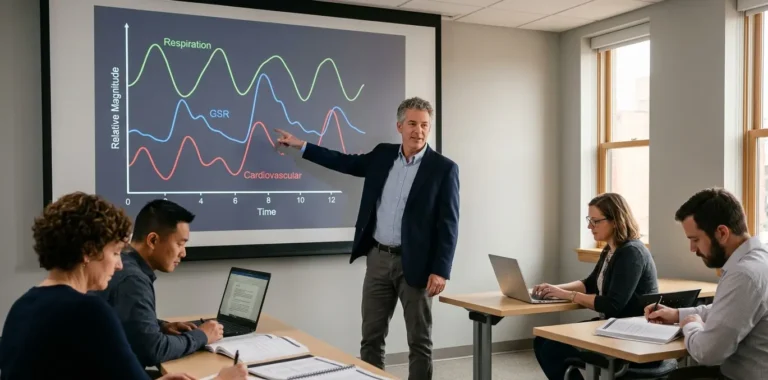
How to Become an Expert Polygraph Examiner: Training, Certification and the Path to Professionalism Editorial Team,...
Read more →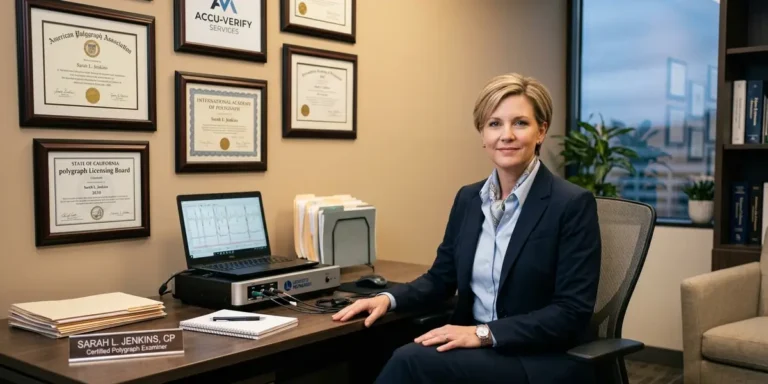
How to Choose a Reliable Polygraph Examiner: 7 Signs of a True Professional A lie detector test is a serious procedure...
Read more →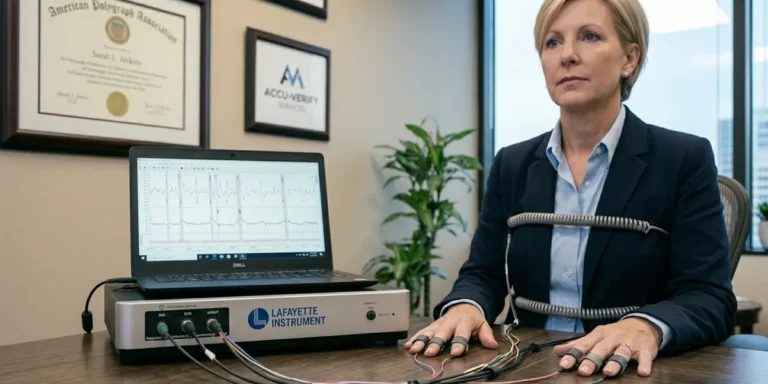
How a Lie Detector Works: Physiology, Technology, and Stages of a Polygraph Test The term "lie detector" is familiar to...
Read more →Certified SPU examiners work across Europe, Asia and North America — choose your country

1
2